Category Archives: Family

Travelogue 1984: Taiwan and China

My father was a prolific letter-writer. What follows is an excerpt from his letter to – of all people – my mother’s aunt and uncle in March 1984, describing his travel to visit me in Taiwan and then our travel together to Mainland China. The letter concludes with my brother’s news, which I leave to him to share verbatim but which details his upcoming college graduation, potential graduate program with showers of fellowship money, and his choice between that and a job offer “at an outrageous rate of pay.”


March 22, 1984

Dear Ben and Brenda:

It has been so long since I have had a chance to either visit with you or write but I thought it was about time to bring you up-to-date on our news. As you know, Amy is spending the year in Taiwan on her Fulbright/ITT scholarship studying Chinese law. I had a chance to visit her over Christmas for an excursion that took us to Hong Kong and the Mainland; and Ruth went for a somewhat longer visit at the end of January and they had an opportunity to go to half a dozen Asian countries.

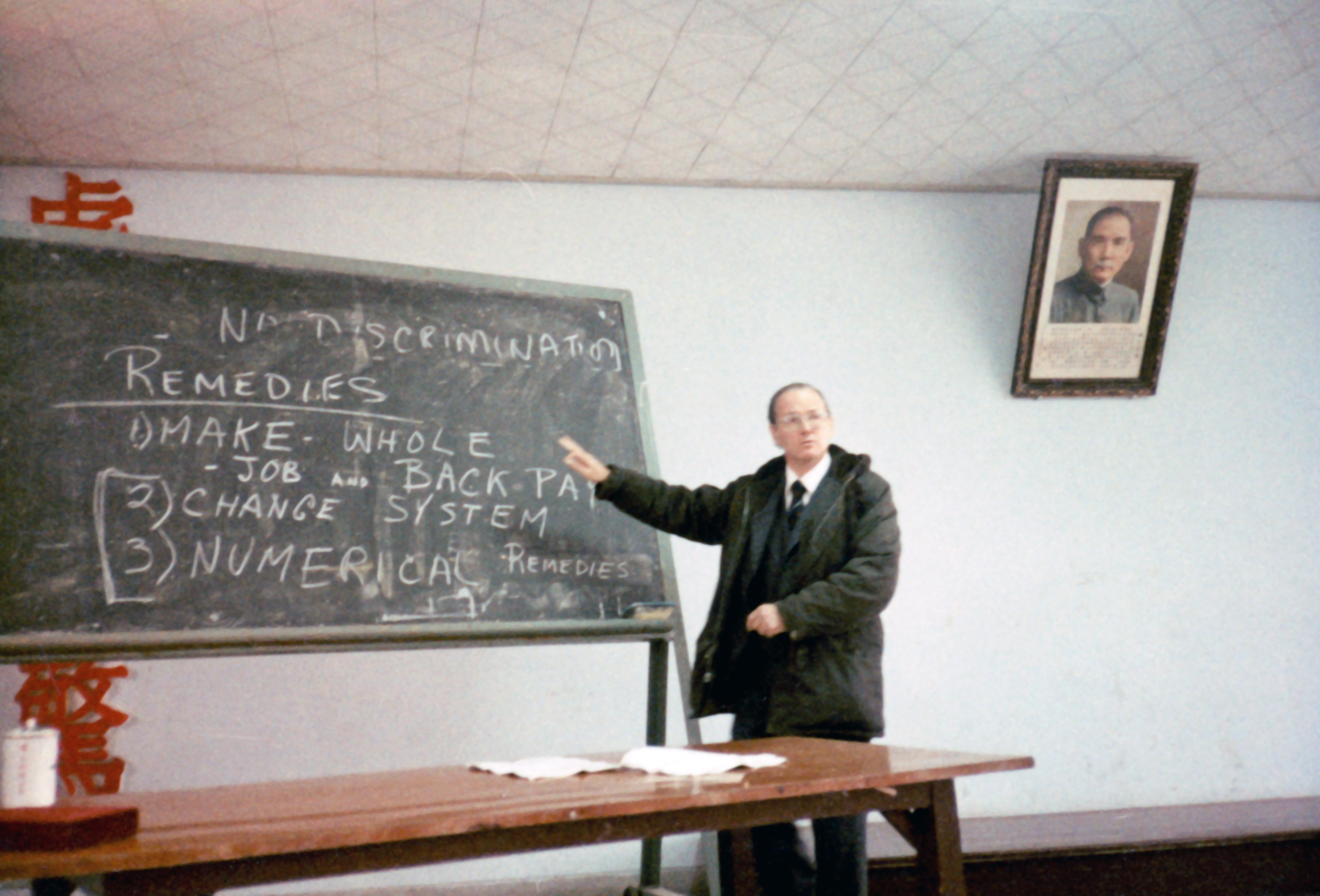
I delivered a lecture at one of the law schools in Taiwan which Amy arranged. She and I had a great deal of fun working out the potential translation with the law professor who was both our host and our translator.

We decided to experiment to determine whether it is possible to visit Mainland China without either advance preparations or a formal tour; I am pleased to report that it is possible. A travel agent in Hong Kong (a friend of a friend of a friend of Amy’s in Taiwan) got us a visa in only 24 hours. We then went to the Hong Kong railroad station, and took a train to Canton.

In Canton we went to the airport and purchased an airplane ticket to Guilin. Actually this stage wasn’t quite that simple. We first went to the downtown ticket office which told us nothing was available. It was the cab driver who said that we should ignore those bureaucrats and go to the airport because “something is always available.” He was right, at the airport Amy walked right up to the counter, purchased two tickets, and we got on our Boeing 737 and were on the way to Guilin and some of the most picturesque scenery in all of China. (I have since learned that they hold half the seats for government officials and release them at the last minute if nobody shows.)

We arrived in Guilin at about 8 in the evening, took the local bus into town, got off the bus, and walked six or eight blocks in the darkness to a hotel which had been recommended to us; and walked in and rented a room.

We were only there three days but, frankly, it was one of the most fun adventures I have ever had on a foreign trip. We rented bicycles and spent two full days touring around the countryside. On the first day we stumbled into a small village which was actually a teachers training college for students who would teach English. We spent three delightful hours with several students eating rice and stew warmed over a small charcoal grill in the middle of their dorm room — 55 unheated degrees. They had seen us bicycling through the village and had stopped us in order to practice their English. One of the most moving moments was when one the students, after having shown us his standard text with its typical English language sentences such as “the neighborhood committee assures that all the peasants carry out the teachings of the party leaders” (why, I use that vocabulary at least twice a day), proudly took a paperback biography of George Washington out of the back of his desk. It was dog-eared and obviously heavily read.

The next day we bicycled in a different direction and ended up following a road that turned into a smaller road that turned into a smaller unpaved road that turned into an even smaller, smaller dirt road that turned into a path that turned into a narrower path that ended up winding us for three or four miles literally down a two foot wide path among the farmers’ fields and provided us with an excellent opportunity to observe the agricultural process at very close range.

I sometimes wonder what Chinese peasants must have thought when they looked up and saw this American on a bicycle with a three piece pin striped suit, white shirt and tie, riding down a path through their fields. Actually, my fantasies were even greater when we passed a railroad crossing. I thought of some American tourist on a packaged tour traveling first class through China babbling on to his/her spouse about the “picturesque little peasants” when suddenly he flashed by this grade crossing on one of these country lanes and saw this American male in a three-piece pin striped suit on a bicycle and turned to his wife (whose attention meanwhile has wandered) to describe what he had seen; and received a “that’s right, dear” in a Thurberesquet so-you-heard-a-seal-bark tone of voice.

I thought you might enjoy a miscellaneous collection of some of our more interesting photographs and I am enclosing several:

[Amy’s note – my copy of the letter did not include the photos, but I think I’ve identified them and include them here. I have not included alt text as my father describes them below. In each, I am a mid-20s white woman with a really bad perm; my father is a late-40s white man in, yes, a pin striped suit.]

1. Amy cooking New Years dinner in Taiwan.

Amy in gray sweater stirring something in a kitchen .

2. Amy buying plane ticket in Canton as we leave for Guilin.

3. Amy arriving Guilin — note the characteristic mountains in the background. They really do have mountains like we see in the paintings. But then New England Lobster Villages really do look like the paintings — I don’t know what I expected.

4. Biking in Guilin.

5. Street side library in Guilin. Brenda, as a librarian, I thought you would find this of particular interest. Note the books hanging on a clothesline, the rack of books in the back left-hand corner as you face it, and another rack of books up front. As near as we could figure out they actually pay a small fee for the privilege of sitting and reading these books.

6. Amy looking at typical Guilin scene. [Couldn’t find this one.]

7. Amy and friend Ben from Taiwan. [Editorial privilege not to include photo of long-ago ex-boyfriend.]

8. Amy and the students we met in Mainland.

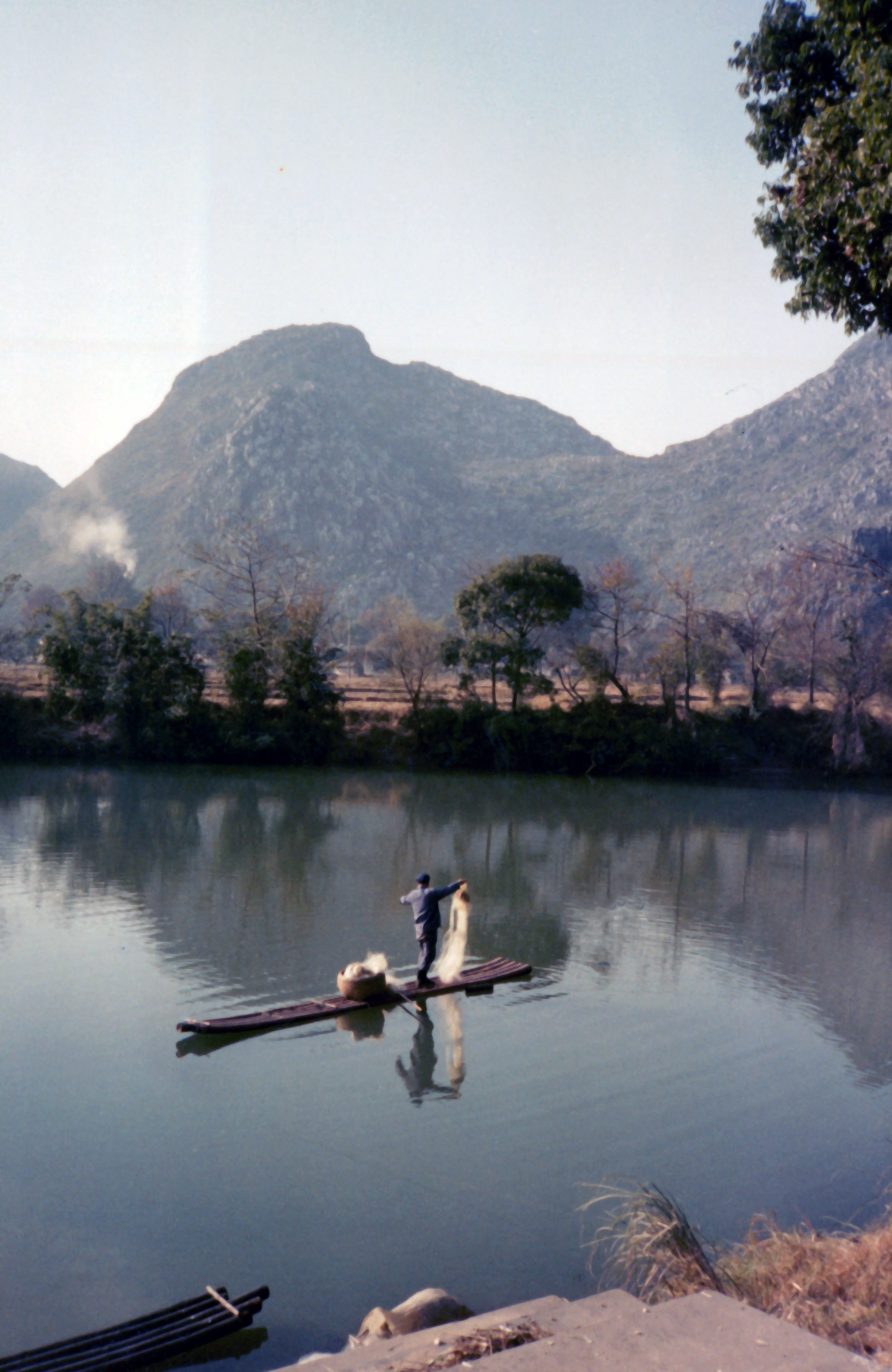
9. A local fisherman near Guilin balancing on his boat (which consisted of four long bamboo logs tied together and was not much different than balancing on a floating large sized diving board) as he strung out his nets. He sculled backwards with an oar in his right hand while feeding out some 200 yards of net from his left hand in a pattern that went back and forth across the river about eight times. Why, you might ask would one need eight separate layers of net. to catch fish coming down the river? Answer, the fish aren’t coming down the river.  The fish live in a cave on the bottom of the river and after the nets are strung out the fisherman makes noise and scares the fish out of the cave and they come up in between the various webs of the net rather than being trapped by swimming into the net end wise. I wished I could have taken a movie of this operation because the grace with which he sculled backward with his right arm, fed the mass of net out neatly with his left hand, while balancing on his diving board all the while was astounding.
Soon after I got back from China, Ruth went over and spent several days with Amy in Taiwan and they then spent close to two weeks traveling to a number of countries and ending up in Singapore on the Washington birthday weekend. Just as they were about to leave their hotel for the airport Amy’s pocketbook with tickets, money, passport, credit cards and camera was stolen and she had to remain behind to obtain replacements when Ruth headed out. Amy is apparently a miracle worker or, at least, has figured out how to function in the Asian culture. She was able to get replacement tickets without paying for them, (it usually takes four months); get the American Embassy to open up on Washington’s birthday and replace her passport (it usually takes three days and cannot start until after the holiday); and she made arrangements through the law firm where she works in Taiwan to get somebody who lives in Singapore to lend her $1000 cash American money. She spent three days dealing with these loose ends and then headed back to Taiwan — her adventure over. I think poor Ruth suffered worse — what with the imperative of her own plane schedule meaning that she had to go to the airport and leave Amy behind within an hour after the theft. Even though Amy was doing very well, Ruth was isolated on a plane for eight hours and she had no way to know that things were working out ok.


Amy here, adding two more photos. First, my father teaching the law school class he discussed in the letter. He is bundled in a winter coat, as Taiwanese classrooms were not generally heated, and is pointing to a blackboard with notes of anti-discrimination remedies. A photo of Sun Yat-sen is hanging high on the wall on the right. The second photo is of my father and me in Guilin, possibly the two dorkiest American tourists ever to visit China.
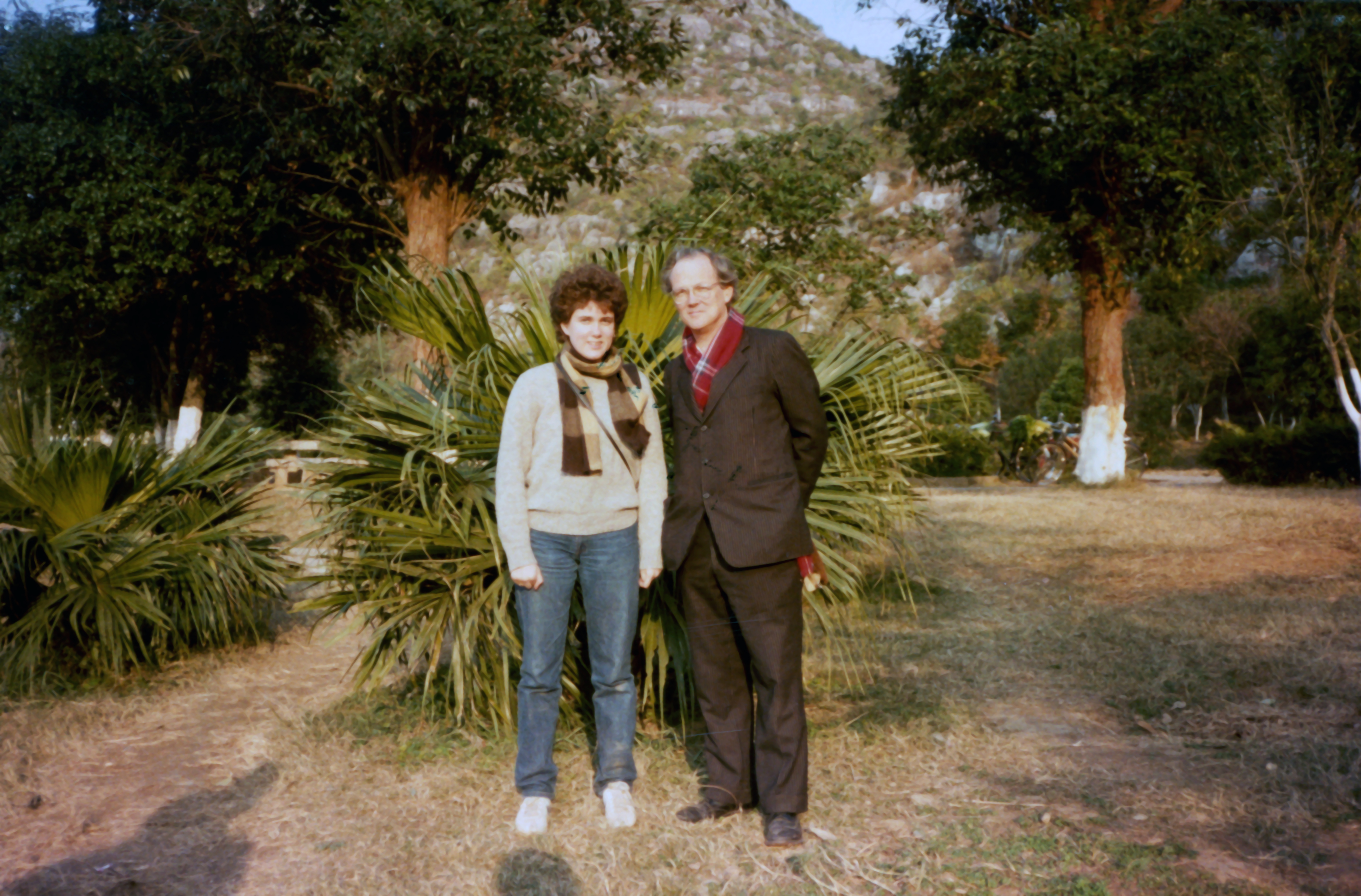
Amy and Peter posing in front of a tree.

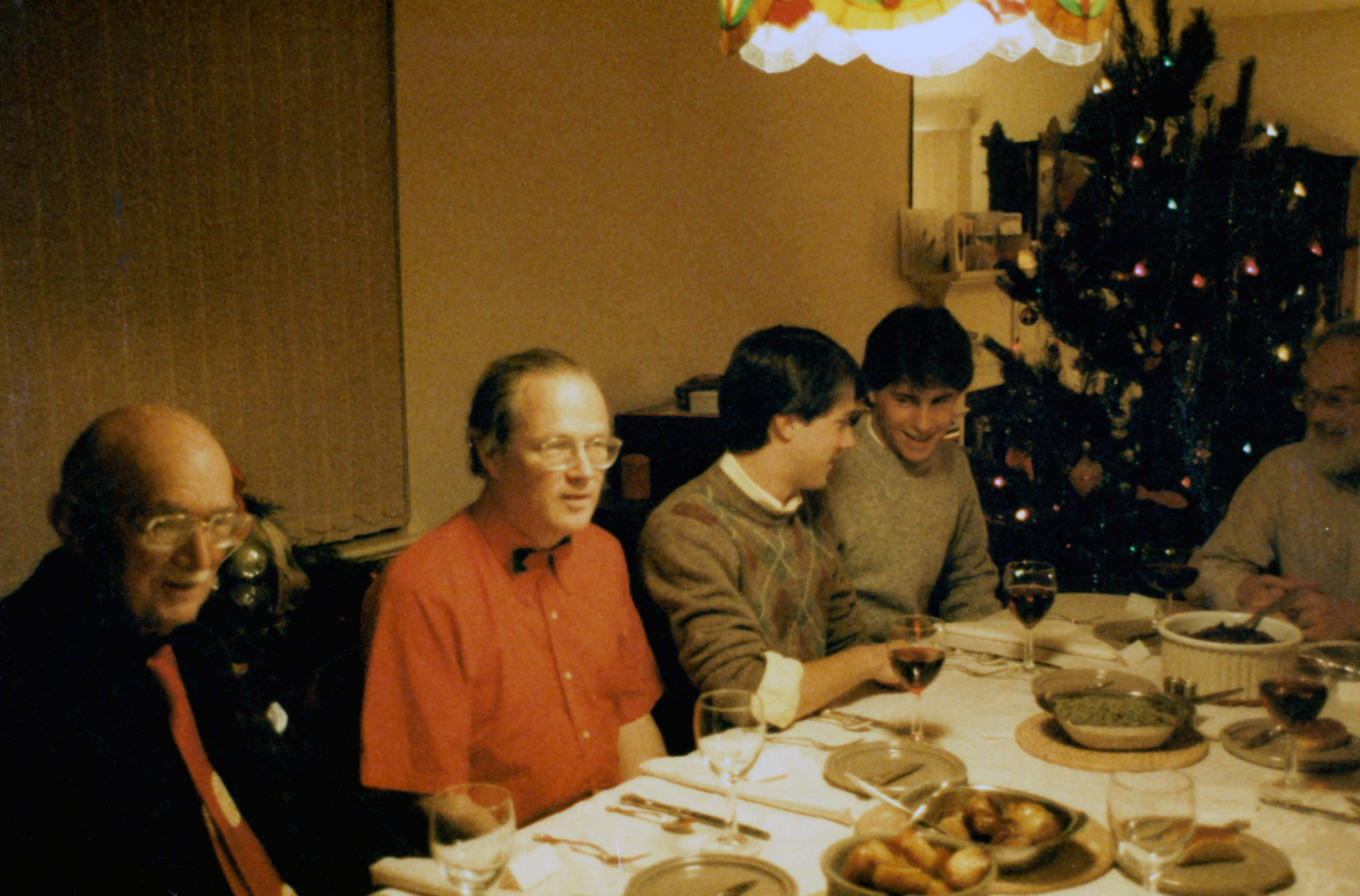
Family Food: Giving thanks for a meal that redefines kinship. (Guest post by Ruth Blau; originally published in 1986.)

[The post below is an article written by Ruth Blau, my mother, and published in The Arlington Journal on November 25, 1986. The photos were not in The Journal; I’ve added them from my archives.]

Holidays are family times. And despite dire warnings from politicians and sociologists, the family is not dead. It is simply, in our fractured times, being redefined.

Take, for example, the family that gathers at my house for Thanksgiving dinner. It includes two or three grown children (some mine, some my husband’s), depending on who is in the country and who can get home from college.

Dinner also includes my mother, in her mid- 80s, and my father, 79. It includes my ex-husband and his elderly father. It includes some dear friends who are regulars, occasionally some new friends, and my husband and me.

Strange, you might think, but it works and we have a wonderful celebration. We also mirror the way American families are changing.

Indeed, the more or less isolated nuclear family – mother, father, a couple of kids – is a 20th-century phenomenon. In earlier times, our own agrarian past, for example, large extended families lived near one another and often functioned as an economic unit. Industrialization and rapid transportation gradually changed all that.

More recently, safe contraception and the high cost of raising children have limited family size in the U.S. – children became more of an economic liability than a valued extra pair of hands on the farm.

Too, the easing of divorce laws in state after state has meant increasing numbers of divided families. As you can see from our example, however, a divided family is not an indicator that no family exists.

It’s just that families are changing, as the following statistics tend to show.

At a time when U.S. population is growing at about one percent per year, the number of divorces per one thousand population is going down from 5.3 in 1981 to 4.9 in 1984, the most recent year for which statistics are available.

Another encouraging statistic: in 1982, according to the 1986 Statistical Abstract of the United States, 48.5 percent of all divorced women remarried.

Further redefining the new family, in 1984 nearly two million couples – not including gay and lesbian couples – lived together without benefit of marriage. This is the famed POSSLQ crowd, Persons of the Opposite Sex Sharing Living Quarters, in the immortal prose of the Census Bureau.

Nearly half of these two million were in the prime child-rearing years of 25 to 44; about half (both men and women) have never married; and just under a third had children younger than 15 in the household.

What do these statistics mean? They mean that we are on our way to creating the new extended family. Or, if you prefer, “official” and “unofficial” families.

In her 1978 book “Families,” sociologist Jane Howard defines an “unofficial” family member as “anyone whose death or suffering would undo me as much as that of a relative.”

I, too, have an official and an unofficial family. While my official family (related by blood or law) gathers for Thanksgiving, my unofficial family comes together once a year for the Passover Seder.

It began about a decade ago, with a small office group, some of whom wished to participate in a Seder but lacked either time or money to go home for the holiday. Now, 10 years later, it is so important to us that we shape our lives around it.

Last spring, for example, my husband and I were to go to Australia (business for him, holiday for me). But, we agreed, we had to be back in time for the Seder – and not just back but enough recovered from jet lag to be able to enjoy the festival.

Our Seder family has a core of eight people who always attend; not all are Jewish. In addition, we include guests, who may come once or may repeat several years. We are never fewer than a dozen and have gone as high as 15.

I particularly enjoyed the year that our group included a young Vietnamese couple who had just become American citizens.

Like many official families, we have our in-jokes. We never, for example, warn guests that they are about to bite into a solid chunk of horse radish, a mind-clearing exercise if ever there was one.

My new extended (“unofficial”) family includes those people to whom people used to be related by marriage. I recall, for example, a Christmas dinner some years ago at Aunt Billie’s. She is not my aunt, but my friend Brenda’s ex-husband’s aunt.

Brenda, remarried and temporarily living in this area, had always been close to Aunt Billie, a widow in her 70s. Brenda’s ex-husband Bob lived on the West Coast, but was coming East with his new wife for the holidays. Brenda, a great organizer, invited us all to Christmas dinner at Aunt Billie’s.

The cast of characters that night looked like this: Brenda and her second husband Tracy; Bob and his new wife; Brenda and Bob’s son Brad; Brenda’s good friends Russell and Terry (who have since split and married others) and their son; myself, my ex-husband and our children (I had not yet remarried).

Presiding over it all was Aunt Billie, the matriarch. It was a memorable meal, not for any fireworks it might have produced, but for the sense of connection to friends, relatives and used-to-be relatives.

This brings me back to holiday time at my house, where three generations from at least five former and present nuclear families gather in harmony as one family.

Jeff, my husband’s middle son from his first marriage, and my ex-husband Peter – who is a permanent fixture at our holiday celebrations – have become good friends.

And when Amy and Bruce (my children from my marriage to Peter) are in town, Jeff is included when they go out to dinner or to the movies with their dad. These young people – all in their 20s – seem quite content with their multi-parent extended family.

Each year, as we sit down to break bread, we raise our glasses to give thanks that we are all again gathered to celebrate the harvest. And each year we understand that we are celebrating something else: family, regardless of how it is defined.

Trans-Siberian Railway 1985: Ruth and Amy’s Big Adventure

[For Ken Shiotani, so some of the photos will be illustrative of text and some will be random trains. Ken generously helped with the alt text for many of the train photos.]

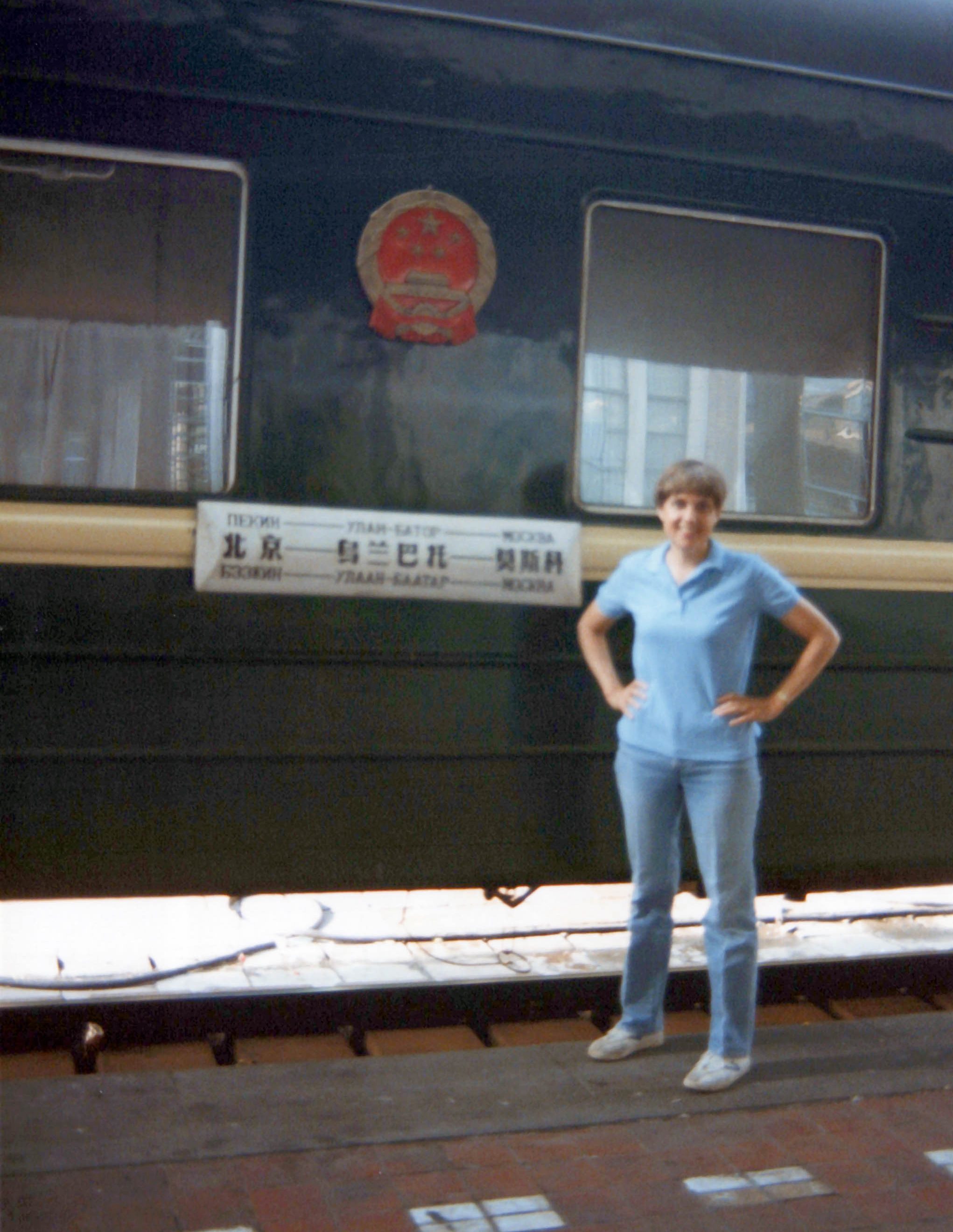
During the summer of 1985, my mother, Ruth Blau, and I took the Trans-Siberian Railway from Beijing to Moscow. Here we are getting ready to board in Beijing.  (I’m adding alt text to the photos. So I don’t have to repeat:  Mom and I are both white women with short brown hair. In July, 1985, Mom is 48 and I’m 24.) 

Ruth (white woman; blue t-shirt; jeans; short brown hair) standing in front of a train car with writing in Chinese, Russian and another language I don't know.
Amy (white woman; white short-sleeve shirt; jeans; short brown hair) standing in front of a train car with writing in Chinese, Russian and another language I don't know.

I had just spent two years (and three out of the last four) in Taipei, Taiwan, first as a gap year (which we called “taking a year off” or “not being ready to face your senior year”) in 1981-82, during which I took odd jobs teaching English, getting my head around the idea of my future, and eating extraordinary things from food carts, night markets, and the occasional restaurant. I came back to Taiwan after graduating in 1983, first on a one-year fellowship to study legal history at National Taiwan University, and then stayed on for another year of teaching, translating, saving for law school, and eating. In 1985, I was heading back to start law school at Yale, but took the long way from Taipei to New Haven through Hong Kong, Nanjing, Beijing, Ulan Batur, Irkutsk, Moscow (for about 2 hours, but that’s another story), Kyiv (which we called Kiev), St. Petersburg (which we called Leningrad), Helsinki, London, Edinburgh (for a friend’s wedding), and Arlington.

I met my mother in Hong Kong, traveled to Nanjing, somewhere along the way climbed Tai Shan at four in the morning (yet another story), and ended up in Beijing where we boarded the Trans-Siberian Railway for the trip to Moscow. I was at that point fluent in conversational Mandarin, and my mother had brushed up on her master’s-degree-level Russian from 1960.

These are mostly my mother’s photos, as I was still in the phase of my photography habit known as “I don’t have the money to develop a ton of 36-frame rolls” so I took photos pretty sparingly.  Luckily my mother had a bit more money to devote to the photo counter at Drug Fair (the CVS of early 1980s suburban DC).  In addition, both my mother’s and my photos sat in boxes in our respective attics/basements for the past 35 years, so the organization is not great.  That is, I may call something “heading out of the station in Beijing” that is really “pulling through some other random station.”  But you’ll get the gist. 

First, the route, from the modern-day TransSiberian website (haha as opposed to what? the 1985 TransSiberian website?).

Couple of photos in the station in Beijing and heading out.

Crowd of mostly Chinese people with luggage in front of an ornate train station.

Train cars seen from outside heading into a tunnel. Train cars rounding a bend photographed from the window of the fifth or sixth car back. Scenery is open green plains; no trees. The dining car. We were, if I recall correctly, told that we were lucky to be riding from Beijing to Moscow rather than the reverse direction, as we had Chinese chefs most of the way and therefore far better fare than was offered by the Soviet chefs.  After spending a week in the USSR – where the five year plan appeared to have focused on cucumbers – I’m guessing that was accurate.

Train dining car with two rows of tables: 4-tops on the left and 2-tops on the right. Occupied by diners of various genders and races. In the foreground, Amy sits considering the menu and looking to the right of the frame. Also note that while my hair is grayer, my fashion choices and coffee addiction have not changed in almost 40 years.

Amy in shorts and sweater getting coffee from the samovar.Although both of us are introverts, my mother and I somehow managed to occupy this space together for five days.

Train sleeping compartment with two cot-sized beds and about 3 feet between; at the end by the window a small table with two multi-colored metal mugs with lids.

Amy sitting on one of the sleeping compartment beds reading a paperback book. Amy standing at the door of the sleeping compartment looking into the aisle. Another passenger (Asian man) stands at a window farther down looking out.  Not far outside Beijing we crossed a portion of the Great Wall — not the well maintained, touristy part, but a part that gives a sense of what the builders were trying to do (and how silly, for example, a modern-day wall might be).

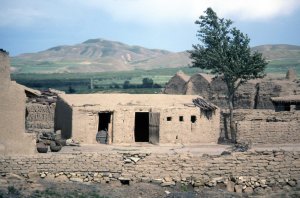
Portions of the Great Wall where it runs up and down steep hills. Portions of the Great Wall where it runs up and down even steeper hills. Two men in work clothes working on a portion of the top of the Great Wall that is entirely rubble.  The crenelated edge is visible in the background. Also during the first day out of Beijing.Adobe or mud houses with no windows or doors.  Unclear whether occupied.

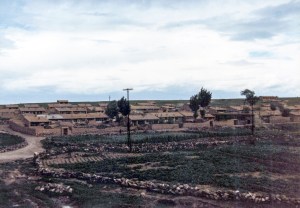
Village of low adobe-colored houses.  Somewhere between Beijing and Mongolia.

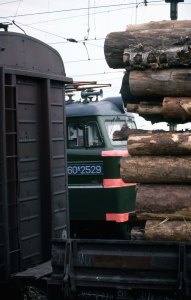
Electric locomotive powered by overhead wires; sitting in a station, photographed from just ahead of the engine.
Four open flatcars of logs.

Train engine viewed through a break in a closer train, the visible part of the closer train includes a closed freight car to the left and a bit of an open flatcar with logs on the right.

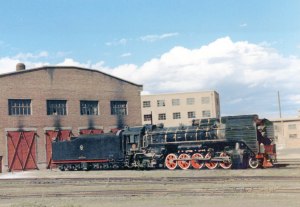
Steam freight locomotive (Chinese QJ class) with one car next to a train barn.  Mongolia:

Five camels photographed from the train running parallel to the train. Person on horseback photographed from the train  with a herd of horses.

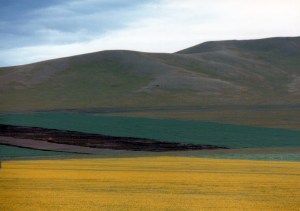
Scenery photographed from the train consisting of brown rolling hills and, in the foreground, a field of yellow flowers. Yurts! For real! 

Two white yurts with multi-colored doors photographed from the train; ordinary buildings in the background. Though both Mongolia and the USSR were still communist in 1985, small-scale, babushka-based capitalism thrived along the railway.

Older white woman in blue flowered shirt and white head scarf (babushka) sitting in front of baskets of strawberries she is selling.  Three older white women in head scarves (babushkas) and two older white men -- one in a flat cap, the other in a fedora -- sitting in front of baskets of strawberries and other produce they are selling.

Four older white women in head scarves (babushkas) sitting and standing in front of baskets of strawberries and other produce they are selling.

Three white women in head scarves near the tracks.  Two are between sets of tracks pushing baby carriages full of produce to sell; the other sits to the side of the further track. In the background, a young white girl in a red shirt and checked skirt.  In the background, a brick building with wooden doors and an old car. We would be allowed off the train very briefly at stops, though the stations were tightly patrolled. Two blue train cars in a station with a variety of people milling around near the doors. Ornate orange and white train station building viewed from our train with a variety of people sitting and standing on the platform. Although this was taken in the Beijing station, it is relevant to the end of our journey.Photo taken from outside our train car of Ruth leaning out the window of our compartment. As we got closer to Moscow, we were told to close the window in our compartment as the train had switched to a diesel engine.  I managed to convince my mother that this was no big deal and that we should keep the windows open — it was, after all, July.  The result – of which I don’t appear to have a photo – was that we arrived in Moscow covered in diesel soot. 

Our arrival in Moscow marked the end of the Trans-Siberian part of the trip, but not the adventure. We were met by our Intourist guide who told us that “Moscow is closed,” and that she’d be transporting us to the airport for an immediate flight to Kyiv, the next stop on the trip, but one that was supposed to come after a couple of days touring Moscow.  Turned out there was some sort of Communist youth festival in Moscow — the 12th World Festival of Youth and Students to be precise — and Intourist did not want rando Americans wandering around interacting with Youth and Students. So after all that, the entirety of my experience of Moscow is a cab ride from the train station to the airport. We continued our trip with an extended stay in Kyiv — which was cool, as my grandmother was born there — and then Leningrad. We took another train from Leningrad to Helsinki, but sadly I don’t seem to have photos.  My memory is that that train ride was VERY tightly controlled, so it’s possible photography was not permitted? 

It was truly the trip of a lifetime, and I’ll be forever grateful to my mom for making it happen and putting up with me in a small compartment for five days! 

Extra bonus train photos for Ken – from the Beijing to Nanjing trip:

Two Chinese women pushing a vegetable cart with two freight cars in the background.

Steam freight locomotive (Chinese QJ class) in a train yard.

Chinese men in white uniforms and hats (one white one blue) loading sacks onto a train.

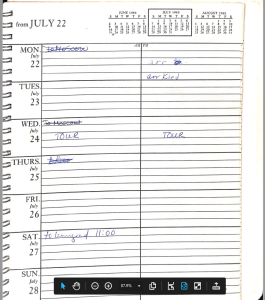
Update: In the process of scanning & tossing old documents, I came across my calendar for 1985,  Here is the page for the week of July 22-28, 1985, reflecting the quick change in our itinerary.

Page from a date book from July 22 to 28, 1985. July 22 has "to Moscow" crossed out, with "arr Kiev" written in later in the day. Wednesday July 24 also has "to Moscow" crossed out, and the word "tour" in the morning and evening. Saturday July 27 has "to Leningrad 11:00"

Estrangement

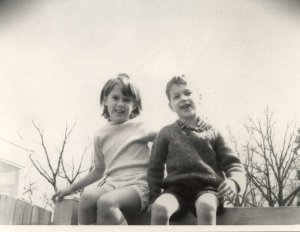
Image: black and white photo of my brother and me (two white kids) ages 6 and 8. We’re sitting on a fence. I’m on the left, short brown hair, t-shirt and shorts. He’s on the right, short lighter hair, sweater and shorts. My arm is around his shoulders.

Now that we’re here, it’s obvious we were always going to be here.

I come from a family of cutter-offers. Most famously, my great uncles — my grandmother’s brothers — Uncle Bubble and Uncle Nippy. I also come from a family in which grown men are called “Nippy” and “Bubble.” At least on my father’s side. On my mother’s side, my great uncles were Max, Ben, Jerry, Bafe, and Joseph.

The Bubble/Nippy split was legendary: they had summer homes across the street from each other and didn’t speak to each other for the last several decades of Bubble’s life. Since they were born in the 1910s and died in 1970 and 1984, I can’t ask them why. Indeed, due to further cutting off — Bubble would not speak to my father — I likely would not have been successful had I tried to ask.

While Nippy and Bubble provided the template cut-off, my father’s family had other variations. My great-grandfather did not divorce his wife, but installed her in a separate house in the Maine coastal village my family invaded each summer. Later, Bubble’s children would cut off from my father and even later — each for a different reason — from my two uncles. Nippy’s three sons had overlapping and complex cut-offs that I never really understood.

There were also less absolute distancings. When my grandmother married my grandfather — a well-pedigreed fuck-up — they moved from the eastern US to the middle of nowhere Wyoming, so that my grandfather could run a dude ranch, one of his more colorful failures. He left after my father was born, came back, and left again for good when my uncle was born. Not long after, he volunteered — at the age of 30-something — for the Army and managed to get himself sent to Europe toward the end of WWII. Many brave adventures ensued, none of which involved being a father to my father and uncle. Later, after my grandmother remarried, my father — considered the problem child in the new family constellation — was sent to boarding school in the same city in which the family — mother, step-father, brother, half-brother — lived.

So I come from a long paternal line of cutter-offers and distancers. My father and I talked about this. A lot. Constantly. Ad nauseam. After my mother started heading toward divorce in the early 1970s, Dad started getting therapy based on Family Systems Theory. This theory helps you figure yourself out by the patterns of behavior — specifically closeness and distance — in your immediate and extended family. As part of his therapy — whether self-directed self-discovery, or assigned homework I was never clear — he sought out and (re)established connections to dozens of random relatives near and far. We found, among his papers, reams of Family Systems charts from napkin scribbles to wall-size pieces of taped-together butcher paper. Having grabbed ahold of Family Systems Theory like a lifeline — and having been sent away from his family as a young teen — my father viewed cutting off as the ultimate failing. He worked his ass off to build bridges, among others to Uncle Bubble’s family, who would not only not talk to him but would also, as we discovered in his papers, return his letters unopened, having written in thick magic marker “RETURN: REFUSED.”

Not all of his family outreach failed. He built a relationship with the father who had abandoned the family in his childhood, and with whom he had had only sporadic contact for the ensuing 30 years. Granddaddy ultimately moved in with my father for the last 24 years of his life — a very bickery, Odd Couple sort of sitcom. It is my impression that Dad’s relationships with his brother and half-brother also improved over this period. They had never been estranged, but I think he — and they — made an effort to bridge some pretty considerable gaps.

In “Story of Your Life” — the short story on which the movie “Arrival” was based — the hero, a linguistics professor (!!!), is tasked with learning and documenting the language of a species of alien — spaceships orbiting the earth and mirror-like devices permitting communication. The linguist figures out that their written language is not linear — as is most human writing — but rather requires the writer to have the entire sentence composed with the first stroke. She uses the term “semagram” to mean, roughly, “word,” and observes:

Comparing that initial stroke with the completed sentence, I realized that the stroke participated in several different clauses of the message. … Yet this stroke was a single continuous line, and it was the first one that [the alien] wrote. That meant the [alien] had to know how the entire sentence would be laid out before it could write the very first stroke. The other strokes in the sentence also traversed several clauses, making them so interconnected that none could be removed without redesigning the entire sentence. The [aliens] didn’t write a sentence one semagram at a time; they built it out of strokes irrespective of individual semagrams.

As she learns this written language, she finds it changing the way she thinks. “As I grew more fluent, semagraphic designs would appear fully formed, articulating even complex ideas all at once.” She realizes that, for the aliens, events are not sequential and causal, but coexisting and teleological. After she learns the alien’s written language, she finds that

new memories fell into place like gigantic blocks, each one measuring years in duration, and though they didn’t arrive in order or land contiguously, they soon composed a period of five decades. It is the period during which I know [the alien’s language] well enough to think in it, starting during my interviews with [the aliens], and ending with my death. … [O]ccasionally I have glimpses when [the alien language] truly reigns, and I experience past and future all at once. … I perceive — during those glimpses — that entire epoch as a simultaneity.

My brother and I got along well until late 2017. To that point, we had weathered our parents’ divorce and my father’s death, supporting each other, and sharing parent-based in-jokes, gossip about the larger family, remedies for nasal allergies, and adoration of and admiration for his kids, my niece and nephew. I always thought one of the reasons we got on so well was the utter lack of sibling rivalry which was based, in turn, on how different we were. Though we are relatively close in age — I’m 21 months older — we are different genders, which I think takes away a quick 80-90% of any sort of rivalry. We are different in most other respects, too: he excelled in science; I enjoyed languages. He was popular and outgoing; I was introverted and nerdy. I liked traveling and spent much of my late teens and early 20s living in Taiwan and traveling in Asia; he spent those years in Philadelphia and Delaware. I got a linguistics degree and then went to law school; he got a couple of chemical engineering degrees (B.S.; Ph.D.) and then went to business school. There was nothing we really competed in, which allowed us to support each other effortlessly in our respective worlds.

We are also politically opposite. Though we were both raised by the same folk-music-loving, Adlai-Stevenson-voting liberals, he started heading rightward in college, and ended up a Trump supporter by 2016. I know this only secondhand as we ceased being able to talk about politics mid-Bush-43, when he suggested lack of support for the Iraq war made one unpatriotic. His political views make me sad, but we ended up with an unspoken understanding that we would just stay off the topic, and trundled on.

Because of my father’s preoccupation with family systems — which started when we were approximately 12 and 10 — we heard a lot about our extended family and a lot about cutting off. We listened and watched and discussed the siblings and cousins who cut off, as well as those who sued each other over use of the common tennis courts, yelled at other people’s kids to stay off their docks, drove over each other’s lawns, and sent angry letters about microscopic differences in the shared use of a gorgeous piece of the Maine coast that at least I never had the patience to understand. And of course we knew The Legend of Bubble and Nippy — the touchstone/template/ur-cutoff.

So well did we know it, and so much a template was it, that when Bruce wrote me, just before our aunt’s funeral in December, 2017, “Not sure if we had our Nippy/Bubble moment or not,” I knew what he was talking about, and he knew I’d know. Then, 10 months later, there it was: he decided to “cut off all contact.”

I’m intentionally omitting the reason he does not want to talk to me. It would require a separate — likely tedious and long-winded — discussion, and honestly, given our family teleology, I’m not sure it matters. I will say that it was recursive or self-referential: a cut-off about a cut-off.

One of my father’s Family Systems mantras was that it takes two sides to cut-off, and that he refused to participate. I’ve expressed the same to my brother — that I do not want to cut-off; that we can resume communication at any time; that I love him — but as the returned letters showed my father, one person can be pretty damned effective at cutting off.

So I sit here, stunned and puzzled that this is where we are, yet feeling like we were always going to be here, the sentence written in our Family System before we were born. In the middle of the story, watching it sequentially, I would never have imagined the events that would get us here. If you had asked either of us in, say, 1985, I think we’d have laughed heartily at the idea that we would ever tread the ridiculous and over-analyzed path of our great uncles.

In the story, the linguist struggles with the meaning of free will in a thought system that understands history as coexisting and teleological rather than sequential and causal. Where, too, is the free will in a Family System? I’ve spent over 45 years thinking about our Family System, certain that I had the free will to escape the patterns. Now that we’re here, though, it feels like the entire sentence — one long run-on sentence from 1962 to 2018, one giant semagram — was always written this way.

***

Coda: This post focuses on the cut-offs. Many family members are moving away from some of the more destructive patterns, and I treasure my relationships with my aunts, uncles, and cousins.


You want a safe space? How about Yale College, 1924.

Thomas Chatterton Williams joins a long line of whiners complaining that taking basic steps to make our public and academic life more inclusive is Just. Too. Hard.  In his review, entitled “Does Our Cultural Obsession with Safety Spell the Downfall of Democracy,” he argues that it is “fraught” for marginalized people to object to the appropriation of their language or to the use of their bodies as metaphors.  He describes an allegedly new generation of college students who “are ‘obsessed with safety,’ which they define to include expansive notions of ‘emotional safety.’”  He asserts that this “safetyism culture” started when this generation “began arriving on college campuses in 2013.”  These students apparently have the audacity to want respect, to want a classroom in which their existence, freedom, and standing as citizens is not open for debate.  Oh the drama!

You want safe?  I’ll show you safe.  I’ll show you a truly fucking safe college experience — 89 years before 2013.

When it was time for my white, Christian, Southern,* formerly-wealthy-but-still-pretty-fucking-privileged, two-generations-away-from-enslaving-people grandfather to go to college, he found a very, very safe space.** In 1924 — according to a story my father often told*** — Yale College accepted the entire graduating class from Hotchkiss, my grandfather’s prep school.  Talk about safety schools!

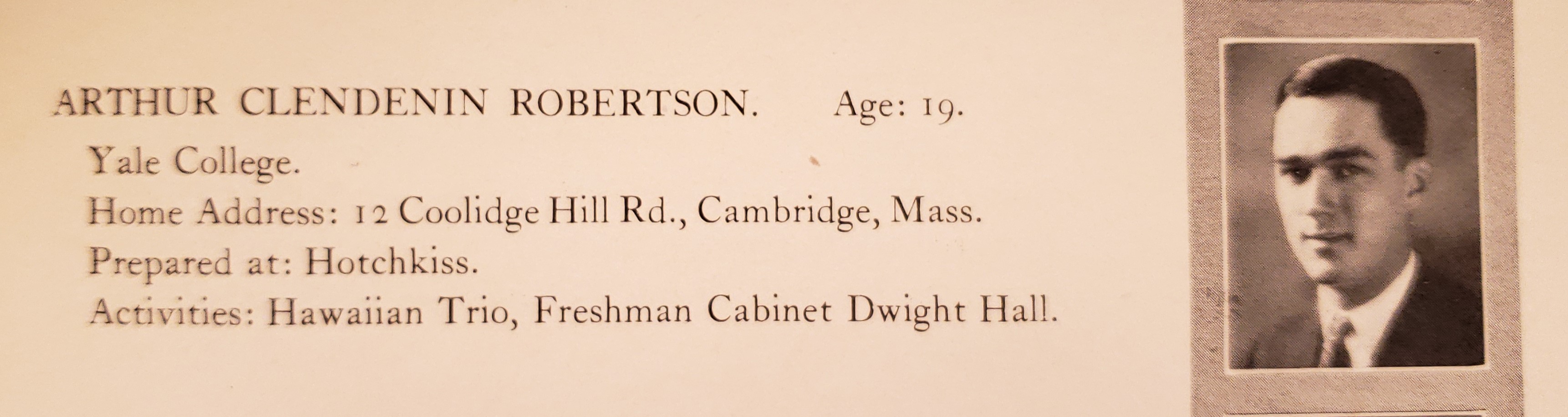
Image: Yearbook photo of a white man with brown hair in a suit and tie. Text reads Arthur Clendenin Robertson. Age 19. Yale College. Home address: 12 Coolidge Hill Rd., Cambridge, Mass. Prepared at: Hotchkiss. Activities: Hawaiian Trio, Freshman Cabinet Dwight Hall.  What Granddaddy found when he got to Yale must have felt very safe, too. His entering class of 823 students had (::checks calculator::) zero women.  It also had:

  • one (1) Black student;
  • by my very unscientific count (*cough* lastnames *cough*) approximately 20 Jewish students;
  • one Armenian-American (again, per my unscientific analysis of the guy’s last name);
  • one Greek-American (same), and
  • one (likely) Syrian-American (same).

The “Yale Freshman Yearbook” for the Class of 1928 claimed that the class included six “foreign” students, which turned out to be six white guys who happened to be living outside the country when they were accepted at Yale, for example, Willard Tisdel Hodgsdon from Guatemala, and George Robert Carter, Jr. from Hawaii (remember the year!).  And of course a token Canadian — so diverse!  There were no students with names that appeared to be even remotely Asian (Chinese, Japanese, Korean, Indonesian, Malaysian, Vietnamese, etc.).

If the Yale class of 1928 was not safe enough for Granddaddy, he could always retreat to his fraternity or, if that was still too diverse, to his “secret society,”  Skull and Bones.  There, I said it.  A bunch of white guys with weird rituals whose childish need for safety, sorry secrecy, was so profound that my father warned us NEVER, EVER to so much as say the words “skull and bones” in front of my grandfather.  Guess this made our family an “emotionally safe space” for Granddaddy.

This cocoon of unisex, monoracial safety was the default setting for the American university for most of our history.  These white dudes did not have to encounter classmates with different gender, racial, cultural, or linguistic experiences.  They did not have to worry that speakers invited to campus would call their very existence a “disease” or “a disorder comparable to sociopathy” or explain that they were genetically inferior to individuals of a different race.

Sometime between 1924 and 2013, colleges began to integrate.  My guess is that, for much of that time, female and minority students were (and were expected to be) sufficiently grateful just to attend college in the first place that they did not dare or did not know how to demand a space that respected their existence.  By the time I started college in 1978, we were griping about the white male canon and marching for divestment from apartheid.  Even then, though, I don’t think we gave much thought to how welcoming we were to students of different backgrounds.

But let’s examine the whole “safety” thing from a broader perspective. White people’s need to feel safe has given us lynchings, the modern police state, and BBQ Becky.  A white woman felt emotionally unsafe in the presence of Emmett Till.**** His penalty was not cancellation of his speaking tour or criticism in the college newspaper.  It was violent death at the hands of a white mob.

Do students from marginalized backgrounds demanding respect at university “spell the downfall of democracy.”  Oh hell no.  They will help us build a democracy that is truly democratic. But I’ll edit Williams’s question and answer in the  affirmative. “Has White People’s Cultural Obsession with Safety Almost Spelled the Downfall of Democracy?”  A resounding yes.

****

* I’m not really sure how he ended up with a Cambridge, MA address.  I think I know the story, but it’s not really important.  He was raised in Chattanooga, Tennessee, in a family with deep roots in the south.

** I hate telling this story.  Granddaddy is not who I am.  Within his generation, the family fortune was lost in the Depression and he was a very deeply flawed, highly entertaining failure.  My father, also a privileged WASP, married my mother, the daughter of a middle-class Jewish family, and my public school upbringing in the DC suburbs was a far cry from Hotchkiss.  But who am I really fooling?  I went to a small liberal arts college that my aunt and uncle had also attended, and then to Yale Law School, which my father had attended.  My path, too, was plowed by white affirmative action.

*** My father often told this story because he lectured widely on employment discrimination and specifically affirmative action.  He would explain “you want affirmative action?  Let me tell you about Yale’s admissions policies in 1924.”

**** Edited.  I originally wrote, “Emmett Till made a white woman feel emotionally unsafe.”  As Anita Cameron pointed out, Mr. Till himself did nothing.  His accuser ultimately confessed that “she falsely testified he made physical and verbal threats.”

You know who I feel bad for? Alger Hiss.

Alger Fucking Hiss.  Egghead State Department bureaucrat thrown in jail for his fairly tenuous Soviet contacts.*  Also Dalton Trumbo, Ring Lardner, Lester Cole and others blacklisted in Hollywood for Communist “sympathies.”  Pete Seeger — my musical hero — who was a member of the Communist Party and went to jail for refusing to cooperate with the House Un-American Activities Committee.

Image: middle aged white man in a suit jacket with a banjo case over his shoulder.

Pete Seeger arrives at court for sentencing with his banjo over his shoulder, April 4, 1961. Source: New York World-Telegram and the Sun Newspaper Photograph Collection, Library of Congress Prints and Photographs Division: http://www.loc.gov/pictures/item/2002709318/

Every schmuck who was called before HUAC and stood their ground or didn’t.  Every government employee — like my Grandpa Clarence Blau —  whose loyalty was questioned for the job they held, a newspaper they subscribed to, a meeting they attended, or a petition they signed.  Every American whose FBI file Herbert Hoover created and padded.  Everyone who was ever on the receiving end Joseph McCarthy’s or Richard Nixon’s bloviating.

We were terrified of people who read newspapers or sang songs or attended meetings full of other newspaper-readers or song-singers.  We made people’s lives miserable and ruined careers based on false and flimsy allegations.

Hell, I’m sort of sorry for the Rosenbergs, even if they were guilty.

Why do I feel bad for the entire spectrum — from pale pink to bright red, from folk singer to spies?  Because none — not one — of those individuals stood on stage before a worldwide audience and handed over our country to the Russians.

*****

*According to my Granddaddy Clen, Hiss was framed by Whittiker Chambers.  Granddaddy probably had a rip-roaring case of OCD, undiagnosed.  He spent much of his adult life gathering files and articles, creating maps and timelines, and filling stacks of 3×5 cards about this conspiracy.  This will mean something to approximately 16 living humans.

Remembering my Dad on what would have been his 80th birthday

Damn, I miss him.  He would have been a glorious 80-year-old.  This from our travels in China in 1983.

Image:  White man in suit reading wall posters in Chinese.

Kitchen technology

In yesterday’s installment of “adventures in remodeling,” we packed up our kitchen.  For the next few weeks, we’ll be camping out in the living room, cooking with a single burner and a microwave.  In other words, the same way we’ve been cooking for the past 20 years, but in the living room.

Just kidding.

Sort of.

This process required us to pack up everything except a small collection of kitchen equipment that we’ll use in our living-room camp-out.  I thought it was telling that our first two must-have choices were a martini glass (Tim) and a colander for pasta (me).  What we’d want on a desert island.

As I packed up the various drawers of random kitchen equipment, I came across a couple of interesting items that I think I tossed in the boxes coming from my Dad’s house in 1997.  I find them funny for a variety of reasons, not the least of which is: my father essentially didn’t cook.  He knew how to make his own standard breakfast (two fried eggs over easy; burned* & buttered toast); a couple of standard dinners (hamburgers;** steak; roast chicken****); and vacation food (lobster*****).  I don’t think he was unable to cook; he just liked those things and didn’t see any reason to expand his food horizons.  When he and I traveled to China in 1981, he survived largely on packaged peanuts.

Anyway, here are some of the tools I inherited from Dad.  First, a snicker for your inner 11-year-old:

Image: scissors-like tool with two scoops at the end, in package that reads "Swedish & Cocktail Meat Baller."

If the meat baller weren’t enough, he also had a melon-baller, though from Spain or Mexico, so we miss the English-language snicker.  I love  “¡¡si!!” on the packaging.  Whatever problem this tool is solving, we are clearly intended to be very happy that it has solved it.
Image:  tool with very small scoop at the end; packaging is in Spanish.
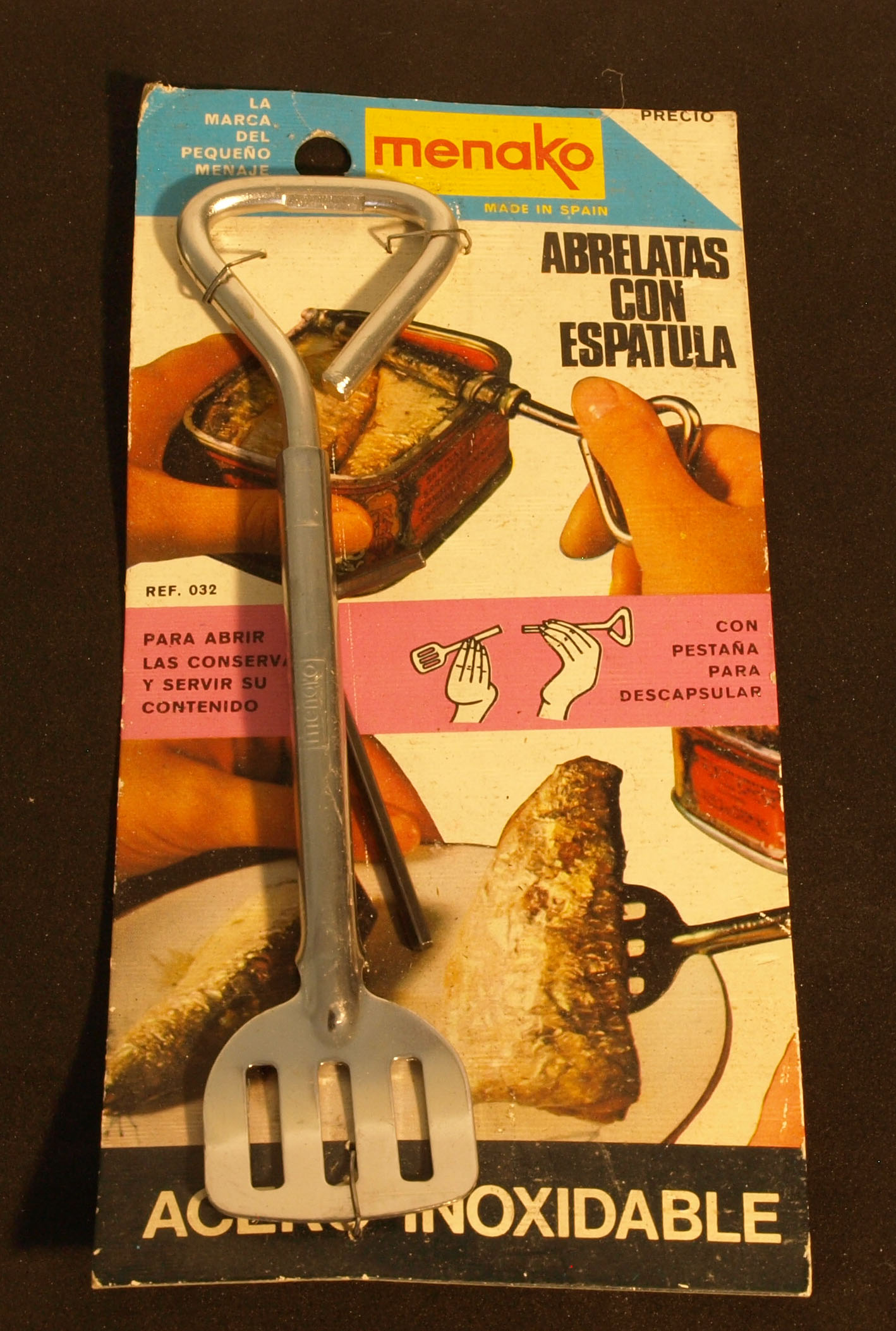
I loved the idea of a culture so into eating sardines that it would develop a single tool for opening the sardine can and eating the contents.
Image:  Tool still in packaging that permits opening a sardine can and eating the sardines using the single tool.
What is this and why did Dad have one?
Image:  unexplained tool with hook at the end.
What is this and why did Dad have two of them?
Imate:  Two identical tools consisting of a handle and an approximately two-inch by four-inch set of parallel blades.
Prehistoric food processor:
Image:  small cylindrical grating blade in a plastic housing with a turn handle.
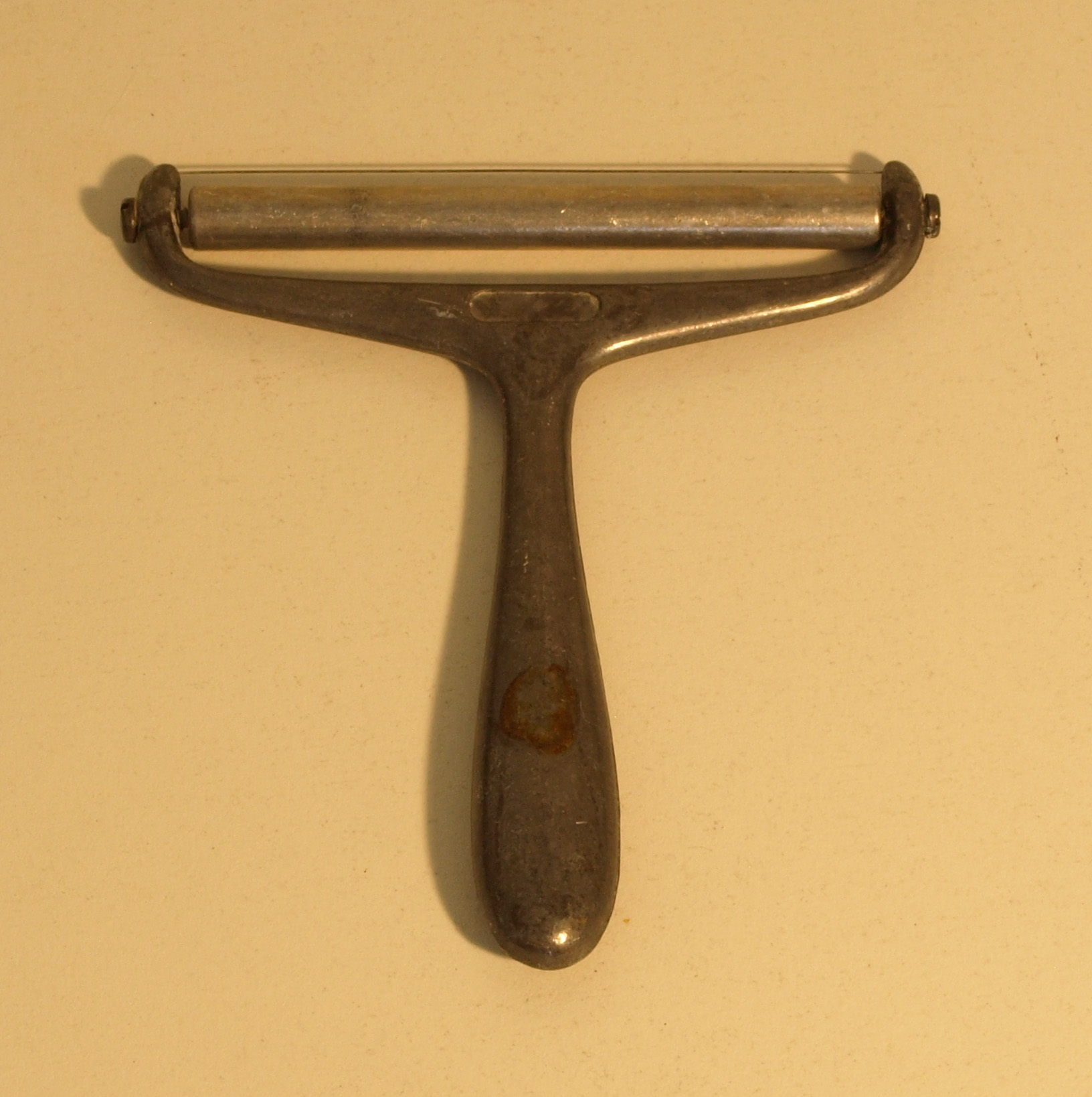
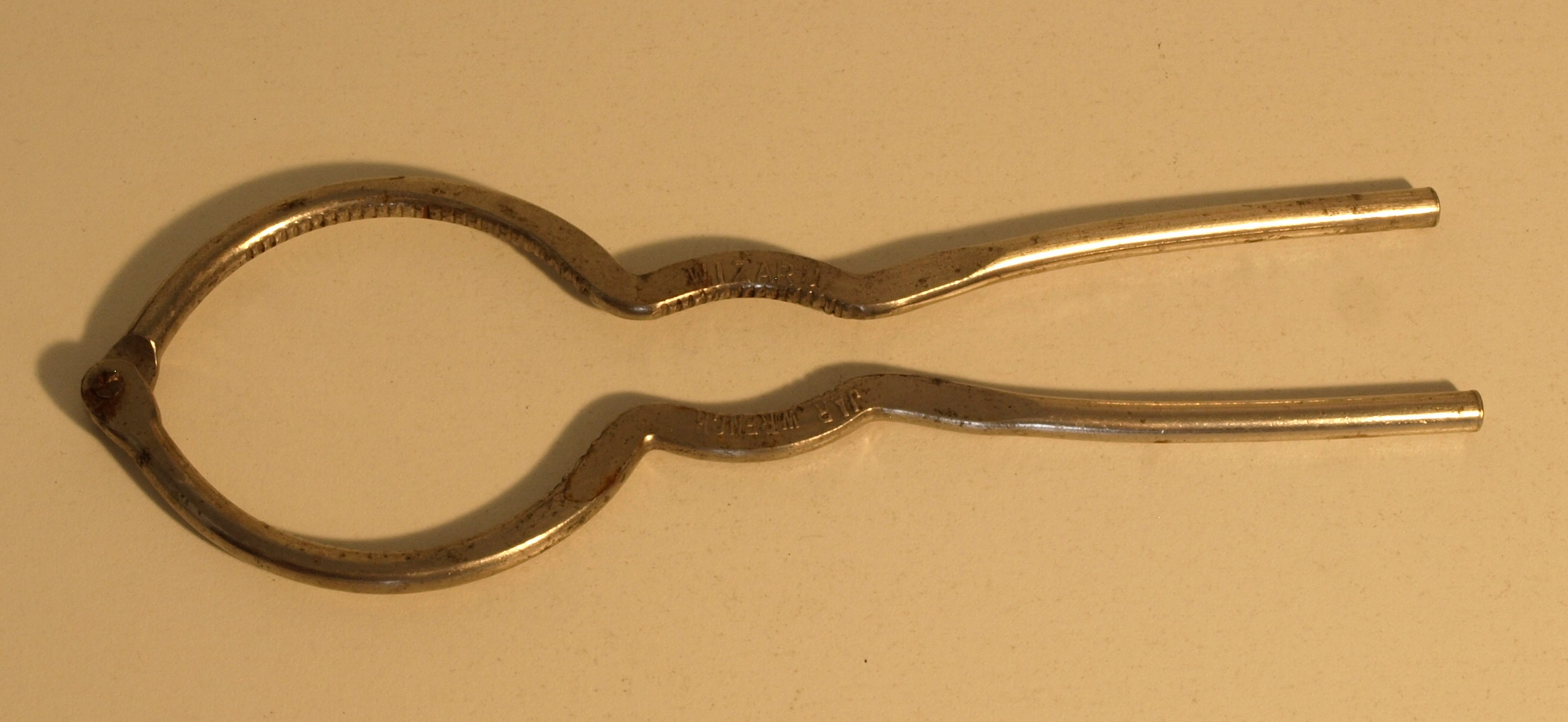
And finally, just a couple of cool, old, weathered kitchen tools:
Image: old cheese parer with handle and single blade.
Image: weathered bottle opener.
Image:  Old style jar opener.
Detail:
Image:  close up of old style jar opener showing the words  "jar wrench wizard."
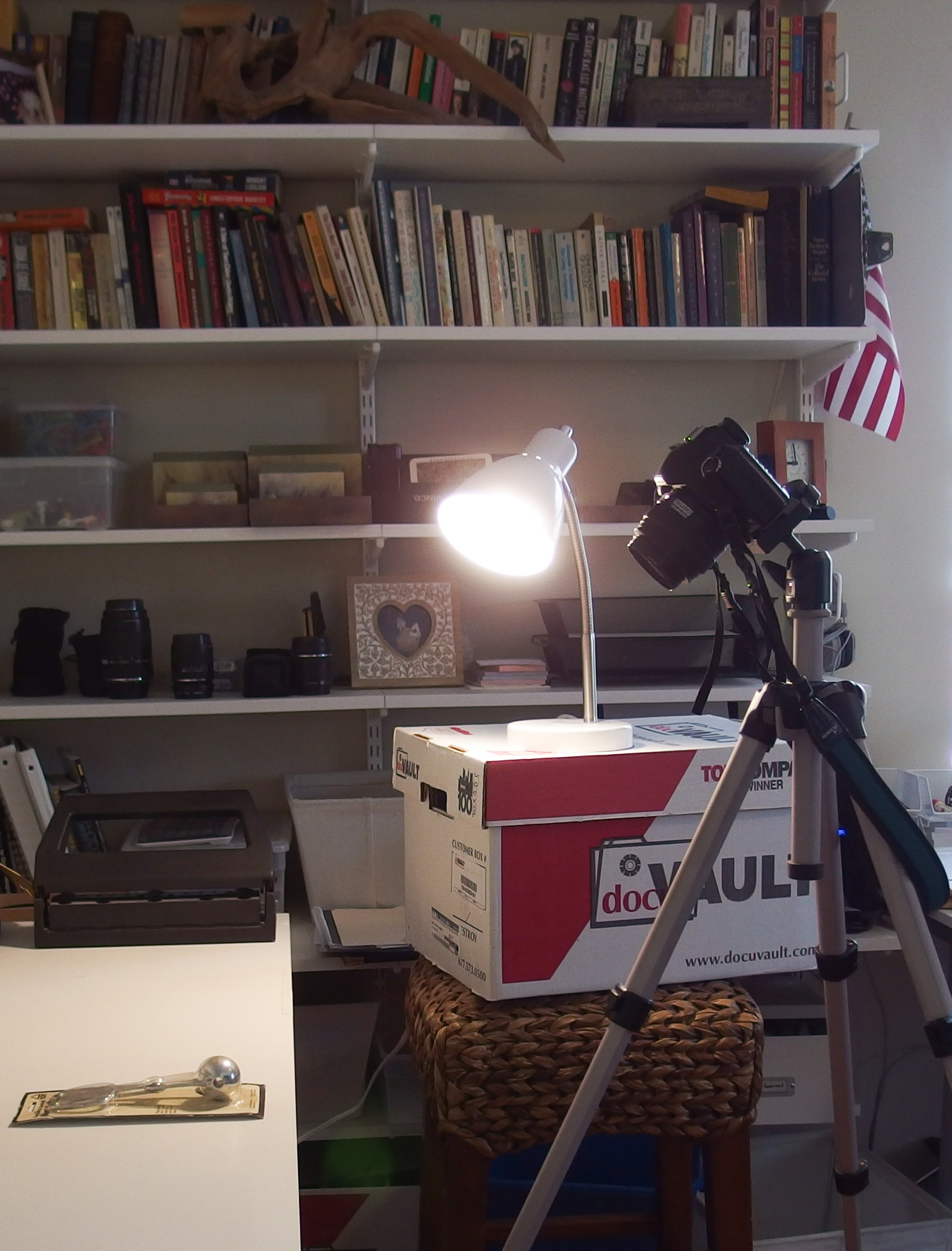
In conclusion, show of hands, how many people think I should (1) learn how to use the white balance****** features of my camera and software; and (2) get some real lighting equipment:
Image:  Camera set up to photograph objects on a table.  Lighting comes from a desk lamp on top of a cardboard box on top of a stool.

***********

* Intentionally.  And when he ordered bacon in a restaurant, he would go to great pains to insist that it be burned as well.

** Classic divorced dad moment:  he wanted to make hamburgers for us; little shits that we were, we*** wanted McDonalds.  Dad: “OK, then, if you want a McDonalds hamburger, I’d be happy to step on your burger before I serve it to you.”

*** And by “we” I mean “Bruce.”

**** IIRC, Dad’s recipe called for dowsing the chicken in butter every five minutes while it roasted.  No question, that was an excellent roast chicken.

*****  Steamed; dipped in butter.

****** This has to do with the temperature of light, not some weird-ass reverse affirmative action.

The FoxRob Christmas/Chanukah/Festivus/New Year Tree

Of course

Image: coffee cup ornament

From our neighbors’ Hawaiian vacation

Image: Hawaiian dancer ornament with text Mele Kalikimaka

From my Dad (of course!):

Image:  Lobster and life jacket ornaments

To celebrate our southwestern holiday season:

Image:  chili pepper ornament

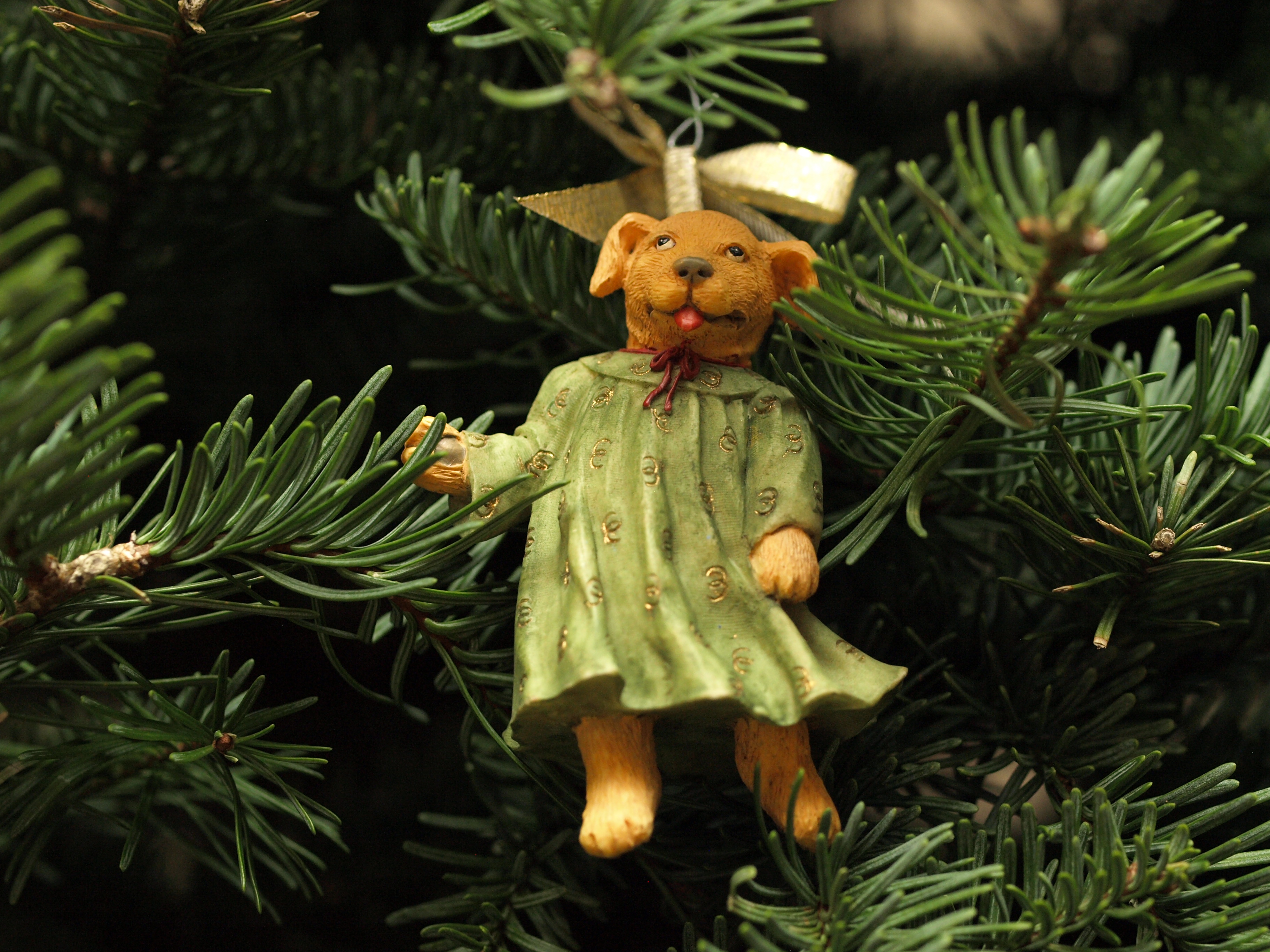
I think this started out as a Golden Retriever Angel, but over time the wings snapped off, so now it’s more like Golden Retriever in PJs.

Image:  ornament consisting of Golden Retreiver in baggy green gown.

And of course of course:

Image:  Denver Broncos jersey ornament

Happy Everything You’re Celebrating Whenever You’re Celebrating It!

“We were strangers once, too.”

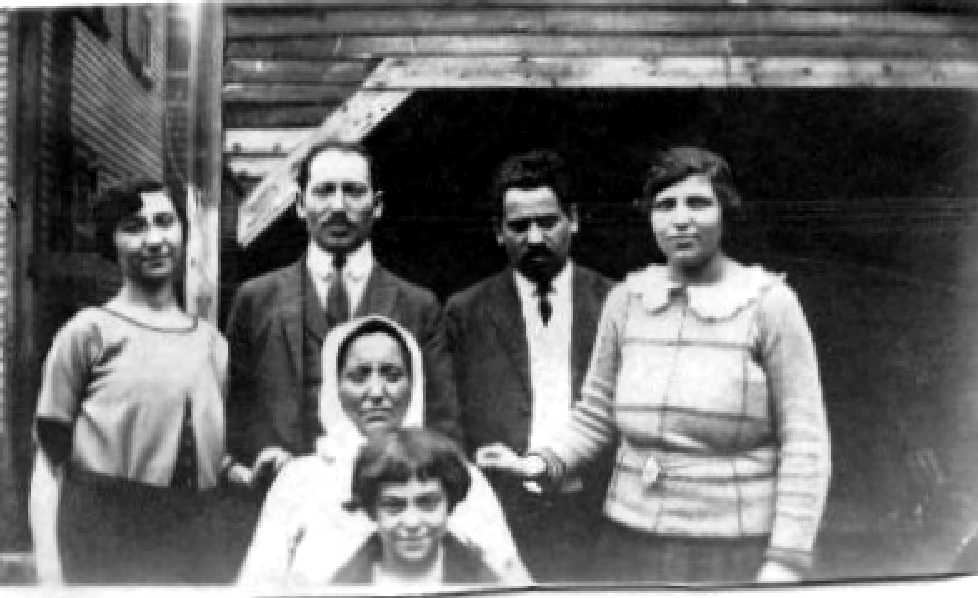
Image:  slighly blurry black & white photo of a group of 6 people.  In back, a young woman, two middle aged men and a middle aged woman; in front of them, an older woman, and in front of her, a child of about 10.

My Jewish grandmother, Edith Spivack, was born in Kiev, Ukraine in 1904 or 1905.  The family immigrated to the U.S. when she was young, and her remaining four siblings were all born in America.  She’s not in this photo, but her father (my great-grandfather), Zacharias, is the second from the right in the back row, and next to him is his sister, Fanny.  The older woman in the middle is Zacharias’s mother, my great-great-grandmother.

Update:  My mother just sent this excellent old-world photo, though by dint of the cast of characters, taken in the U.S. in about 1907 or 1908.  (Thanks, Mom!)

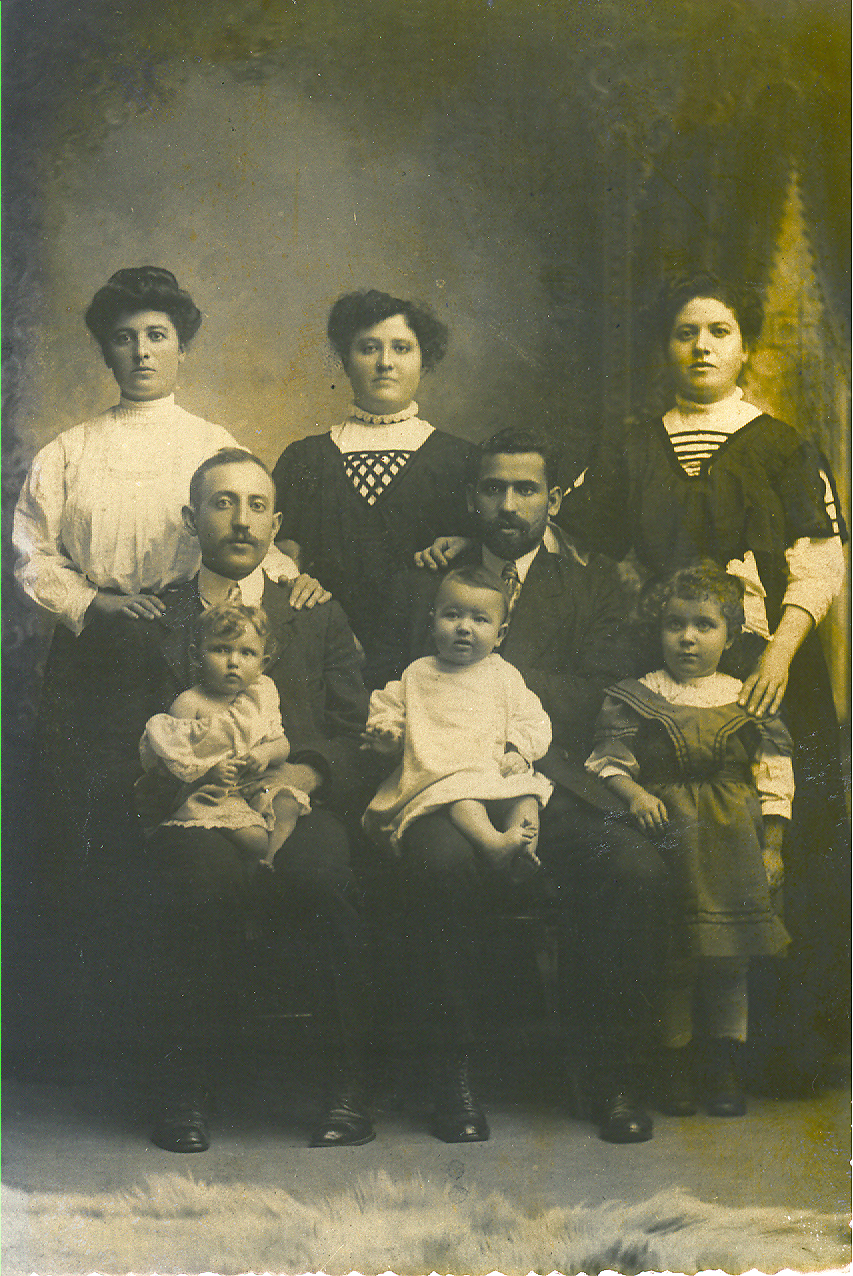
Image: sepia (brown and white) photo of eight people in formal dress of the early part of the 20th Century.  In the back row, three women (standing) in high-collared blouses, all apparently in their 20's or 30's; in the middle row, two men (sitting) wearing suits; the one on the left has a moustache; the one on the right has a full but neat beard.  In the front row, three children.  Two toddlers sit on the men's knees.  One perhaps 4-year-old stands on the right, with one of the women's hands on her shoulder.

From my mother’s description, with my commentary:  Back row:  Rachel (Toporovskaya) Palkin; Ida Toporvskaya (apparently  not yet married when this photo was taken); Fanny (Toporovskaya) Spivack [my great-grandmother].  Middle row:  ? Palkin (Rachel’s husband); Samuel Spivack [Fanny’s husband; my great-grandfather; Zacharias from the photo above — Samuel was the English name he selected].  Front row:  Palkin child; [my great-uncle] Max Spivack (on Samuel’s lap); [my grandmother] Edith Spivack (later Blau; standing, her mother’s hand is on her shoulder).  Rachel, Ida, and Fanny were sisters.

On the Protestant side, you have to go back a couple more generations:  my great-great-great-grandfather was born in Colne, England.  I have fuzzy memories of my father — an enthusiastic if not terribly well-organized genealogist — telling me that that he or another early family member essentially absconded from England with a patent that he did not, technically, own to start a manufacturing business in Massachusetts.

Update:  My Protestant peeps deserve a photo, too, right?

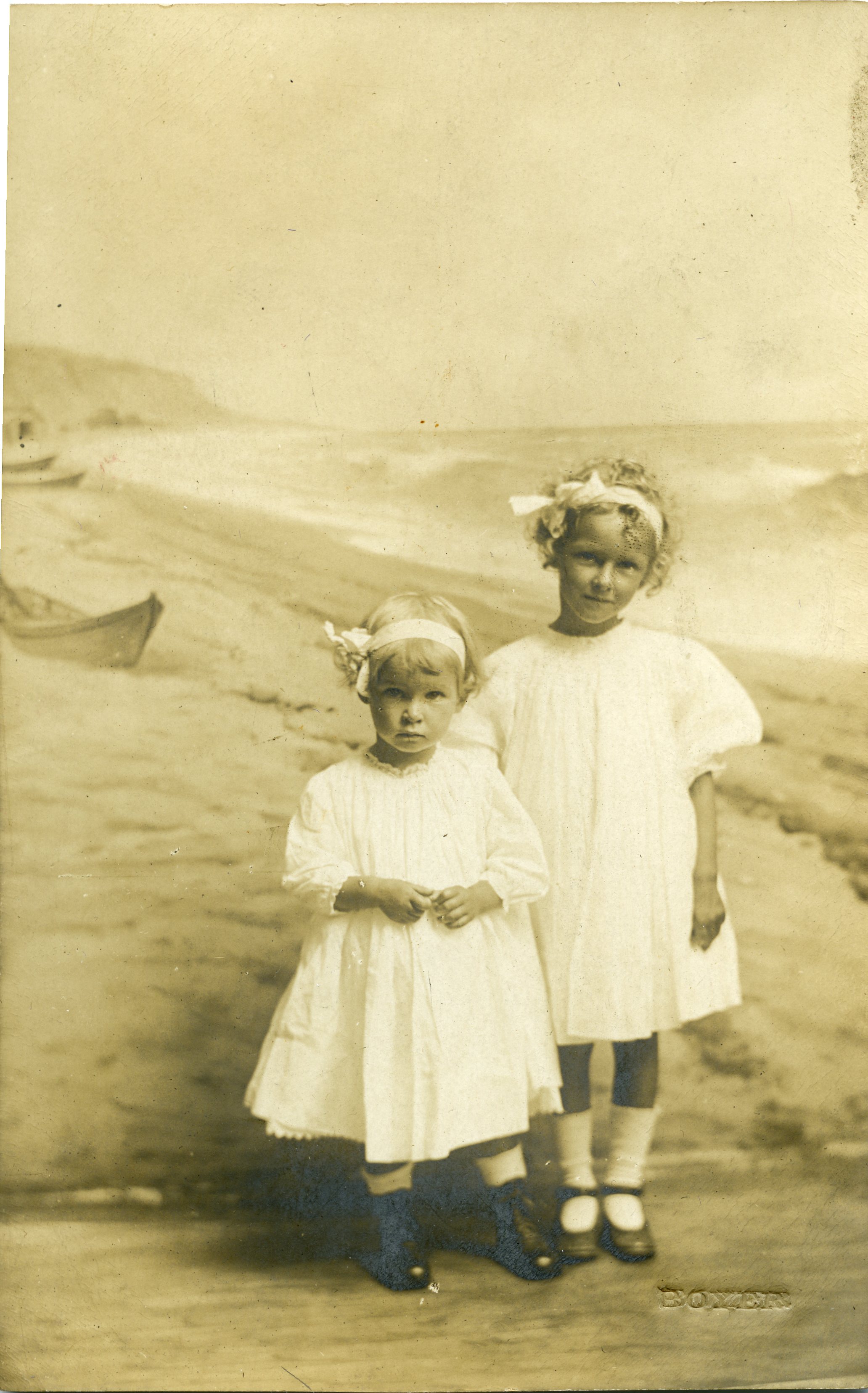
Image:  sepia photo of two young blond girls in white dresses with white ribbons in their hair, standing in front of a painting or backdrop of a beach with a rowboat.

My grandmother Helen Farr Smith [Robertson] [Love] and my great-aunt Elizabeth (Betty) Lees Smith [Carey], in 1911.

So we were strangers, once, and possibly of that criminal immigrant element you keep hearing about.  And yet here we are, a largely productive and law-abiding bunch.  I am grateful for the country that welcomed these people from such different places.  I’m grateful for the opportunities that allowed my grandmother to go from the shtetl to Radcliffe in the span of a single life.

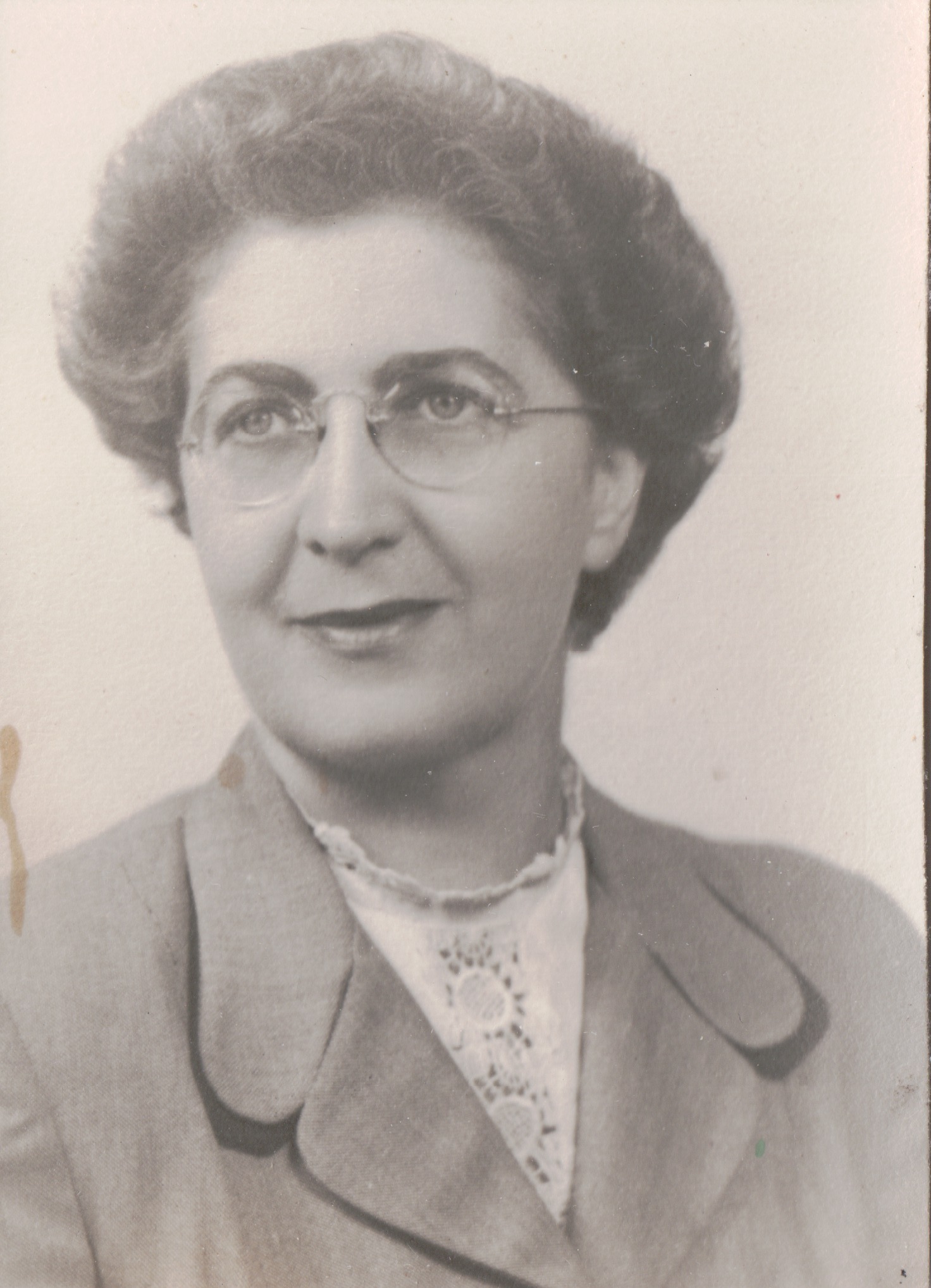
Image:  black & white photo of a middle-aged woman with short salt & pepper hair and wire-rimmed glasses, wearing a suit jacket and a lace blouse underneath

I’m grateful for the mixing bowl that allowed a Protestant college guy and a Jewish college gal to meet and marry and have the quintessential American mutts that are my brother and me.  I’m grateful that many of us still welcome the strangers from many places, and hopeful that those who don’t will gradually find room in their hearts for their fellow immigrants.*

Scripture tells us that we shall not oppress a stranger, for we know the heart of a stranger – we were strangers once, too.

My fellow Americans, we are and always will be a nation of immigrants. We were strangers once, too. And whether our forebears were strangers who crossed the Atlantic, or the Pacific, or the Rio Grande, we are here only because this country welcomed them in, and taught them that to be an American is about something more than what we look like, or what our last names are, or how we worship. What makes us Americans is our shared commitment to an ideal – that all of us are created equal, and all of us have the chance to make of our lives what we will.

Barack Obama, November 20, 2014.

*************

* Well, most of us.  I realize these heart-warming words need some editing for those whose ancestors crossed the Atlantic in the hold of a slave ship or were already here when our ancestors got here and started waxing eloquent about welcoming each other.  Bottom — un-heart-warming — line:  white people who would close our borders need to stfu.