Category Archives: Language

Checklist for being a plaintiffs’ lawyer

The site “Stuff Journalists Like” posted a (so-far) 20-point “Checklist for being a ‘real’ journalist.”  It’s hilarious in and of itself, but some of the items are really part of a longer “checklist for being a word nerd,” for example:

2.  Corrected a loved one’s grammar in a greeting card.

My mother (love ya mom!) really did this once!  My word-nerdiness is clearly genetic and I was doomed from the start, because both of my parents have/had this gene.   Also

8. Can no longer read a newspaper without scanning for typos and errors.

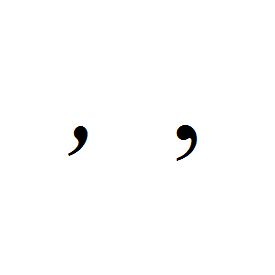
Hell, I can’t read typos and grammatical errors in anything without being deeply disturbed. And I have, within the past week (1) had a serious discussion about whether a comma following a case name was improperly italicized (you know who you are!), (2) pondered the conditions under which the word “id.” at the end of a sentence is preceded by a period and capitalized or preceded by a comma and in lower case; and (3) laughed derisively at the obvious line-spacing errors in my opponent’s brief (before, of course, realizing that the judge would not give a rat’s ass).

Italicized Comma vs. Not Italicized Comma

Here are a couple more that I think apply almost equally to plaintiffs’ lawyers:

3.  Replaced one of the major food groups with coffee.

I never did like fruit, and coffee occupies more of my diet than any food group but pasta and cheese.

5.  Eat in your car more often than you do at a table.

Replace “car” with “desk” and I’ll cop to that.

9.  Learned that being told to “fuck off” and “go to hell” is part of the job.

13.  Found that fine line between harassment and persistence.

Completely applicable to plaintiffs’ lawyers.  Like journalists, we often find ourselves needing to talk to people who don’t really want to talk to us.

10.  Woke in a cold sweat thinking you forgot to change the date on A1.

Just last night I woke up in the middle of the night — Tim can vouch for this — thinking that I never did review the final table of authorities in the brief we submitted on Thursday.  Luckily, our superhuman paralegal was in charge of it, so I slipped right back into a peaceful slumber.

17.  Have conducted a phone interview while completely naked.

Close:  I have often conducted legal research clothed only in a towel.  When you have good ideas in the shower, they really shouldn’t wait until you’re fully dressed to research them.  I have also edited a brief telephonically with co-counsel while walking the dogs and scooping up after them.

I had also previously suggested two “you might be a plaintiffs’ lawyer” conditions:  that your car is older then your paralegal; and when the skirts on the tables supporting the courtroom technology of your opposing counsel are nicer than the skirt you’re wearing.  What else, plaintiffs’ lawyers, should we add to our checklist?

More on the “r-word”

Sam Bagenstos has written a thoughtful post on the use of the word “retard” in movies and our response as a community.  He was responding to this post, which was reacting, in turn, to the use of the word “retard” in the Alexander Payne/George Clooney movie, The Descendents.  I tend to agree — on general free expression and artistic license grounds — that we should not be in the business of telling writers what to write.  But I’m hoping for the day when the casual use of the word “retard” carries the weight that the casual use “nigger” or “cunt” would.  (For example, I’m predicting it was pretty jarring to read those words in my blog.  Was it equally jarring to read the word “retard”?)

Given the intersection of language nerdery and disability rights, this is a subject that interests me and that I’ve written about a couple of times.  Sam’s blog post makes excellent points, including that

People use the r-word in real life, just like they use slurs against other groups (and just like they do other harmful and wrongful things), and it would be wrong to say that movies and literature can’t depict that.  (And I think it’s a cheat to say that the use of the word can be depicted but only if the character who uses it “learns the lesson” that it’s wrong or is otherwise shown to be a bad and unsympathetic character.  That’s not any different than requiring purely idealized depictions of people.)

Very true.  In fact, if the word were restricted to movies, books, or tv shows in which lessons were learned, we’d only hear it in after-school specials, where the bully turns out to have problems of his own, reforms, and everyone has a group hug in the end.  No, rather than requiring lessons be learned or the word avoided, I’m hoping the movie-going public evolves to the point where the writer knows that putting that word in a character’s mouth will communicate something deeply negative about that character.  Right now, the choice to have a white character use the word “nigger,” without the quotes, directed to or about an African-American, communicates something very specific and negative:  the speaker is a racist asshole.  Same with “cunt”:  sexist bastard, or denizen of frontier Deadwood, South Dakota.

The truth is, I find it incredibly jarring and disappointing when a character in a movie with whom I sympathize (or perceive that I’m supposed to sympathize) uses the word “retard” as a casual epithet.  It’s similar to the phenomenon that Ta-Nehisi Coates has called “the John Mayer Rule,” and which I called “drinking with white people”:   that moment when someone you thought was cool says something bigoted  . . . and the concomitant urge to avoid situations (in my case, drinking with acquaintances who don’t get disability rights) where this might happen.  There are good reasons why George Clooney would not say a long list of offensive epithets in a movie of the type I understand The Descendants to be.  I’m hoping for the day when writers and actors will think that way about the word “retard” and use it accordingly.

One final thought:  a laser-focus on one word misses is the many ways movies and TV can be demeaning to people with disabilities while remaining pristine in language use.  One of my favorite examples is Law & Order, which has presented a long string of pathetic and/or criminal people with disabilities, without once (that I can recall) showing, say, an attorney, detective, forensic professional, or random witness in a wheelchair.  Two episodes stick in my mind.  In one, a mother is accused of killing her son, a quadriplegic.  The son is presented as unable to get out of bed and as a result we are asked to sympathize with the homicidal mother.  Scenery-chewing DA Jack McCoy tells the jury — as a fact, I promise, not as a negative comment on the mother’s narrow world view — “she knew he’d never grow up to be a doctor or lawyer.”  Seriously – how hard would it have been for the writers to figure out that there are all sorts of quad doctors and lawyers and other professionals?  The other episode I recall was where the hunt for the killer led toward the brother who was paralyzed and as a result bitter and murderous.  While I can’t recall others off the top of my head, I don’t recall any portrayals of people who use wheelchairs straying beyond vegetative and/or embittered.  I’d take 100 George Clooney “retard” utterances over this.  Although we keep watching the damn show,* we know to turn it off the instant there is mention of a character with a disability.  We know, to a 100% certainty, that L&O will screw it up.

********************
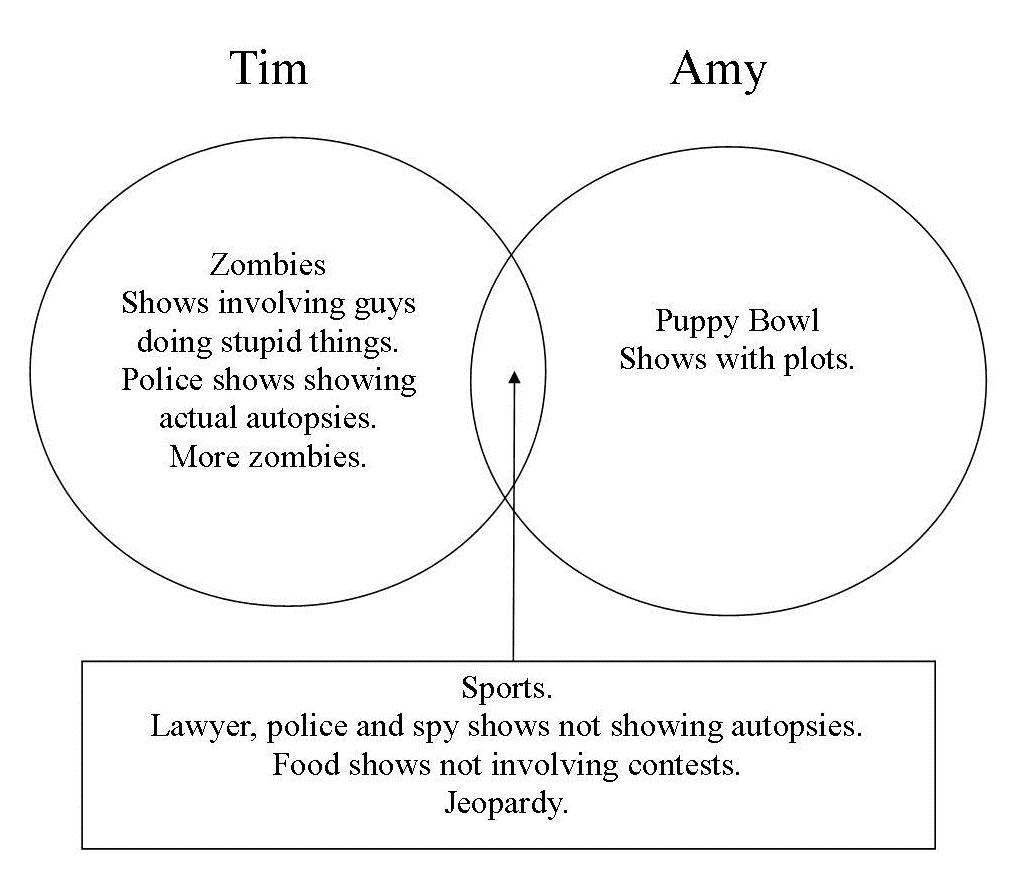
* L&O occupies the very small overlapping area of Tim and my taste in television:

Flourishing: Calling Bioethical Bullshit

Bioethics is much too important to be left to bioethicists.”  So sayeth Michael Bérubé.  Accurately.  And here’s why:  because they argue in bigoted tautologies.  That’s right:  loathsome and intellectually empty.

Digression/throat clearing:  I love reading anything by Michael Bérubé.*  Anything.  I would read the phonebook cover to cover if he wrote it.  One of the beauties of reading his writing is you don’t have to be an expert in cultural studies or criticism to get what he’s talking about (even if not all the references) and to enjoy his attitude of critical good humor.   Armed only with my vintage 1983 BA in linguistics and philosophy, however, the prospect of trying to respond to one of his posts has always felt like trying to jump on a merry-go-round** that’s going by very fast.

I have neither the time nor the skills to master the literature and vocabulary necessary to contribute a coherent comment.  But now I have my own damn blog, where I can say whatever I want without feeling too self-conscious that I’m interrupting a learned conversation.  Here goes.

This post responds to two Bérubé posts, one on Crooked Timber; the other on a site called “On the Human.”

Without attempting to summarize either the posts or the materials he’s criticizing, I’ll jump onto the carousel at the point I’d like to discuss:  the concept of “flourishing.”  Bérubé tees off of a book by Jonathan Glover (Choosing Children: Genes, Disability, and Design), which he is careful to credit with some level of disability consciousness:  

Choosing to have a child without certain disabilities need not come from any idea that disabled people are inferior.  Nor does it entail that the world, or the gene pool, should be cleansed of disabled people”  Id. at 28 (as we cite in the law biz).

But Glover also says

“I think that, other things being equal, it is good if the incidence of disabilities is reduced by parental choices to opt for potentially more flourishing children.”  Id. at 35.

Bérubé’s post then outlines a number of thought experiments designed to … do what I’m not sure.  For example:  you have to choose between two tests, one that detects and cures a disability in utero vs. one that detects the likelihood of disability pre-conception, so the parents can avoid conceiving a disabled child.  I think, in retrospect, that shit like this was why my phil minor focused on philosophy of mathematics.  Rather than discussing who should or shouldn’t be born, we discussed what it meant, in an absolute sense, to measure something.  This has come in freakishly handy in my legal career.  (ADAAG in-joke.  Sorry.)

Anyway, here’s another doozy — Glover quoting Frances Kamm who:

discusses a hypothetical case … of a woman who knows that, if she conceives now, her child will have a life worth living but will be mildly retarded. The woman also knows that, if she waits, she will be able to have a normal child. Frances Kamm accepts that, having a life worth living, the child with mild retardation will not be harmed by being created. But she thinks the woman will still have done wrong by not waiting. … She says “even if she could produce no child except a mildly retarded one, it might be better for her not to produce any” and that the woman “would do wrong to produce a defective child when she could have easily avoided it.”  Id. at 55.

Bérubé attacks these hypotheticals on the legitimate grounds that they make no sense.  “There is no scenario — I repeat, no scenario, none whatsoever — in which any woman knows that, if she foregoes conception now, she will have a normal child later on.”

Here’s where I jump into the middle of this discussion with what I really, truly hope is an obvious point that has been covered extensively in other literature that I’ve been too busy measuring toilets (in the absolute sense) to have read.  And that point is:

WTF*** DO YOU MEAN WHEN YOU SAY “FLOURISH”?

The question of what constitutes flourishing — and what parents do before, during, and after pregnancy to influence the flourishment of their child — is far far broader than whether the child has or does not have a disability.  That is, there are as many ways to flourish and not flourish as there are children, the vast majority of those ways (I would argue) uncorrelated with disability.

At the simplest, non-comparative AND MOST OBVIOUS level, there are multitudes of flourishing disabled people.  I’m tempted at this juncture to list a bunch of awesome pwds I know and know of and contrast them with a bunch of deeply non-flourishing non-disabled people I know and know of.  But that dignifies a question that does not deserve dignity.

OK so we’ve established that you can flourish with a disability.  But it’s also true that, in many cases, children (disabled and nondisabled) flourish in ways that parents (since that was the original thought experiment) can influence in greater or lesser degrees.  Do children with Down Syndrome, osteogenisis imperfecta, or cerebral palsy whose parents have inexplicably consented to give birth to them flourish more or less than children with parents who are:  drunk; abusive; divorced; helicoptery; rich; poor; strict; lax; human?

Can any child flourish in an abusive family?  How about one so coddling that the child never learns to fend for him or herself?  Can a gay child flourish in a homophobic family?  A curious child in a fundamentalist**** family?

I know, I know — the bioethicists would condemn parents who were alcoholic, abusive, homophobic, or fundamentalist.  BUT THEY WOULD NOT DENY THOSE PARENTS’ CHILDREN THE RIGHT TO EXIST.   They would not say to the homophobes or fundamentalists or overprotective parents:  hold on – your kid’s not going to flourish – don’t get pregnant!  It is bioethically wrong for you to have a child.  We can have whatever discussion we want about good and bad parenting; it’s only when a child might have a disability — with unknown effect on flourishment — that we talk about making sure the kid doesn’t even exist in the first place.

And here is where I’m glad I studied the unhip logical positivist philosophy that I did because what we have here, folks, is a simple problem of definition.  Bioethicists have defined “flourish” in a completely circular fashion.  “Flourishing” doesn’t mean “loving” or “loved” or “happy” or “curious” or even (not my definition, but maybe others’) “blessed” or “sacred.”   It means “physically and mentally typical in a way that bioethicists deem worthy of survival.”  Or it may in fact mean “physically typical with a high IQ” — that is, the sort of person that the average bioethicist would want his or her kid to be.

But the saddest thing of all is:  Bioethicists — or at least Glover — may already know this.  I’m not in fact pointing out something incisive or new.   Despite graciously (sort of) conceding that pwds are not “inferior,” Glover states, “in this book disability has been contrasted with human flourishing.”  Id. at 88.  That is, the entire discussion starts from a point of circularity.   And euphemism.  Instead of saying “parents shouldn’t have babies who are disabled,” which sounds sort of discriminatory, you say, “parents shouldn’t have babies who won’t flourish” and then, to address the fact that you really aren’t talking about, say, your colleague’s fucked up teenager or other mainstream, middle class, ways of not flourishing, you define “flourish” to mean “nondisabled.”

Here is my bioethics:

1. It is never OK to decide for someone else whether that person is flourishing, especially when

2. “flourishing” is defined based on a single, culturally-specific set of values, that excludes disability a priori, and especially when

3. the definition determines who gets to be born.

And here is the list of hard questions I’m ignoring:

1.  When is it OK to cure disability?

2. Is is ever OK to withhold medical treatment without consent, for example, when death is imminent?  (Even I am willing to define “dead” as “not flourishing.”)

3.  And what about war?  And that goddamned trolley?

************

* The only thing about Bérubé that pisses me off — and it *really* pisses me off — is that he stopped blogging.  He used to write at www.michaelberube.com, and if you check out some of his archives, you’ll see what I mean.  I’m guessing that writing 10,000 words a day on top of his professoring duties — not to mention husbanding, dadding, hockeying, lecturing, administering, and apparently wet-vaccing the basement every week or so — got to be a bit overwhelming, but couldn’t he just have cut back to 9,999 or so?  Or even 1,000?  Per week?  They’d still be the most enlightening and entertaining words you’d read all week.

** Why merry-go-round and not train.  I’m not sure, and it’s sort of bugging me.

*** That’s another reason, btw, to blog rather than write journal articles.  Besides the fact that it’s quicker, easier, and intellectually lazier, there is nfw they’d let me write “wtf” in a journal article, however appropriate it was — as it is here — to the point I’m making.

**** I’m going to define my own terms here.  By “fundamentalist” I mean any family that adheres to a single orthodoxy of thought and punishes or ostracizes the child for exploring or adopting other views.

One Simple Graph Explains Lawyer Stress

I’m a law nerd.  Out and proud.  Give me an interesting legal question, access to my Westlaw account, and a steady supply of seltzer and pasta, and I’ll be happy for days.  I’m also privileged to have the world’s best law partner (my husband) and the world’s coolest co-counsel, with essential qualities like a sense of humor, appreciation for good beer, and knowledge of excellent restaurants.  Oh, yeah, and they’re really freaking smart lawyers, too.

Why, then, would I ever experience stress?*  I submitted this question to the world’s most powerful computer, which analyzed years of data in the form of briefs, letters, and emails in my cases, applied a complex algorithm** decades in development, and came up with the following answer:  The Merits:Bullshit Ratio.  It is best understood as a graph:

This means, for example, that in the brief we will receive next week, the bullshit level will be at the far right-hand side of the chart.  The question at issue is very simple, and we’re right.***  So why should I stress?  Because the extremely low level of merit in the defendant’s position means — I promise you, this is a scientific fact — there will be an extremely high level of bullshit.


You lawyers know I’m right on this.  When you’re briefing a complex, interesting, multi-faceted question with some merit on both sides, the briefs tend to be substantive and relatively mature.  When you’re simply flat-out correct, and your opponent has no real argument, his briefs are filled with arguments that are the legal equivalent of “I’m rubber, you’re glue,” “takes one to know one,” and “you’re a poopyhead.”  In addition, of course, the level of italicized text goes up.  Further computer analysis generated this chart:


Having achieved the first part of our research goal (the charts above), I have asked the computer to generate a solution to the stress that results from reading too much bullshit.  Preliminary results indicate that the solution involves beer.  Stay tuned.

****************

* There are two other well-known reasons for lawyer stress.  One is the stress people feel when they really don’t want to be lawyers.  This is not my problem:  I really really love being a lawyer; I just hate the bullshit.  The other reason is trying to balance your lawyer-life with your family-life.  I have solved this problem by completely merging the two.  It’s not for everyone, but it works for us!

** I love that word.  Does it really mean anything other than “equation”?  I don’t think so but it makes you sound really cool!

*** We’re always right.  That’s why we take the cases we take.  Only civil defense counsel get paid to represent wrong positions.  If our client has a wrong position, we don’t eat or pay the rent.

Political rhetoric

A really smart friend of mine asked, “For my liberal friends only: when we’re objecting to cross-hairs, should we maybe feel a little bit bad about ‘somewhere in Texas, a village….’?”   The question made me think, as all of her questions do.  So here are my thoughts on four kinds of political rhetoric.

Juvenile name-calling.  Somewhere in Texas . . .; Bu$h; Busshit; Nobama.  Calling Bush or Palin stupid or Obama an elitist, or candidly using the words “socialist” or “fascist” as epithets these days has precisely the substantive content and rhetorical impact as calling someone a poopyhead.  Yes, it cheapens the dialog, but it wasn’t very expensive to start with.  The key effect of language like this — at least on me — is to make me turn the page or click away from the site, confident that I’m not missing anything enlightening or even funny.

Gun-related words.  I’m in favor of generally giving people credit for metaphor.  Crosshairs over congressional districts was at worst bad taste, and probably pretty banal.  I’ve described an opponent’s brief full of silly arguments as a “target-rich environment” and plaintiffs’ lawyers who make silly arguments as “friendly fire” without the remotest connection to an actual firearm.*  Indeed, when Rand Paul came out against the ADA and enthusiastically in favor of the Second Amendment, I joked that he might have arrived at a more efficient remedial process:  access at the point of a gun.  “My friend Glock and I would like you to install a ramp.  Now.”   Again, no intent to replace my Westlaw subscription with a semi-automatic, but I thoroughly enjoyed the mental image.

Of course, actually calling for someone’s death crosses a very important line, and calling for “second amendment remedies” or  explicitly for political violence comes damn close.

De-legitimizing language.  Now, this sort of rhetoric really bugs me.  Throughout the Bush years, there were liberal bloggers who insisted on calling Bush the “Resident” rather than “President,” and  asserting that “he’s not my president.”  These days we have “birthers” — folks who think Obama was not born in the US and therefore not legitimately qualified to hold the office.  Assertions that a president from either party is a tyrant or a dictator may fall into the juvenile category, but they also suggest that he is trying to change our political system, rather than simply implementing policies the speaker disagrees with.  The country thrives when the loyal opposition is both loyal and opposed.  We need people in every administration who believe in the country and its system, but disagree with the current guy’s policies.   Rationally, reasonably, preferably civilly.  Arguing that the president isn’t legitimate is completely unhelpful, whether from the left or right.

Knee-slapping hypocrisy.  People from Alaska criticizing federal spending.  Anyone who supported the Patriot Act complaining about over-regulation.  This type of discourse may be the most pernicious, because it doesn’t go away once we’ve all had a good laugh.  But damn, I love it!  It’s an excellent reminder that, as human beings, we’re all about 97% full of shit, with the differences at the margins.

***********************
* However, when I propose to engage in kitchen remodeling using a flame-thrower, I intend to be taken very, very seriously.  I will be exonerated by a jury of my peers.

Happy and/or Merry

I’m going try to do two possibly contradictory things in this post:  (1) urge everyone to wish each other merriness and/or happiness in a spirit of joy and celebration; and (2) unleash just a little bit of snark on the whole war-on-Christmas baloney.  Here goes.

New rule:  No one gets to be indignant when someone else expresses the wish that they be happy or merry.  Unless someone is wishing you something truly bizarre like Happy Dog Shit Day,* the proper response is “thanks!” and possibly, “you too!”  The following is an incorrect response:  “Dude, you just wished me to be happy and/or merry for the wrong reason.  You must have some sort of weird political agenda.  Let’s bail on this whole joy and celebration thing and really annoy each other!”

For the record, as a half[assed] Jew, I have no problem with being wished a Merry Christmas.  It’s not a holiday with religious meaning to me, so I feel the way I felt when my Chinese friends wished me Gong Xi Fa Cai on Chinese New Year.  And that feeling is:  Happy.  Instead of the human interactions that fill up my average day — bizarre italicized accusations from opposing counsel, middle fingers from other drivers,** depressing political commentary — someone is just telling me to be happy.  Or merry.  Or in the case of Gong Xi Fa Cai, congratulating me and wishing me to prosper.  This is all good.  All.  Good.  Did I mention good?

Let’s practice:

Jewish person:  Happy Chanukah!
Christian person:  Thanks!  That’s so nice of you!

Wasn’t that easy?  And fun!  How about this:

Christian person:  Merry Christmas!
Jewish person:  Thanks!  You too!

See!  Don’t you feel merrier and happier already?

Random person #1:  Happy Holidays!
Random person #2:  They’re not “holidays.”  There’s only one real holiday, that is, MY holiday.  Please don’t wish me happiness unless you’re doing it for the right reason.

ZZZZZT!  Wrong.  Remember the rule:  whatever merry or happy you are wished, the proper response is “Thanks!”  Seriously, try it.  My prediction is:  you might actually feel merry and/or happy.

But I do want to say a quick word about the “put the Christ back in Christmas”***/”Reason for the Season” crowd.  I’m perfectly fine with putting Christ back in Christmas if that means, on December 25, focusing on the religious meaning of the birth of Christ instead of acquisition of new and better electronic devices and fleece sweaters.  Indeed, I enjoy focusing on the Christian religious meaning of Christmas, and each year find myself learning and reflecting on important things from and with my Christian family and friends.  And, happily, acquiring cool electronics and fleeces.

But if “put the Christ back in Christmas” means the only merry or happy we all get to say starting after, say, Halloween or perhaps Labor Day is “Merry Christmas,” I’m afraid I have to (merrily and happily) dissent.  And because I’m a complete nerd, I have to point out that the “reason for the season” is not, in fact, the birth of Christ, but the need of early Christians to promote their new religion by attaching their observances to existing pagan solstice celebrations.****  So technically the reason for the season is the circuit of the earth around the sun, the beginning of the lengthening of days, and the need of people in the cold and dark to eat fun high-carb foods and drink enough to forget the cold and dark.

Still, snarkiness and nerdiness aside, I really think there should be more merries and happies rather than fewer, and that when someone wishes you a merry or happy that doesn’t line up with your particular views, just go with the merriness and happiness.  And feel free to wish others merriness and happiness for whatever reason strikes you.

Or if you want to try for more calendrical accuracy, here are some suggestions:*****

Dec. 1       Rosa Parks Day
Dec. 2       Chanukah
Dec. 3       International Day of People with Disabilities
Dec. 4       National Cookie Day
Dec. 5       First Sunday in Advent
Dec. 6       Finnish Independence Day
Dec. 7       Islamic New Year
Dec. 8       National Brownie Day
Dec. 9       Jeff’s Birthday
Dec. 10    Constitution Day
Dec. 11    International Mountain Day
Dec. 12    Day of the Virgin of Guadalupe
Dec. 13    National Cocoa Day
Dec. 14    National Bouillabaisse Day
Dec. 15    Bill of Rights Day
Dec. 16    South African Day of Reconciliation
Dec. 17    National Maple Syrup Day
Dec. 18    International Migrants Day
Dec. 19    National Oatmeal Muffin Day
Dec. 20    National Games Day
Dec. 21    Winter Solstice
Dec. 22    National Date Nut Bread Day
Dec. 23    Festivus
Dec. 24    Chinook’s Birthday
Dec. 25    Christmas
Dec. 26    Boxing Day; beginning of Kwanzaa
Dec. 27    St. Stephen’s Day
Dec. 28    Card Playing Day
Dec. 29    Pepper Pot Day
Dec. 30    Festival of Enormous Changes at the Last Minute******
Dec. 31     New Year’s Eve

* There have been circumstances in which that would have been an appropriate greeting in our house, but I’ll spare you the details.

** Unpleasant even when justified.

*** But do remember to “Keep the Han in Hanukkah.”  (h/t Laura R.)

**** There are a couple of other theories too.  http://www.bib-arch.org/e-features/christmas.asp

***** Recipients of our 2006 holiday card will recognize that I’m recycling material here.  And yes, Mom, I corrected the typo.

****** Not a lot of documentation for this one, but I really liked it.

In which I start my new blog by offending everyone

Next time you are tempted to call someone a retard, or a [clever neologism]tard, or even accuse them of riding the short bus, stop and substitute one of the following offensive first-letter-only words: the N one; the S one; or the K, C, or J ones.

I’m actually going to make the argument that calling someone a r****d is worse than calling an African-American a n****r or a Chinese person a c***k.  Because it is not generally people with cognitive disabilities who are being called r****ds.  It’s not just a word of derision for the minority in question.  It is more commonly used to disparage people who are not cognitively disabled.  It’s saying “you are bad because you are like a person with a cognitive disability.”  Like calling white people n*****rs or c****ks:  “you are bad because you are like a black person . . . or a Chinese person.”

And liberals, I’m looking at you.  Mostly I’m looking at you because you’re all I read these days.  I know I know … echo chamber blah blah blah.  But when I want to read illogical ad hominem bullshit, I’ll stick with opposing counsel’s filings — which I have to read anyway.

I’m also looking at you liberals because you’re supposed to know better.  Remember?  We’re the ones who respect everyone.  Everyone.  Not “I’ve learned the words I’m supposed to use for black people and brown people and girl people but it’s just such a drag to have to learn the ones for disabled people.”  Everyone.

So, anecdotes, anyone?  How about the otherwise hilarious Wonkette, which insists on adding the suffix “tard” to turn random words into insults:

This is seriously like deciding that it’s hilarious to insult people by adding “igger” to the end of other words.  Pauliggers.  Libiggers.  Conserviggers.  Palestiniggers.  That last one is just awful on so many levels, eh?  Now, do you get how truly awful Palestinetards is?

I’m predicting a common response.  Maybe I underestimate you, but what I predict is the response above:  it’s just such a drag to keep track of all this!  I just learned to say Negro, when I was told to say Black, then it was Africa-American.  Oriental? Asian?  Ooooo noooooo!  It’s just so confusing!

A while back I had an email exchange with a fairly prominent liberal blogger who had used the word “retarded” as an epithet.  I called him on it — saying it was equivalent to offensive expressions such as “jew him down.”  Here is the rest of the colloquy – quoted at some length because I think it typifies the common reaction, and sets out my views succinctly:

Prominent Liberal Blogger:  “Unfortunately, it’s hard to keep track of all the words that offend some subsection of the population these days.  I’ll watch myself in the future, although I have to admit that I have a hard time equating this to such a plainly offensive expression as ‘jew him down.’”

Me: I hear you, and I confess that I predicted this response.  The “keep track of” argument segregates groups whose rights and feelings are worth worrying about (Blacks; Jews) from those who aren’t really on the radar screen (people with cognitive disabilities).  The term you used is plainly offensive to a large subsection of the population; just one that you don’t really think about.

PLB:
I really don’t think you can dismiss the issue like that.  It really is hard, and there really are lots of groups who get offended over things.  It’s just impossible for any single person to track it all.  It’s not as if there’s some clear rule for figuring out whether a term is legitimately offensive, after all.
Here in [his location], for example, it’s considered offensive to display the flag of Vietnam.  Big Vietnamese population, you see, and they insist that only the old South Vietnamese flag should ever be displayed publicly.  Is that legitimate? Or is the flag of Vietnam the flag of Vietnam, whether you like it or not?

Me: I would argue that there is a difference between using a term in a disparaging or pejorative manner and a political dispute.  I am firmly of the view, for example, that if you think affirmative action is wrong, or that gays should not be allowed to marry (both positions with which I disagree) or that one political system is or is not legitimate in Vietnam (a position on which I am sadly ignorant) there is nothing offensive about asserting and defending your political views.  I’ll argue anything on the merits.

Politely.[*]

On the other hand, you used a slang term that refers to a type of person and you used it in a pejorative sense.  You were not (I hope) expressing a negative political or other substantive view about people with cognitive disabilities.  I think common courtesy, rather than political correctness, would suggest that the word not be used that way.

Hell, even in the political context, a bit of forethought and courtesy would not be a bad thing.  If I were going to be a guest in the home of a Vietnamese person, I might look into the matter and not wear, say, a tee shirt with the wrong flag.  I really do think people with different views can speak to one another politely and respectfully.

* [Full disclosure:  Politely, but with occasional, okay fairly common, use of cuss words.]