Category Archives: Things That Are Inexplicably OK

Prior litigation: admissible; evidence of life with a disability: inadmissible.

[Cross posted at FoxRobBlog, which is involved in some sort of DNS attack.  Whatever that is.]

In Yates v. Sweet Potato Enterprises, Inc., 2013 WL 3662645 (N.D. Cal. July 12, 2013), the plaintiff — a guy who uses a wheelchair — alleges that he encountered barriers at a Popeyes restaurant.  In the order, the judge addresses questions from both the plaintiff and the defendant about what evidence can be used at trial.  In so doing, she does two things that are stunning individually, but that — taken together — turn the plaintiff into the defendant, defending his right to equal access to the businesses that non-disabled people patronize everyday without a second thought.

First, the court grants the defendant’s motion to exclude “sympathy-inducing evidence regarding Plaintiff’s disability” that is not directly relevant to his experience at Popeyes, including “testimony regarding his day-to-day hardships.” The court just doesn’t see how that’s relevant.

Second, the court denies the plaintiff’s motion to exclude evidence that he has filed a large number of other access lawsuits.

Pause.

If people who use wheelchairs filed a lawsuit challenging every illegal barrier they encountered each day, most would file — I’m guessing — five to ten lawsuits each day.  Instead, most people go about their days, swearing at the illegal and thoughtless barriers, but without the time or resources to file those tens and eventually hundreds of lawsuits.  A brave and energetic few take the time to bring the lawsuits that remain necessary — twenty years after the effective date of the ADA’s architectural provisions and thirty years after California’s — to achieve a modicum of compliance.  For their trouble, these people are dubbed — in the press and in court — “serial litigators.”

The Ninth Circuit — the court with appellate authority over the Yates court — has recognized the role of these brave and energetic people in enforcing the law:

Courts must tread carefully before construing a Disability Act plaintiff’s history of litigation against him. As we have noted more than once, “[f]or the [Disabilities Act] to yield its promise of equal access for the disabled, it may indeed be necessary and desirable for committed individuals to bring serial litigation advancing the time when public accommodations will be compliant with the [Disabilities Act].” We must therefore be “particularly cautious” regarding “credibility determinations that rely on a plaintiff’s past [Disabilities Act] litigation.”

Antoninetti v. Chipotle Mexican Grill, Inc., 643 F.3d 1165, 1175 (9th Cir. 2010) (internal cites omitted; emphasis — though not nearly enough — added).   One of the cites I pulled out to make that quote more readable was Sam Bagenstos’s excellent article The Perversity of Limited Civil Rights Remedies: The Case of “Abusive” ADA Litigation, 54 UCLA L.Rev. 1 (2006).

So despite the fact that the Ninth Circuit has instructed courts to be particularly cautious about credibility determinations relying on past litigation, the Yates judge — without citing Antoninetti — holds that

Plaintiff’s  filing  of  well  over  a  hundred  disability  lawsuits  in  which  he  alleges  identical injuries bears directly upon his credibility.  . . . Plaintiff’s  alleged  scheme  to  generate  income  through  the  serial  filing  of  lawsuits  in  an  effort  to  extract  settlements  from businesses, may, in fact, be probative of his credibility.

More than simply disregarding controlling precedent, this decision has the very immediate and apparently intended effect of converting Mr. Yates from a real, live person who navigates his day to day world  in a wheelchair to a greedy serial litigant, judged on the fact that he has filed other complaints, the legitimacy of which he will likely not be able to prove before the jury.  (This question is not addressed in the decision, but my strong guess is that the defendant will be allowed to show the fact of hundreds of lawsuits, while the plaintiff will not be permitted to show that, in each one, the facility in question was indeed out of compliance.  That would, in essence, require hundreds of mini-trials within this single trial.)

On another level — about which I’ll write more later, as I have to get back to the other outrages on my desk — this is part of the broader scheme on the part of the business world to spin the fact that — 20-30 years after the federal and state standards took effect — there is still massive noncompliance.  When you’re really really wrong, accuse the other guy of “serial litigation” to correct your many many failures.

One of these is not like the other.

Apparently it’s OK to shoot your sibling or get plastered and shoot your hunting buddy, but not to have a curious and experimental mind.  (I did enjoy the “category” assigned the first article by the Miami New Times.)


Florida science experiment


Gun tragic accident


turkey camp shooting


my first rifle

my first rifle 2

Denver Post or The Onion: it’s hard to tell

One of my favorite Onion headlines is

Stereotypes Are a Real Time-Saver

I’m a busy guy. And, while I’d love to, I don’t have the time to get to know every person I encounter in the course of my daily life. So thank goodness I have a handy little device at my disposal that helps me know how to deal with just about anyone I come across: stereotypes. Yes, stereotypes are a real time-saver!

The Denver Post appears to have borrowed this crucial piece of wisdom to guide its journalistic standards.  In reporting the tragic death of Tom Clements, the Executive Director of the Colorado Department of Corrections, the Post added the following pieces of gratuitous, unsupported, speculation to its initial reports:

Clements’ death occurred a week after he denied a request by a Saudi national, Homaidan al-Turki, to serve out the remainder of a Colorado prison sentence in Saudi Arabia.

The article goes on for three paragraphs to describe the al-Turki case — citing no evidence outside the chronology to connect it to Clements’s murder — but does not offer any further gratuitous, unsupported, speculation concerning other individuals of, say, other races or affiliations.
Colorado corrections officials are investigating whether a paroled white-supremacist prison-gang member at the center of the investigation into the execution-style slaying of state prison chief Tom Clements was ordered by the gang to do a “hit,” a source told The Denver Post on Thursday.
No time, funding, or balls for real reporting?  Stereotypes are a real time-saver!
[Updated to note dates of DP articles.]

Absurdity Slider

No, it’s not a small, tasty, metaphysical snack.  It’s a review of a review — big time-saver! — and a digression into the meaning of life.  The slider is explained below.  (Look!  A teaser!)

I minored in philosophy.  At Swarthmore.  You’d think this would have trained me to overthink almost anything.  And honestly, I can overthink important things like the font in my email or whether to get the 90 Shilling or the 1554.  But I recently* read a review in the New Yorker of a book that I think may represent the gold standard in overthinking: David Benatar’s “Better Never to Have Been: The Harm of Coming Into Existence.”  The thesis: since it’s worse to suffer pain than to forego pleasure and since — in the words of the reviewer, “[e]ven the best of all possible lives consists of a mixture of pleasure and pain” — it is better never to have been born.

Yes, you read that correctly.  As the review notes:

The volume is dedicated to his parents, “even though they brought me into existence,” and to his brothers, “each of whose existence, although a harm to him, is a great benefit to the rest of us.”  (It’s fun to imagine what family reunions with the Benatars are like.)

But I think I’ve found the Rosetta Stone of disability discrimination.  As the reviewer explains it:

Benatar’s case rests on a critical but, in his view, unappreciated asymmetry. Consider two couples, the A’s and the B’s .  The A’s are young, healthy, and rich. If they had children, they could give them the best of everything — schools, clothes, electronic gaming devices. Even so, we would not say that the A’s have a moral obligation to reproduce.

The B’s are just as young and rich. But both have a genetic disease, and, were they to have a child together, that child would suffer terribly. We would say, using Benatar’s logic, that the B ‘s have an ethical obligation not to procreate.

They have a WHAT?

The case of the A’s and the B’s shows that we regard pleasure and pain differently. Pleasure missed out on by the nonexistent doesn’t count as a harm. Yet suffering avoided counts as a good, even when the recipient is a nonexistent one.

And what holds for the A’s and the B’s is basically true for everyone. Even the best of all possible lives consists of a mixture of pleasure and pain. Had the pleasure been forgone — that is, had the life never been created — no one would have been the worse for it. But the world is worse off because of the suffering brought needlessly into it.

Is this guy an android?  Everyone suffers at some point.  In fact, how does life have any meaning without suffering?  Hell, without pain, how do you learn basic things like not to touch a hot stove and not to listen to the Beach Boys?  I suppose if you never existed, you wouldn’t have to go through any bothersome learning processes.  But then, what’s the point?  I guess that is his point.

“One of the implications of my argument is that a life filled with good and containing only the most minute quantity of bad — a life of utter bliss adulterated only by the pain of a single pin-prick — is worse than no life at all,” Benatar writes.

He acknowledges that many readers will have difficulty accepting such a “deeply unsettling claim.” They will say that they consider their own existence to be a blessing, and that the same goes for their children’s. But they’re only kidding themselves.

Ladies and gentlemen, this is not The Onion and as near as I can tell, this dude expects his theory to be taken seriously.  On one level, it merits only derision.  Or this year’s Hitchhiker’s Guide Philosophy Award, an award I just started for philosophical arguments that measure up to my favorite ever, from the Hitchhiker’s Guide to the Galaxy, explaining the existence of the Babel Fish:

Now it is such a bizarrely improbable coincidence that anything so mindboggingly useful could have evolved purely by chance that some thinkers have chosen to see it as the final and clinching proof of the non-existence of God.

The argument goes something like this:

`I refuse to prove that I exist,’ says God, `for proof denies faith, and without faith I am nothing.’

`But,’ says Man, `The Babel fish is a dead giveaway, isn’t it? It could not have evolved by chance. It proves you exist, and so therefore, by your own arguments, you don’t. QED.’

`Oh dear,’ says God, `I hadn’t thought of that,’ and promptly vanished in a puff of logic.

`Oh, that was easy,’ says Man, and for an encore goes on to prove that black is white and gets himself killed on the next zebra crossing.

But on another level, the concept that it is better to avoid all pain than to experience any pleasure explains disabiliphobia.  It explains why the non-disabled world regularly projects on to people with disabilities a far lower quality of life than the latter actually experience.  This, in turn, leads non-disabled windbags like Peter Singer to opine that it is better for infants with disabilities not to be born or to be killed in infancy.  Benatar’s theory is simply the apotheosis of Singer’s: If it’s better not to be born than to be born with quadriplegia, where do we draw the line?  Better not to be born than to be born and later in life get the sniffles.  Perhaps it’s helpful to imagine this scale as a slider of the type I’m just now learning to use in Lightroom.  We’ll call it the Absurdity Slider:

The Absurdity Slider


Benatar took the Absurdity Slider and dragged it all the way to the right — up to 11 — where not only is it best to euthanize disabled infants, but it’s best that none of us ever have been born.

Given the highly accurate “that’s bullshit!” response most people will have to Benatar’s theory, I think he’s done us a service in placing Singer’s arguments along this all-important scale.  If only I had control of the actual slider.  Any coders out there want to help me develop a working Absurdity Slider, one that could tone down the absurdity in an argument the way you adjust the contrast in a digital photo?

*************

* Yes it was in the April 9 New Yorker, but it is true that I only recently read it, as I have just now reached that archeological layer in the New Yorker pile next to my comfy chair.

We need a Language Police.

Of which, of course, I’d be Chief.

Our jurisdiction would be broad:  grammar; punctuation; semantics.  But our most important task would be punishing language abuse.   Today’s perp:  The NYT.  The charges are based on a sentence fragment in today’s Times that is superficially just crappy writing, but is in fact stunningly offensive.  In an article discussing Michelle Obama’s white ancestors, the writer makes clear that the family of the First Lady’s white great-great-great-grandfather owned her great-great-great grandmother.  At the time their child — Mrs. Obama’s great-great-grandfather, Dolphus T. Shields — was conceived, the white slave-owner was 20; his slave only 15.  The article continues:

Such forbidden liaisons across the racial divide inevitably bring to mind the story of Thomas Jefferson and his slave Sally Hemings. Mrs. Obama’s ancestors, however, lived in a world far removed from the elegance of Jefferson’s Monticello, his 5,000-acre mountain estate with 200 slaves. They were much more typical of the ordinary people who became entangled in America’s entrenched system of servitude.

Just a bunch of random, ordinary people of, you know, a couple of different skin colors, who — passive voice! — became entangled, you know, like you do when you are charging too many electrical devices and the cords end up on the floor, or your dog puts one too many rope toys in front of the back door and, you just, you know, become entangled.  No one’s fault.  That lethal system of violently-asserted racial superiority, oppression, and death was just lying around entangling ordinary people.

Rachel L. Swarns, you are under arrest for First Degree Language Abuse.

Ms. Swarns — who has apparently written a book about Ms. Obama’s multiracial ancestors — goes on to perpetrate this egregious sentence, which may form the basis of a referral to my colleagues with the Journalism Police or possibly the History Police.

[Ms. Obama’s great-great-great grandmother] had more biracial children after the Civil War, giving some of the white Shieldses hope that her relationship with [the white slave-owner] was consensual.

W.T.F.  There is no universe in which the sexual relationship between a master and a slave can be consensual.  Nor did the end of the Civil War magically turn former slaves and their former owners into free agents.

I get the motive for this:  we don’t want to offend the tender feelings of Mrs. Joan Tribble — “a retired bookkeeper who delights in her two grandchildren and her Sunday church mornings” — by suggesting that perhaps some of her distant ancestors were, um …. how can I say this delicately yet factually? … slaveowners.  Because of course “[s]ome of Mrs. Tribble’s relatives have declined to discuss the matter beyond the closed doors of their homes, fearful that they might be vilified as racists or forced to publicly atone for their forebears.”

How the hell can we teach history if we’re unwilling to just tell it like it is?

Posthumous conversion

I’ve been percolating a post about religion and religious tolerance.  It started around the time of Tebowmania, and each time I’d think I had just the right angle, something new and blogworthy would happen, like a panel of celibate dudes lecturing the world on contraception.  That post may still occur, but this snippet (sorry!) was too good to wait:

Stephen Colbert on Thursday tackled the practice of posthumously baptizing Holocaust victims into the Mormon church.  . . . But “Jews don’t baptize, so instead I will now proxy-circumcise all the dead Mormons,” Colbert said.

The practice of posthumous baptism is fascinating to me from a number of angles.  Given that Jews don’t believe that baptism has any significance, our collective response should logically be “knock yourselves out, guys.  Enjoy the swim.”  But for sheer creepiness, it is really hard to outdo.  If I got word that my Jewish ancestors were being, well, not “baptized,” because that is not a meaningful concept to me, but invoked during a Mormon pool party the upshot of which is to say that their religion is better than mine, I’d be good and annoyed.  And creeped out.

Stephen Colbert has the answer.  Posthumous conversion of Mormons to Jews!

(I couldn’t get the Comedy Central video clip to embed, and I’ve wasted just about enough jury-instruction-drafting time trying.  For the full, hilarious, clip, click here.)

I’m thinking of proxy converting everyone, living or dead, to my religion:  Unaffiliated Skeptic With A Working Hypothesis of Monotheism.  Our main sacrament is Trying to Figure Out What It All Means.  All of my new converts would wander around in the same state of religious confusion in which I dwell, engaging in the Sacrament by asking each other, “What do you think it all means?” and listening respectfully to the answer.   No special clothing or food required.  And most importantly, no oppressing, killing, or even legislating against anyone else’s faith.

In which my friend Susie does good things for my brain.

Expand & protect.

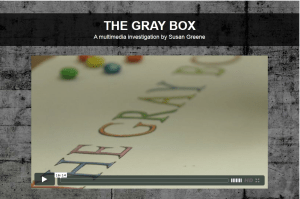
Lunch yesterday with my awesome friend Susie Greene, who has just produced/published this multimedia investigation into solitary confinement.  Extra bonus awesomeness, it features ass-kicking DU clinical professor Laura Rovner.   The video will expand your brain into the toxic arena of solitary confinement.  You thought it was just a few days “in the hole” for bad behavior.  Think again.

And, um, protect.  After lunch — at the (perfectly appropriate) prodding of Susie and Tim — Susie took me ski-helmet shopping.   I have been trying to convince myself that having skied for 40ish years without a helmet, I was somehow grandfathered (grandmothered?) in.   But even I had to admit, finally, that this made no damn sense.  So now I’ll look like this when I ski:

Lindsey Vonn skiing at top speed

Or more realistically:

Amy in a red ski helmet

More on the “r-word”

Sam Bagenstos has written a thoughtful post on the use of the word “retard” in movies and our response as a community.  He was responding to this post, which was reacting, in turn, to the use of the word “retard” in the Alexander Payne/George Clooney movie, The Descendents.  I tend to agree — on general free expression and artistic license grounds — that we should not be in the business of telling writers what to write.  But I’m hoping for the day when the casual use of the word “retard” carries the weight that the casual use “nigger” or “cunt” would.  (For example, I’m predicting it was pretty jarring to read those words in my blog.  Was it equally jarring to read the word “retard”?)

Given the intersection of language nerdery and disability rights, this is a subject that interests me and that I’ve written about a couple of times.  Sam’s blog post makes excellent points, including that

People use the r-word in real life, just like they use slurs against other groups (and just like they do other harmful and wrongful things), and it would be wrong to say that movies and literature can’t depict that.  (And I think it’s a cheat to say that the use of the word can be depicted but only if the character who uses it “learns the lesson” that it’s wrong or is otherwise shown to be a bad and unsympathetic character.  That’s not any different than requiring purely idealized depictions of people.)

Very true.  In fact, if the word were restricted to movies, books, or tv shows in which lessons were learned, we’d only hear it in after-school specials, where the bully turns out to have problems of his own, reforms, and everyone has a group hug in the end.  No, rather than requiring lessons be learned or the word avoided, I’m hoping the movie-going public evolves to the point where the writer knows that putting that word in a character’s mouth will communicate something deeply negative about that character.  Right now, the choice to have a white character use the word “nigger,” without the quotes, directed to or about an African-American, communicates something very specific and negative:  the speaker is a racist asshole.  Same with “cunt”:  sexist bastard, or denizen of frontier Deadwood, South Dakota.

The truth is, I find it incredibly jarring and disappointing when a character in a movie with whom I sympathize (or perceive that I’m supposed to sympathize) uses the word “retard” as a casual epithet.  It’s similar to the phenomenon that Ta-Nehisi Coates has called “the John Mayer Rule,” and which I called “drinking with white people”:   that moment when someone you thought was cool says something bigoted  . . . and the concomitant urge to avoid situations (in my case, drinking with acquaintances who don’t get disability rights) where this might happen.  There are good reasons why George Clooney would not say a long list of offensive epithets in a movie of the type I understand The Descendants to be.  I’m hoping for the day when writers and actors will think that way about the word “retard” and use it accordingly.

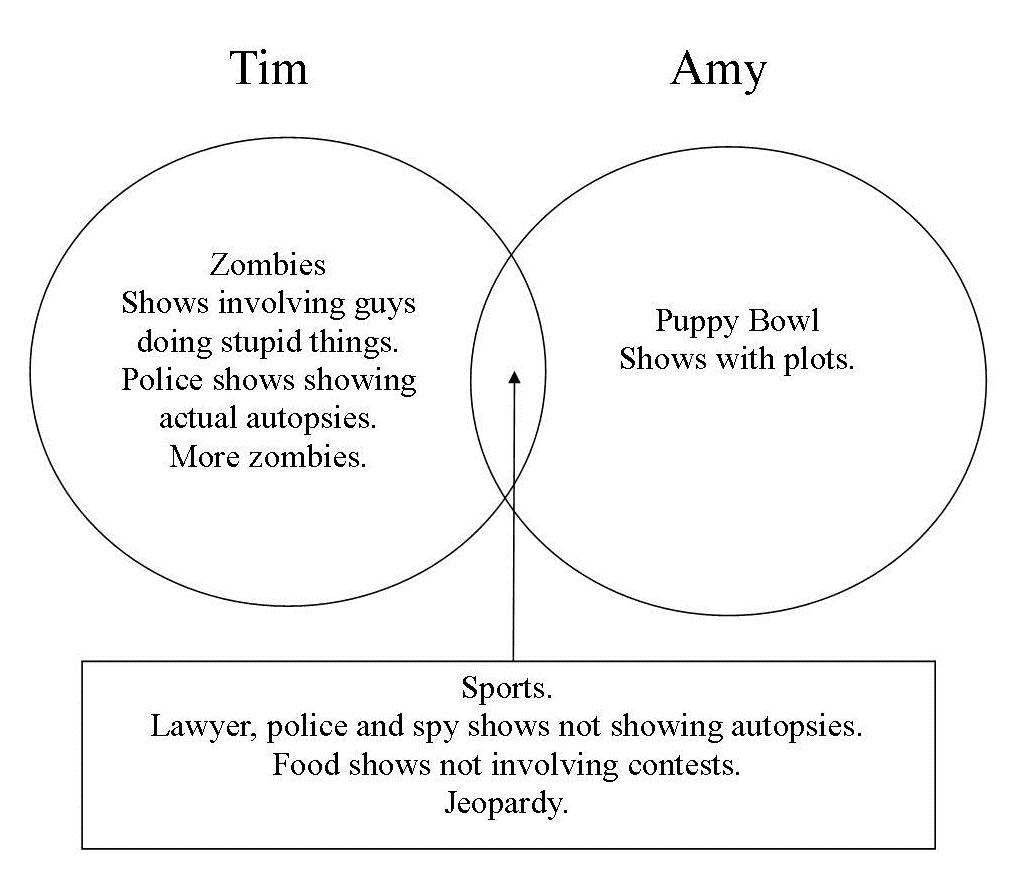
One final thought:  a laser-focus on one word misses is the many ways movies and TV can be demeaning to people with disabilities while remaining pristine in language use.  One of my favorite examples is Law & Order, which has presented a long string of pathetic and/or criminal people with disabilities, without once (that I can recall) showing, say, an attorney, detective, forensic professional, or random witness in a wheelchair.  Two episodes stick in my mind.  In one, a mother is accused of killing her son, a quadriplegic.  The son is presented as unable to get out of bed and as a result we are asked to sympathize with the homicidal mother.  Scenery-chewing DA Jack McCoy tells the jury — as a fact, I promise, not as a negative comment on the mother’s narrow world view — “she knew he’d never grow up to be a doctor or lawyer.”  Seriously – how hard would it have been for the writers to figure out that there are all sorts of quad doctors and lawyers and other professionals?  The other episode I recall was where the hunt for the killer led toward the brother who was paralyzed and as a result bitter and murderous.  While I can’t recall others off the top of my head, I don’t recall any portrayals of people who use wheelchairs straying beyond vegetative and/or embittered.  I’d take 100 George Clooney “retard” utterances over this.  Although we keep watching the damn show,* we know to turn it off the instant there is mention of a character with a disability.  We know, to a 100% certainty, that L&O will screw it up.

********************
* L&O occupies the very small overlapping area of Tim and my taste in television:

Things that are inexplicably OK, part 2

The New Yorker recently published an article on premature birth that inspired this thoroughly appalling letter:

So let me get this straight:  Instead of ensuring that our educational system teaches all of our children, we should “accept death,” lest we be excessively sentimental to the detriment of . . . the special education students to whom we so desperately — but  apparently inappropriately? — want to cling.  What does Linda Bonin of Kirkland Washington think we should do instead?   Administer the PSAT prenatally?   What really frosts my shorts is that Ms. Bonin was almost certainly regarded as a good person — someone who liked to help people — possibly even by the parents of the special education students whose very existence she regretted, unsentimentally.

Who the hell is Ms. Bonin to decide that her students didn’t deserve to live.  Who are any of us?

Things That are Inexplicably OK

I’m not talking about things that are bad but widely acknowledged to be bad like, murder or the Dallas Cowboys.  And I’m not talking about things that I’m confident are bad but as to which I grudgingly acknowledge that marginally reasonable minds could differ, like mayonnaise or light beer.  I’m talking about things that allegedly smart people in allegedly polite company seem to have no problem with but that are completely morally indefensible.

Peter Singer.  This guy is a philosophy professor at Princeton who advocates killing infants with disabilities.  Seriously.  I’m not sure this guy is on anyone’s radar outside the black-turtleneck-and-tweed world and the disability rights world, but now you know:  Princeton has on its faculty a professor who favors infanticide for disabled kids, largely based on his utilitarian approach which is based, in turn, on the sound philosophical principle that upper class white guys with tenure can judge the quality of life experienced by the rest of the world and make life and death decisions based on that judgment. I’m all for academic freedom and the First Amendment, and I don’t advocate that this guy be fired or punished for these absurd views.  I’m just wondering why on earth he’s taken seriously.  It’s like Princeton deciding to hire a Holocaust denier or “intelligent design” advocate — or really someone who offered a principled, philosophical defense of slavery.  I would defend any of those hires in the name of academic freedom, but I really think that many more people would join me in puzzlement as to why the hell such a person has a chair at Princeton.

The Tomahawk Chop. Atlanta Braves fans spend a large part of each game making gestures designed to mimic a tomahawk and humming a tune designed to mimic what antediluvian Hollywood thought was Native American music.  This is just gross racial mockery.*  I have to confess (sorry, Bruce) that I feel the same way about “Redskins.”  I don’t have a problem in general with Native American team names — Braves, Indians, Seminoles — because there are plenty of other groups-of-people names:  Padres, Vikings, Patriots, Mariners, Royals, Twins, Pirates, Rangers, Canucks, Canadiens, Packers, Texans, Buccaneers, Cowboys, Raiders, Senators, Kings, Celtics, Cavaliers, Trail Blazers, Warriors.  And, um, Wizards?  But “Redskins” is an epithet, not a generic group-of-people name.  Sorry.**

Flying the Confederate flag. What part of treason is unclear to these folks?  Seriously.  I love the fact that throughout the south “United We Stand” bumper stickers are pasted side-by-side with the stars & bars.  Again, I have no problem, as a First Amendment matter, with flying whatever flag you want.  Just don’t asked to be taken seriously when you display the Confederate flag and question other people’s patriotism.

“Free Mumia.” Give the man a fair trial, but damn, it sure looks like he shot a cop.  Let’s not free him til we’ve tried him fairly and he’s been acquitted.

This is a very very partial list.  Feel free to share your contributions in the comments!  (Really!  I LOVE comments!)

******************
* I always loved that Jane Fonda, during her Ted Turner period, could regularly be found in the Braves’ audience chopping away.  For you conservatives who hate her for being a liberal, the joke’s on you:  she’s just another shallow celebrity looking for attention — and you give it to her!

** I predict that this will engender more brotherly ire than all my liberal political rantings put together.