Author Archives: Amy Farr Robertson

Unknown's avatar

About Amy Farr Robertson

Civil Rights Lawyer. Dog Lover. Smartass.

Things that are inexplicably OK, part 2

The New Yorker recently published an article on premature birth that inspired this thoroughly appalling letter:

So let me get this straight:  Instead of ensuring that our educational system teaches all of our children, we should “accept death,” lest we be excessively sentimental to the detriment of . . . the special education students to whom we so desperately — but  apparently inappropriately? — want to cling.  What does Linda Bonin of Kirkland Washington think we should do instead?   Administer the PSAT prenatally?   What really frosts my shorts is that Ms. Bonin was almost certainly regarded as a good person — someone who liked to help people — possibly even by the parents of the special education students whose very existence she regretted, unsentimentally.

Who the hell is Ms. Bonin to decide that her students didn’t deserve to live.  Who are any of us?

Time

Tim and I have a mixed marriage.

Not really religion :  even though we’re technically of two different faith traditions, we’ve found we often have more in common with each other than either of us has with most of the rest of our respective tribes.

Not sports teams:  I converted.

And of course, we’re both lawyers.  I have *no* idea how mixed marriages between lawyers and non-lawyers work.  What on Earth do they talk about?

No, Tim and I are a mixed marriage with respect to time.  I’m analog.  He’s digital.

For example, I don’t believe that the time of day comes in chunks smaller than five minutes.  So I would no more say “it’s 12:37” than I’d say “it’s 12:37:42.03.”  It’s either 12:35 or 12:40.  And truthfully, I’m much more likely to see this

and say “twelve thirty” or “quarter of one.”  Because really, who needs to know that it’s “twenty-five of one?”   In fact, I’m likely to see this:

digital clock showing 12:37

and say  “twelve thirty” or “quarter of one.”  This, of course, drives Tim up the wall.

When we first met, my watch looked like this:

watch with hands but no numbers

That’s right — no numbers whatsoever.*   Do you really need them?  Look at that watch face.  You know all you need to know about the time:  it’s that time of the afternoon when you should start thinking more seriously about what you are going to eat for dinner.

I’m also generally late.  This is based on (1) my refusal to remember the digits to the right of the colon in the start time of any event and (2) the fact that when that time rolls around, I view it as my signal to start getting ready to go.  Thus, if I were in charge of getting us on a 12:37 flight, I would internalize it as “12 something,” and at 12 something,  start to think about packing for the trip.  This is why I am *never* in charge of getting us to the airport on time.  Occasionally, on a lark, I take charge of some lesser event, say, dinner reservations at a steak joint where they know us, we’re not meeting anyone, and if I totally screw it up, we can eat in the bar.   I can usually get us there within 20 minutes one side or the other of when we’re supposed to be there.

Where it really gets interesting, however, is where Tim is forced reassert control over the time situation.  This is when we discovered his time-bending abilities.  For example, if we’re supposed to be at his parents’ house at noon….  Pause to explain that in the Fox family, the time gene follows the paternal line.  This was clearly not so in our family, where my father had more or less my attitude and aptitude toward time and my mother and brother share Tim’s precision.  But when we’re set to meet the Foxes at, say, noon, we generally get a call at 11:55 asking our ETA.  (Love you, Denver!)

Back to time-bending.  If I’ve managed to make us late — say, just as a hypothetical, by waiting for the actual necessary departure time to begin a long list of pre-departure tasks (change clothes, brush teeth, gather miscellaneous items that belong in my purse, put the dogs out, wait several minutes for Saguaro to select the optimum location to pee, bring the dogs in, locate my coat, etc.) — Tim will reassert control over time.  This is not an adversarial process.  It’s not “Dammmit, we need to get going.”  It’s the fact that once Tim is in the car with me, a trip that — based on the speed limit, the physical capabilities of the van, and the theory of relativity as I understand it — takes 30 minutes will in fact take 10 minutes.  I have no idea how he does it.  We call it “Timmifying time” and it has to be used judiciously, as randomly Timmifying any given trip has the risk of getting you to your destination very early, leaving you as, say, the first two people to arrive at a heinously boring bar dinner.  In those situations, we retroactively Amify the time by stopping at the actual bar and preparing ourselves, chemically AND chronologically, for the event.

*********************

* My watch would still look like this if I could find one for under $25.  I bought this for a couple of bucks in Hong Kong in about 1984 and it long ago gave up the ghost.  Unfortunately, I don’t buy nice watches for the same reason I don’t buy nice pens:  I lose them.  I long ago figured out that this wasn’t going to change, and that rather than freaking out over losing an expensive watch, I would simply buy Timexes or Swatches and replace them as needed.

Defame This!

Remember just the other day I was ridiculing some over-caffeinated opposing counsel for accusing CCDC of defamation for posting, on its website, pleadings in case alleging that his client violated the ADA.  Highlight:


My position is that you and your clients have been defaming my clients by raising false allegations of discrimination . . .


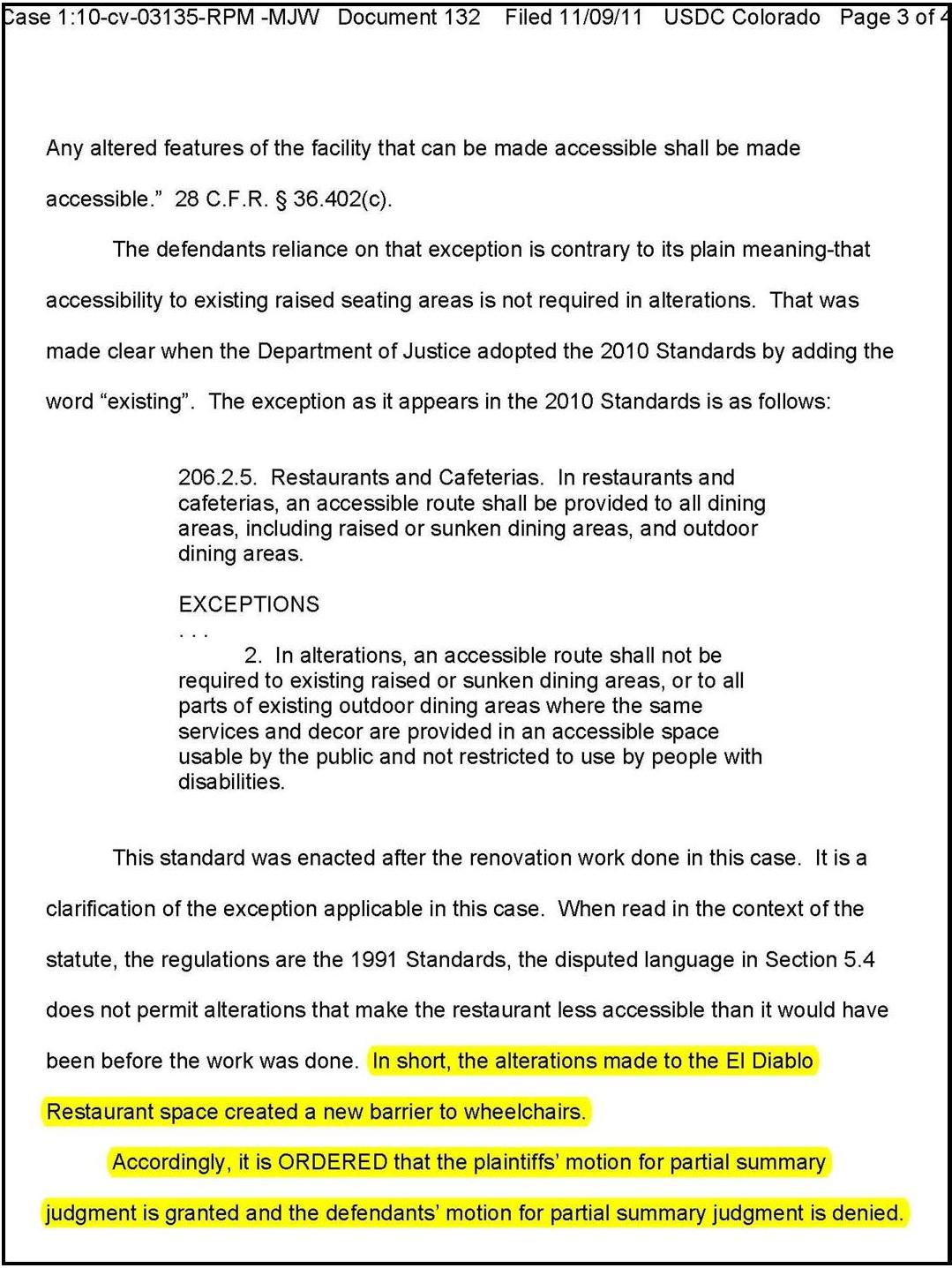
On Wednesday, we got the judge’s decision on our motion for summary judgment.  Here’s page 3 — the key portion: 


That’s right, Ladies and Gentlemen, summary judgment granted to plaintiffs!  Big thanks for the excellent legal work of Team CCDC:  Kevin Williams, Andrew Montoya, and Briana McCarten.


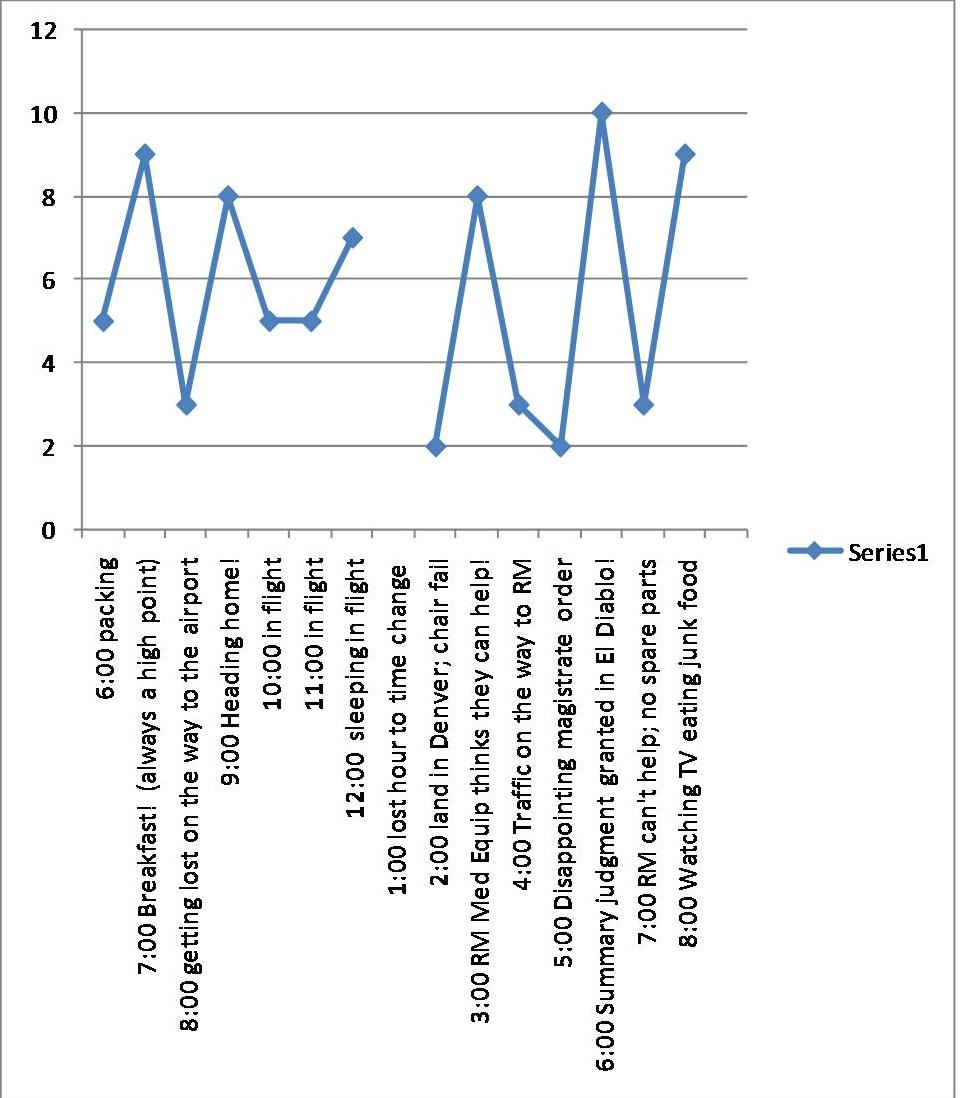
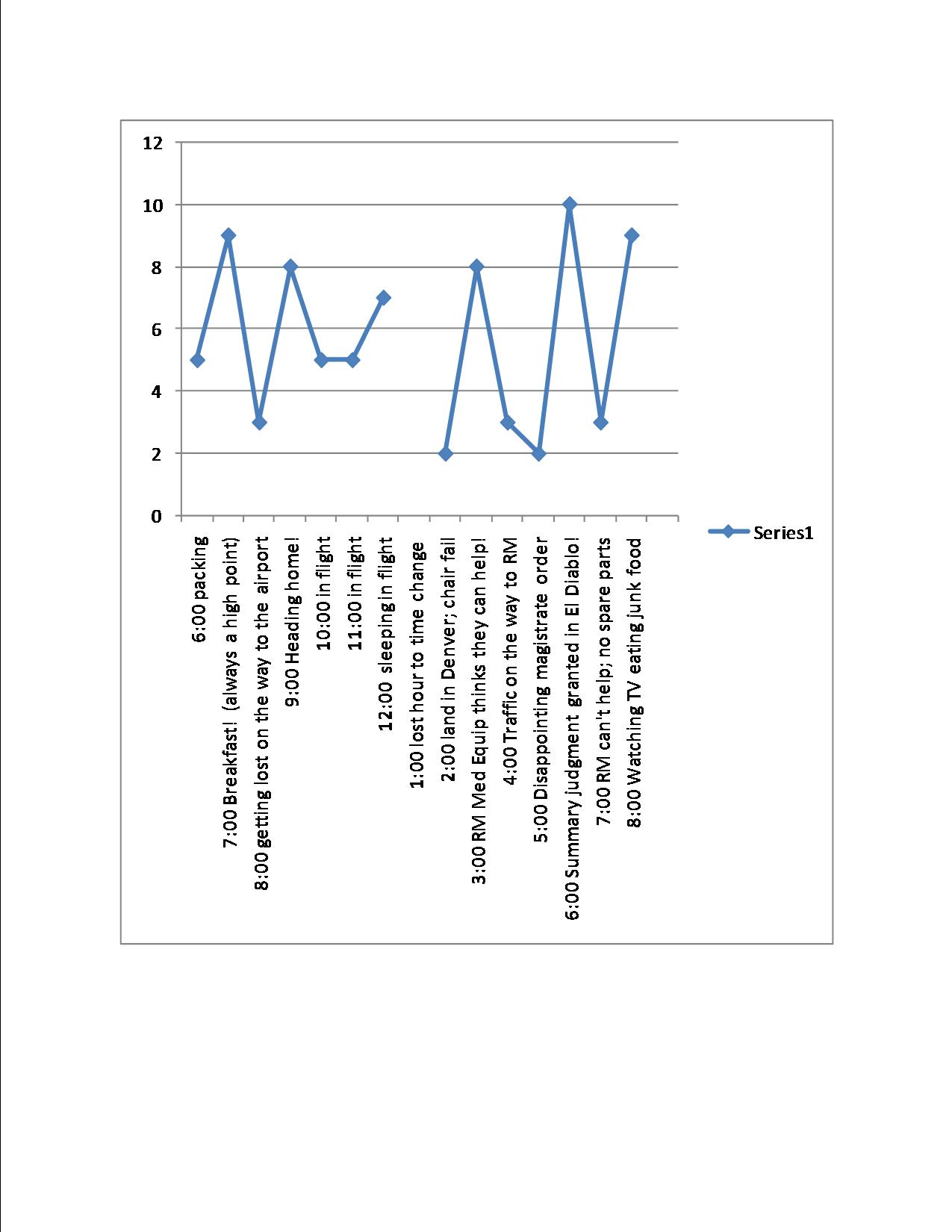
My Day: A Chart

Flew home from Portland, wheelchair fail, and two very different court decisions in a short period of time:


This Week In Random Media Hypocrisy

Breaking News!  Did you know that the mayor of a  major American city said that treating African-Americans equally was an “inconvenience” that was “unfair to average people” because it made them “uncomfortable”?  You didn’t!?  What a scandal – how did the media miss this?

Oh, right, sorry — it was just the civil rights of people with disabilities.  Silly media consumers — you know that’s not the same thing.  So no reason to expect 24/7 handwringing, apologies, and navel-gazing talk shows about the state of civil rights in response to the MAYOR OF OUR LARGEST CITY SAYING THAT RESPECTING THE RIGHTS OF HIS MINORITY-GROUP CONSTITUENTS IS INCONVENIENT AND UNFAIR TO “AVERAGE” PEOPLE.

In fact, I have to cut the intrepid reporters on the civil rights beat some slack on this because they were busy pursuing a much more important story.

Yes, leading liberal website ThinkProgress was far too busy tracking the astonishing news that  beauty queen got drunk and used a bad word.  In fact, the website was so on top of this story that they got an …

That’s right, an EXCLUSIVE.  You won’t read this important story ANYWHERE ELSE!   And in fact, ThinkProgress has the crucial details, too.  Miss Virginia’s roommate told the reporter that she was “extremely intoxicated” that night and seemed upset that she did not have the full house to herself, so she  “downgraded people based on their physical appearance and economic status.”  Now this is indeed breaking civil rights news:  college girl gets drunk, says something stupid and hurtful.

How on earth did ThinkProgress beat out The Onion to this important scoop?

Stupid Lawyer Tricks: alleging defamation as defense to inaccessibility

It should be obvious that whatever the ADA does or does not permit, it would not permit a business owner to DECREASE accessibility.

ADA 101:  You’re supposed to build new facilities to be accessible and make old ones accessible when it’s “readily achievable” — that is, when the cost and your resources make it reasonable.*  When you’re making alterations, you’re supposed to make them accessible “to the maximum extent feasible.”  But fer Pete’s sake — a phrase that really should appear verbatim in the regs — don’t take something that’s accessible and make it inaccessible.

This is what the regs actually say about it:  “No alteration shall be undertaken which decreases or has the effect of decreasing accessibility or usability of a building or facility below the requirements for new construction at the time of alteration.”  ADAAG § 4.1.6(1)(a).

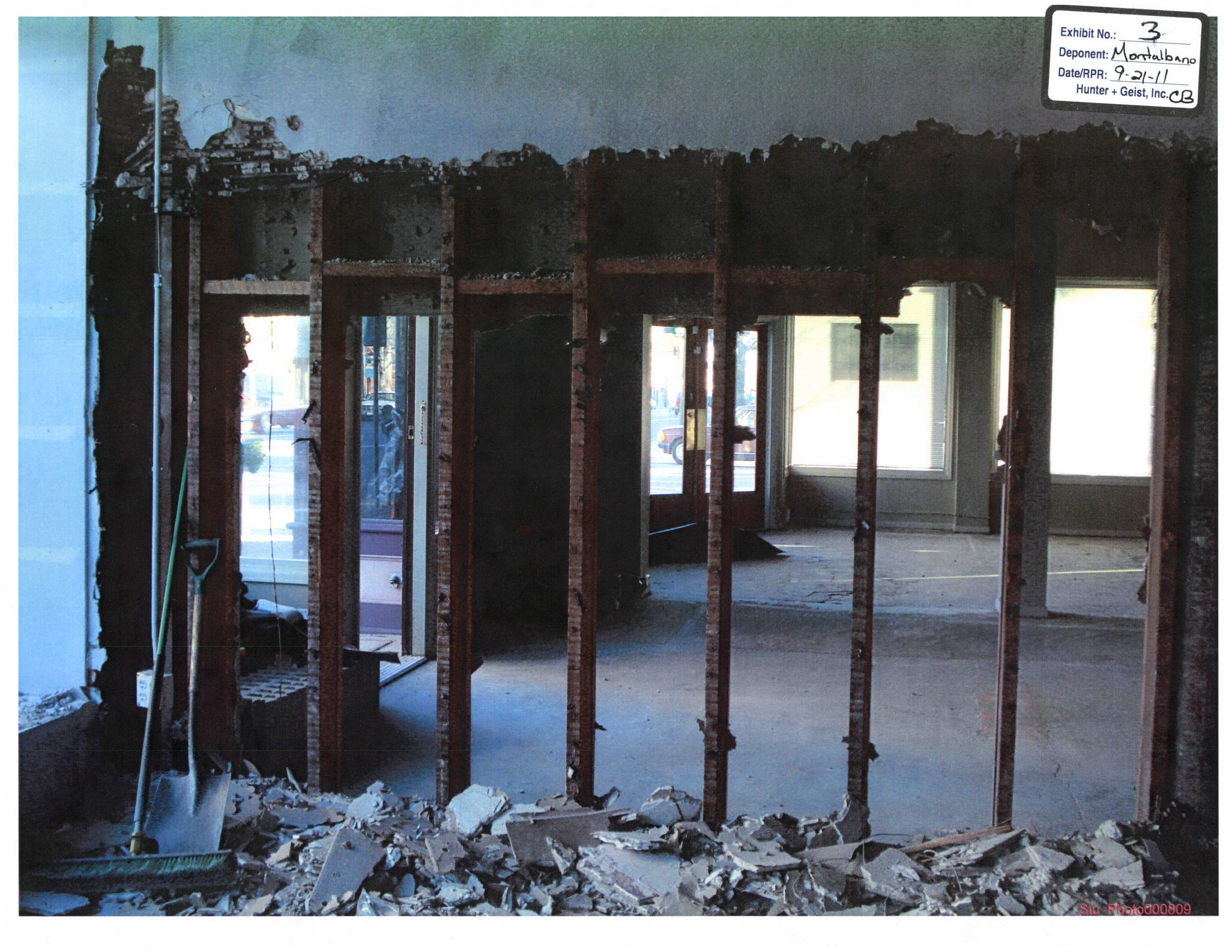
When we moved into our office space in February, 2008, the space across the street was empty and essentially gutted.  Among other things:  flat.  The floor of the space was had no changes in level.  Did I mention it was flat?

Hoping for another good restaurant in our neighborhood, we were psyched to learn that someone was opening a mid-scale Mexican restaurant & bar across the street.  We looked forward to good food and after-work gatherings, especially with our friends & co-counsel at the Colorado Cross Disability Coalition, which is right up the street.

This is what the space looked like before:

Here’s what it looks like now:

We don’t have a panoramic shot of the restaurant, but this is the newly constructed raised area on the north side — the mirror image of the newly constructed raised area on the south side.  No ramps.  Over half of the total floor area is now inaccessible, and most of the rest is occupied by a bar, leaving a couple of tables — often inaccessible high tables — on the ground level.

To summarize:  The owners constructed two inaccessible raised areas in a previously flat, fully-accessible space.  They took a space that could have been completely integrated and created — at best — a wheelchair ghetto.

In brief:

Before: flat.
After:  inaccessible.

We tried hard to talk to them about this, with no success.  So we got together with the Colorado Cross-Disability Coalition and filed suit.

Pause for a brief introduction to CCDC, as if all five of my readers aren’t already intimately familiar with them.  On a shoestring budget, CCDC works with the legislature, conducts training, engages in outreach and advocacy and — when called for — files suit to ensure equality of opportunity for people with disabilities.  During the legislative session, their volunteers are at the capitol every day.  When people are having difficulty securing needed services or benefits, their volunteers are on the phone.  And their advocacy and litigation have increased Denver’s physical accessibility from the Pepsi Center to Red Rocks, and … done a lot of other amazing stuff.  I was going to give some more examples, but just click here and scan the list!

In response to the lawsuit, the restaurant retained Littler Mendelson, a nationwide employment discrimination defense firm.  And by “nationwide” I mean, of course, “expensive.”**  Instead of working with us to make the place more accessible — and saving everyone’s attorneys’ fees — it’s been scorched earth litigation.  But I think what has been most entertaining for us is the Littler lawyer’s decision to accuse CCDC of defamation.  Yup:  the fact that CCDC posts, on its website, the pleadings — public documents — containing the undisputed facts above — took a flat space; made most of it inaccessible — constitutes defamation.  Here is the Littler Mendelson attorney, verbatim, in a deposition of CCDC’s executive director:

5     ……My position is that
6   you and your clients have been defaming my clients by
7   raising false allegations of discrimination, repeatedly
8   accusing my client, both in this case, in judicial
9   filings, but also in Internet filings, which simply
10   reiterate the false allegations put into the court
11   record that my client discriminates against individuals
12   with disabilities.
13                You are trying to present a picture of my
14   client to the Court which is not true, and I’m entitled
15   to present a picture of your client which I believe
16   demonstrates its motives in pursuing this case.  You’re
17   trying to present a picture of your client to the Court
18   of a noble organization just trying to obtain
19   additional access for people with disabilities.
20                I’m allowed to present to the Court a
21   picture of your organization as one which shakes down
22   and scourges local businesses and forces them to incur
23   tens to hundreds of thousands dollars in attorney’s
24   fees and costs in order to promote the organization’s
25   revenue and business, and I think I’m allowed to make
1   the same types of — I’m allowed to rebut the glowing
2   picture of your organization that you’re trying to
3   present to the Court . . .

That’s right:  calling attention to the fact that the defendant took an accessible space and made it inaccessible is defamation.  I suppose we should be glad that being accused of inaccessibility is at least regarded as a bad thing!

Just after we started our firm in 1996, I was talking to my Dad about some of the baloney we were already starting to get from defense counsel.  He told this story. When he was the Executive Director of the Missouri Commission on Human Rights in the early 1960s, he decided to drive around rural Missouri testing the newly-enacted Civil Rights Act which prohibited discrimination on the basis of race in places of public accommodation, for example, restaurants.  On at least one occasion, the restaurant he had just tested called ahead to the next one down the road, and the folks at the second place were waiting at the door with shotguns when he arrived.

I suppose it represents a sort of progress that enforcing the civil rights laws in 2011 requires only a thick skin and a high tolerance for bullshit rather than a up-armored ’64 Dodge Falcon and firearms.

************
* OK, the definition is slightly more complex than that, but I sense your eyes glazing over already.

**  We haven’t seen their legal bills, but I’m fairly certain Littler Mendelson is not working for free.  Our assumptions did lead to this dryly hilarious exchange in the deposition of CCDC’s executive director:

18 Q. All right. Then in the
19 next line, the next paragraph, second sentence, says,
20 “[The restaurant’s] owner is spending money, lots of money, on
21 a 17th Street law firm to fight providing access.” Do
22 you see that?
23 A. Yes.
24 Q. What is the basis of your knowledge
25 concerning the amount of money, if any, that
1 [the restaurant’s] owner is spending on legal fees?
2 A. I — I guess I don’t know exactly. It’s
3 an assumption. Maybe I shouldn’t have made that
4 assumption. Maybe you’re working pro bono and I don’t
5 know that.

If you are not rolling around on the floor laughing so hard you can’t breathe, you probably aren’t a plaintiffs’ lawyer.

Stopping to appreciate

I was just about to post a cranky post about opposing counsel in a case we’re involved in* and my last two Facebook posts have been

This is where we are on our Big Case: witness has to go back to doctor for urgent tests and possible exploratory surgery for cancer; Defendant refuses to withdraw the subpoena for her deposition at the same time as the medical appointment.

Mamas don’t let your babies grow up to be lawyers.

and

File under “K” for karma’s a bitch. Opposing counsel who refused to reschedule a deposition for the witness’s medical procedure now needs us to reschedule for *his* medical procedure. Must.Control.Sarcastic.Response.

so it hasn’t been a good week for Rule 1.5.  But before I launch into my latest diatribe, I wanted to link to this, a wonderful meditation** by my friend and co-counsel Kevin Williams on how lucky we are to practice in the field we do.

As many of you know, CCDC’s offices are like many non-profit’s, but from my office, I can see the Colorado Rockies South and West.  From Pike’s Peak…almost…(if you stretch)… to Long’s.  This evening, as I wrap up today’s work (responding to letters from some lawyer telling me why he thinks I’m an a**hole), I was lucky enough to remember to turn around from my desk and look out my window.  I just watched the magnificence of another spectacular Colorado sunset.

The sunsets keep coming.  Fifteen years of being a disability rights lawyer has taught me one undeniable principle: When you represent people who have a righteous cause, you are doing the right thing.  Although we have had a few let-downs over the years, and many, many contentious battles, the victories keep coming. I look forward to tomorrow’s sunset.

We are lucky.  I’ll be ranting again soon — tomorrow, even — about the antics of our opposing counsel, but for tonight I’m thankful to practice in the field that I do, with a partner like Tim, co-counsel like Kevin and the rest of our incredible and various teams, and righteous clients, cases, and issues.  And much as I love our coastal colleagues, with the amazing view of the sun setting over the Rockies.

**********

*Coming soon.

**I think Kevin will hate this word.  I think he’d prefer something more like gin-fueled philosophizing.

The 12 Stages of Wheelchair Repair

  1. Swearing.
  2. Unhelpful improvisation by Amy.
  3. Searching for lost parts and reassembly.
  4. Helpful improvisation by Dustin.*
  5. Canine supervision.
  6. Calling wheelchair repair place.
  7. Calling back several hours later and finding out they’ve never heard of you.
  8. Two days of immobility in front of computer drafting a brief addressing the same effing issues we addressed in 2003.**
  9. Finding a new wheelchair repair place.
  10. Getting call back from owner of company, who sends competent, friendly employee, who makes three separate trips to our house in one day, resulting in success.
  11. Sending FTD Thank You cookie box to new place, hoping that bribery through sweets will result in future quick repairs.
  12. Finally getting out of the house to complete repairs using vodka and french fries.

Did I mention Rocky Mountain Medical Equipment?  We love you, Alan!

**********************

* OK his etsy shop doesn’t have anything to do with wheelchair repair, but his designer messenger bags are very cool.

** Not strictly speaking a part of every wheelchair repair event, but made this one especially fun for Tim.

What’s a girl gotta do to start an internet meme?

Update: Click here for the Breaking Bad meme.  This page gets a lot of traffic based on the title; but I think if you’re looking for anything, you’re looking for this, not for my smartass Venn diagram.

Original post: I had high hopes for my little photoshopping* adventure in the previous post.  Evidently, I did not do enough market research, because it appears that this is my potential audience:

Anyone wanting to join the elite 4 who appear to have gotten the joke, here is the scene in question — not for the squeamish.

***********

*Truth is, Photoshop itself is too complicated for me to use for edits like that, so the actual work was done in MS Publisher.  But “photoshop” is well on its way to becoming a verb.  Sorry, Adobe!