Author Archives: Amy Farr Robertson

Unknown's avatar

About Amy Farr Robertson

Civil Rights Lawyer. Dog Lover. Smartass.

File under “o” for occasionally we make some progress

One of the (many many) things I love about legal research is that you can get swept up in the interesting stories that cases tell, many of them totally irrelevant to the point you’re researching.   This is also a happy by-product of ADD.   I think of it as the legal research scenic route, and have no fear, I don’t bill for it.

Today’s scenic route was not so scenic, but was instead a startling history lesson.  I’ll let it speak for itself:

The Court notes that until 1950, the National Association of Real Estate Boards (NAREB) counseled its members to maintain segregated neighborhoods in the interest of maintaining property values. The Code of Ethics of the NAREB provided until then that:  ‘A REALTOR SHOULD NEVER BE INSTRUMENTAL IN INTRODUCING INTO A NEIGHBORHOOD A CHARACTER OF PROPERTY OR OCCUPANCY, MEMBERS OF ANY RACE OR NATIONALITY, OR ANY INDIVIDUALS WHOSE PRESENCE WILL CLEARLY BE DETRIMENTAL TO PROPERTY VALUES IN THAT NEIGHBORHOOD.’

Zuch v. Hussey, 394 F. Supp. 1028, 1054 n.12 (E.D. Mich. 1975).

So, yeah, we’ve made some progress.

Gratuitous political comment:  and this is what Ron Paul would take us back to.

Public service: talking to your politically-deluded family members.

If you have a relative who is completely deluded politically  with whom you graciously disagree on various political matters, you may have trouble from time to time coming up with something to talk about at family gatherings.  As regular readers of both of our blogs have discerned, my brother is completely deluded politically a Republican and I am correct in all things a Democrat.   Yet we have many fascinating, non-political things to talk about.  Herewith, as a public service at these family-oriented holidays, a working list of the things that can completely occupy our conversation in the absence of politics:

  1. the awesomeness of my niece and nephew.
  2. our weird extended family.
  3. nasal allergies.
  4. solutions to nasal allergies.
  5. things his kids have puked up compared with things my dogs have puked up (I win — neither of his kids ever puked up a tennis ball).
  6. food (generally not immediately following item #5).
  7. decades old in-jokes involving pointless things our grandfather said.
  8. sports.
  9. hilarious things our father used to do, for example, applying lotion to his face while driving by pouring a big puddle of lotion on the dashboard and dabbing it on his face.
  10. Fart jokes.

Your mileage may vary.

Have I mentioned recently how much I love Michael Bérubé?

A new Bérubé post!  Just in time for Christmas!  Let there be joy throughout the land!  (As we’ve previously established, I’m a HUGE FAN.)  And he’s writing on one of my favorite topics:  universal design.  Let’s face it, the world is full of accommodations . . . for people with physically and psychologically typical bodies.   But they’re only really called “accommodations” when someone with a disability requests them.  Though try attending a meeting where you’re the only hearing person or the only person who doesn’t ride in her own chair, and it will be brought home to you that the typical are accommodated all the damn time.

Future post:  why our lack of wings requires the accommodation of stairs, elevators, escalators, and other ways of accessing upper stories without having to fly.

Anyway, Bérubé’s insight into how this worked in academic accommodations was wonderful:

So in response to my student with CP, I decided to distribute a take-home exam on the final day of class, and then give students 72 or 96 hours to write two essays.  That way, the exam itself would be turned in (and graded) during finals week, and students could devote as much (or as little) time to the exam as they desired.  I’ve done this ever since. . . .

Lastly, for even more extra extra upside, the students who need accommodations  . . . get to work at their own pace, like everybody else.  It’s like universal design … for final exams.

I don’t think those words mean what you think they mean.

Newt Gingrich asks: “Do you want to move towards American exceptionalism, reassert the Constitution, reassert the nature of America, or do you, in fact, want to become a secular, European, sort of bureaucratic socialist society?”

Evidently his own answer is, “neither, thanks; I prefer a dictatorship.”

How do we know this?  Because he has decided to abandon the rule of law, one of the key things that makes America exceptional.

On “Face the Nation,” Gingrich announced not only that court decisions that are out of step with popular opinion should be ignored, but that as president he might have judges arrested by the Capitol Police or the U.S. Marshals.

Ignoring court decisions and having judges arrested is what dictatorships do.

He was referring to a decision to keep a public high school graduation secular, something required by the Constitution.  But ignoring unpopular opinions would not only let us establish government-ordained religion and reinstitute racial segregation, it would let undermine one of the pillars of our economy.   I’m thinking foreclosures are fairly unpopular decisions these days — shall we be allowed to ignore them?  How about evictions?  Don’t want to pay a judgment for breach of contract?  Form a mob and show how unpopular it is!

In my field, decisions tossing ADA cases based on procedural grounds such as standing or mootness are unpopular.  Shall we ignore them and bring our sledgehammers with us when we visit inaccessible facilities?  (Do NOT tempt me!)

Or are we only allowed to ignore decisions that are unpopular with conservatives?

And this guy is supposed to be the brain trust of the Republican party?

What’s funny is that Gingrich is smart.  He knows how important the rule of law is, which also means that he knows he’s full of shit.  But he has apparently decided that the only way to win this time around is graft the arrogance that has always been a side effect of his intelligence to some sort of random right wing slogan generator to create a FrankenCandidate who would be immensely entertaining if he weren’t so frightening.

And finally we have the Republican party 2011:  proclaiming conservative values while embracing a someone with three marriages and multiple affairs; decrying elitism while embracing a pompous windbag with a $500,000 line of credit at Tiffany’s; and proclaiming American exceptionalism while rejecting the rule of law.

Dog blogging

Every morning I take a few* minutes to read and comment on a couple of interesting blogs.  Then I take the dogs for their morning stroll.  Recently, it occurred to me how similar these processes were:

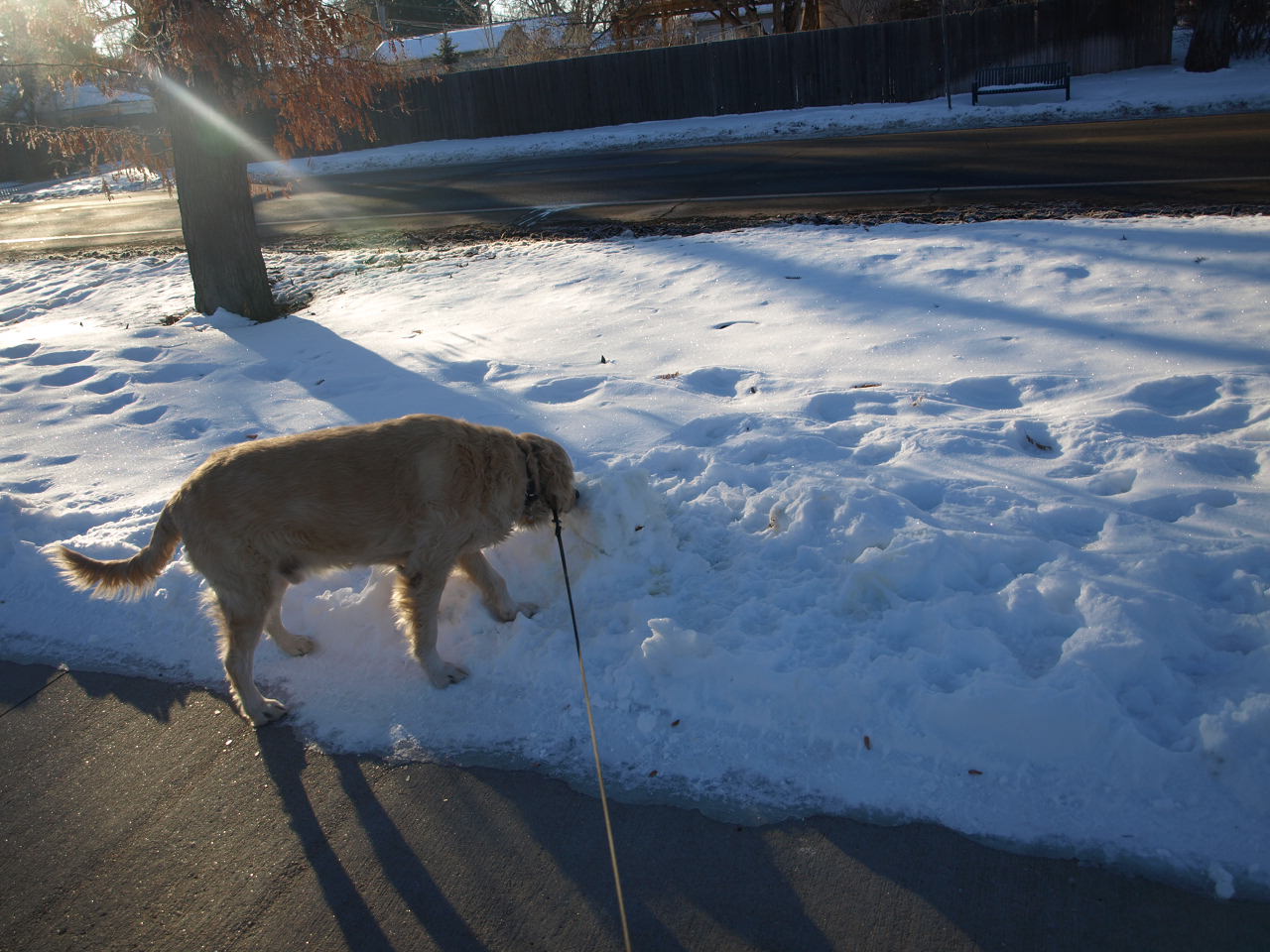
Dog sniffing at pile of (yellow) snow

Reading

Dog peeing on previous pile of (yellow) snow

Commenting

Two dogs sniffing (yellow) snow

Reading

Second dog sniffing (yellow) snow

Reading

One dog sniffing; the other dog peeing

Reading and commenting

Reading
Dog sniffing snow

Reading

all the

Angles

Reading and Commenting Simultaneously

Aaaaaand commenting

* The actual amount of time is directly proportional to the quantity and urgency of the piles of work on my desk.

Checklist for being a plaintiffs’ lawyer

The site “Stuff Journalists Like” posted a (so-far) 20-point “Checklist for being a ‘real’ journalist.”  It’s hilarious in and of itself, but some of the items are really part of a longer “checklist for being a word nerd,” for example:

2.  Corrected a loved one’s grammar in a greeting card.

My mother (love ya mom!) really did this once!  My word-nerdiness is clearly genetic and I was doomed from the start, because both of my parents have/had this gene.   Also

8. Can no longer read a newspaper without scanning for typos and errors.

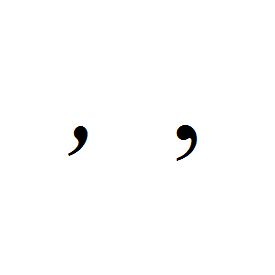
Hell, I can’t read typos and grammatical errors in anything without being deeply disturbed. And I have, within the past week (1) had a serious discussion about whether a comma following a case name was improperly italicized (you know who you are!), (2) pondered the conditions under which the word “id.” at the end of a sentence is preceded by a period and capitalized or preceded by a comma and in lower case; and (3) laughed derisively at the obvious line-spacing errors in my opponent’s brief (before, of course, realizing that the judge would not give a rat’s ass).

Italicized Comma vs. Not Italicized Comma

Here are a couple more that I think apply almost equally to plaintiffs’ lawyers:

3.  Replaced one of the major food groups with coffee.

I never did like fruit, and coffee occupies more of my diet than any food group but pasta and cheese.

5.  Eat in your car more often than you do at a table.

Replace “car” with “desk” and I’ll cop to that.

9.  Learned that being told to “fuck off” and “go to hell” is part of the job.

13.  Found that fine line between harassment and persistence.

Completely applicable to plaintiffs’ lawyers.  Like journalists, we often find ourselves needing to talk to people who don’t really want to talk to us.

10.  Woke in a cold sweat thinking you forgot to change the date on A1.

Just last night I woke up in the middle of the night — Tim can vouch for this — thinking that I never did review the final table of authorities in the brief we submitted on Thursday.  Luckily, our superhuman paralegal was in charge of it, so I slipped right back into a peaceful slumber.

17.  Have conducted a phone interview while completely naked.

Close:  I have often conducted legal research clothed only in a towel.  When you have good ideas in the shower, they really shouldn’t wait until you’re fully dressed to research them.  I have also edited a brief telephonically with co-counsel while walking the dogs and scooping up after them.

I had also previously suggested two “you might be a plaintiffs’ lawyer” conditions:  that your car is older then your paralegal; and when the skirts on the tables supporting the courtroom technology of your opposing counsel are nicer than the skirt you’re wearing.  What else, plaintiffs’ lawyers, should we add to our checklist?

More on the “r-word”

Sam Bagenstos has written a thoughtful post on the use of the word “retard” in movies and our response as a community.  He was responding to this post, which was reacting, in turn, to the use of the word “retard” in the Alexander Payne/George Clooney movie, The Descendents.  I tend to agree — on general free expression and artistic license grounds — that we should not be in the business of telling writers what to write.  But I’m hoping for the day when the casual use of the word “retard” carries the weight that the casual use “nigger” or “cunt” would.  (For example, I’m predicting it was pretty jarring to read those words in my blog.  Was it equally jarring to read the word “retard”?)

Given the intersection of language nerdery and disability rights, this is a subject that interests me and that I’ve written about a couple of times.  Sam’s blog post makes excellent points, including that

People use the r-word in real life, just like they use slurs against other groups (and just like they do other harmful and wrongful things), and it would be wrong to say that movies and literature can’t depict that.  (And I think it’s a cheat to say that the use of the word can be depicted but only if the character who uses it “learns the lesson” that it’s wrong or is otherwise shown to be a bad and unsympathetic character.  That’s not any different than requiring purely idealized depictions of people.)

Very true.  In fact, if the word were restricted to movies, books, or tv shows in which lessons were learned, we’d only hear it in after-school specials, where the bully turns out to have problems of his own, reforms, and everyone has a group hug in the end.  No, rather than requiring lessons be learned or the word avoided, I’m hoping the movie-going public evolves to the point where the writer knows that putting that word in a character’s mouth will communicate something deeply negative about that character.  Right now, the choice to have a white character use the word “nigger,” without the quotes, directed to or about an African-American, communicates something very specific and negative:  the speaker is a racist asshole.  Same with “cunt”:  sexist bastard, or denizen of frontier Deadwood, South Dakota.

The truth is, I find it incredibly jarring and disappointing when a character in a movie with whom I sympathize (or perceive that I’m supposed to sympathize) uses the word “retard” as a casual epithet.  It’s similar to the phenomenon that Ta-Nehisi Coates has called “the John Mayer Rule,” and which I called “drinking with white people”:   that moment when someone you thought was cool says something bigoted  . . . and the concomitant urge to avoid situations (in my case, drinking with acquaintances who don’t get disability rights) where this might happen.  There are good reasons why George Clooney would not say a long list of offensive epithets in a movie of the type I understand The Descendants to be.  I’m hoping for the day when writers and actors will think that way about the word “retard” and use it accordingly.

One final thought:  a laser-focus on one word misses is the many ways movies and TV can be demeaning to people with disabilities while remaining pristine in language use.  One of my favorite examples is Law & Order, which has presented a long string of pathetic and/or criminal people with disabilities, without once (that I can recall) showing, say, an attorney, detective, forensic professional, or random witness in a wheelchair.  Two episodes stick in my mind.  In one, a mother is accused of killing her son, a quadriplegic.  The son is presented as unable to get out of bed and as a result we are asked to sympathize with the homicidal mother.  Scenery-chewing DA Jack McCoy tells the jury — as a fact, I promise, not as a negative comment on the mother’s narrow world view — “she knew he’d never grow up to be a doctor or lawyer.”  Seriously – how hard would it have been for the writers to figure out that there are all sorts of quad doctors and lawyers and other professionals?  The other episode I recall was where the hunt for the killer led toward the brother who was paralyzed and as a result bitter and murderous.  While I can’t recall others off the top of my head, I don’t recall any portrayals of people who use wheelchairs straying beyond vegetative and/or embittered.  I’d take 100 George Clooney “retard” utterances over this.  Although we keep watching the damn show,* we know to turn it off the instant there is mention of a character with a disability.  We know, to a 100% certainty, that L&O will screw it up.

********************
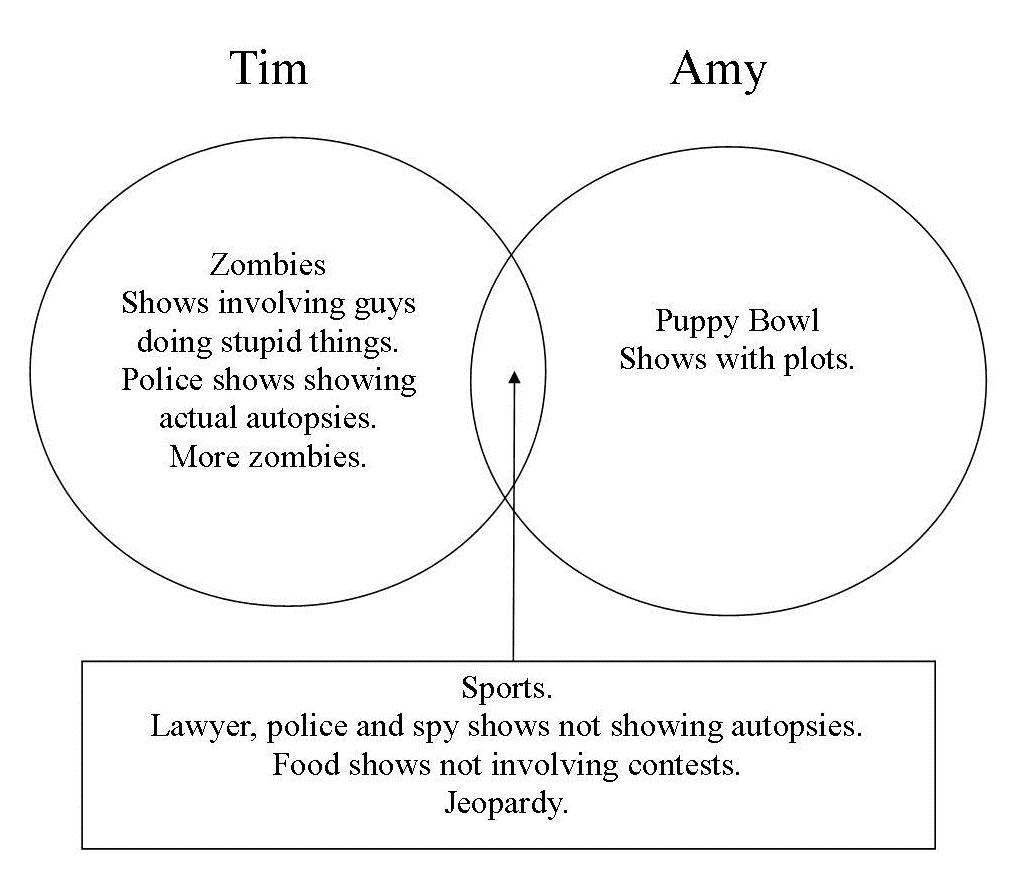
* L&O occupies the very small overlapping area of Tim and my taste in television:

Nerd Fashion

The hallmark of nerd fashion is practicality.  Not the sort of practicality that thinks, “I’m going to be on my feet most of the day.  I think I’ll wear my Cole Haan flats instead of my Christian Louboutin heels.”  It’s practicality mixed with overthinking.  As in black is elegant + white goes with everything = Amy dresses like the help at her aunt’s fancy dinner party.  It’s often practicality mixed with overthinking mixed with cheapness with results like this:

Amy in a garish yellow fleece over a bright red windbreaker.

It’s early morning.  I’m going rollerblading.   I need the yellow fleece to be visible, but (I think) it’s really cold out this morning so I need a windbreaker.  But the fleece has to be on top for the whole visibility thing.  Of course, I could spend$159 for a warm, high-visibility jacket at REI (and, as a bonus, I could apparently zip things into my armpits):

much better-looking bright yellow cycling jacked from REI

But I’m a nerd!  Why on earth would I spend $159 when I have the ingredients for a perfectly practical solution?