Category Archives: Disability Pride

Because the biggest f*****g problem with the ADA is too many f*****g drive-by plaintiffs

This evening we went back to the completely gutted and remodeled Izakaya Den restaurant and found that they installed a raised sushi bar with no ramp.  Here’s a photo from Westword with my added mark-up.

Photo of the inside of a restauarant.  To the lower left of the photo, a raised area is visible with seats at a lowered sushi bar.  The raised area is circled in red, with an arrow pointing to it from text that reads "Step up to sushi bar."

Sigh.

Just that, by itself, is deeply frustrating.  As we’ve discussed in connection with our lawsuit against the El Diablo restaurant, you can’t take an empty space and make part of it inaccessible.  While this should be obvious, it’s also illegal.

But what made this depressing, frustrating, infuriating and really sad was that we have been patronizing Izakaya Den and its sister restaurant, Sushi Den, for years.  They know us in both restaurants, well enough at Sushi Den that we had a table where we always sat, and most of the waitstaff had served us so often they automatically brought me a phone book to sit on.*  We had participated in a private sushi tasting with a chef visiting from Japan, and at that point (and others) met the owners.

It’s bad enough that Izakaya Den got seriously bad architectural advice.  It’s really depressing that no one ever stopped to think, this isn’t just a theoretical legal question; we have a regular customer who will want access to the sushi bar.   And what’s funny:  they have an elevator.  They added a second floor and an elevator.  Very fucking cool.  But damn!  Why on earth add an unnecessary, new, inaccessible raised area?

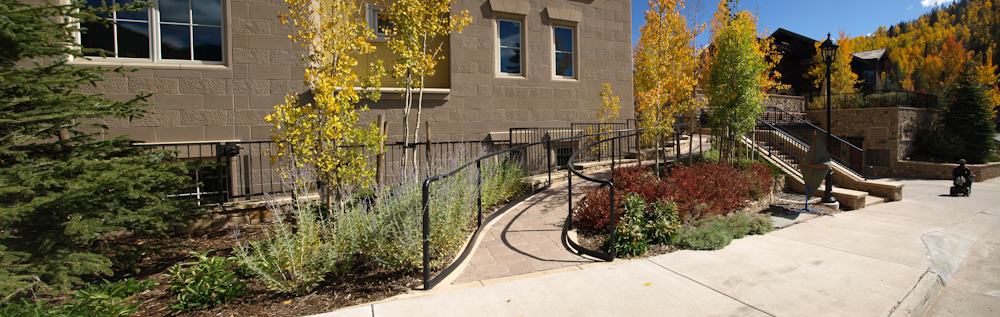
We proceeded from Izakaya Den to Kaos** pizza, which was also inaccessible,  then*** on to the Black Pearl which had this gorgeous ramp

Photo showing front of restaurant with a ramp to the front entrance adjacent to a patio area with tables and seats.

as well as truffle fries, an excellent cheese plate, and a nice refreshing bottle of 90 Shilling.

************

*  Yes, I’m that short and have that little pride.  But it’s nice to be able to look my fellow diners in the eye.

** Sounds like Maxwell Smart should be nearby, talking on his shoe phone.

*** I’m leaving out the part where I crossed the street from Kaos to where Tim was waiting, swearing my ass off, while he made “maybe you don’t want to use those words just now” eyebrow motions.  Turns out he was chatting with a nice woman — hidden to me by a parked car — and her cute Lab puppy.   I was embarrassed, she was understanding (“that’s OK; let it all hang out!”), and the puppy was really really cute.

Why I love Autistic* women (and you should too). (Guest post!)

[I have been blessed with a guest post by Corbett O’Toole, longtime activist and kickass good writer. ]

My life and disability activism entwined since my early childhood with polio.  I got the good, bad and ugly of the 1950s Poster Child years.**  I got to be the “problem” at my public school (they threw me out after kindergarten because they said my climbing the school stairs would be a ‘liability’), and then an “inspiration” at my Catholic school as the only person with a visible disability (where I climbed 2 flights of stairs everyday).

After I graduated from college, I moved to Berkeley, California with a friend and fell into the Disability Rights Movement.***  We made history (well I just followed along and did what I was told (mostly)).  We got curb cuts on city sidewalks, stopped inaccessible public buses with ADAPT, even shut down HEW director offices in the 1977 Section 504 sit-in.  I saw lots of folks come to Berkeley and then start their own dreams.  It was a time of action (and a whole lot of sex, drugs and rock and roll but that’s another blog).

But by the mid-1980s a lot of disability activism disappeared.  We went mainstream and many folks saw our organizations as service providers not activist centers.  And we started to narrow who was included in “disabled”.  When the first generation of AIDS folks came to our centers, we gave them minimum services (and some places just turned them away).  When the hemophiliac folks started dying from tainted blood, we acted like they were not us and turned away.  Little by little our public face became more about getting public acceptance for specific groups of disabled people (i.e. “us”) and less about disability justice.****

I continued to participate in disability rights work but increasingly I was on the margins – working on queer disabled issues, building bridges with other marginalized crip folks like disabled people of color.  We were not being invited to the official disability tables (not even as token speakers).  Often it felt like the days of serious activism – in your face, on the streets – had passed.

Then I met the Autistic women.  They blew my mind with their honesty, compassion and stunning intellect.  Have you read some of their blogs? I did.  They name injustice.  They call for action.  They help each other out.  They prize kindness. And they are over-the-top smart.

And for their efforts, they are routinely derided, receive hate mail, and are largely ignored (and often shunned) by people in other disability communities.

Here are some of the things I learned from Autistic women (and a few men).  Remember these are folks who are usually excluded from disabled and nondisabled communities; their disability-related needs are ignored; they have no money (or jobs) – yet – they, in my opinion, are leading the way towards disability justice.

SPEAK OUT

Every week there is a news report of an autistic child or adult who was murdered (or nearly murdered) by someone close to them.  In response to the latest one, Alyssa called for a new blog to respond.  Within an hour, a group of Autistics created “Voices for Justice” – a place to fight the public complacency about these murders.

Nearly all the press coverage is ‘explaining’ why the murderer ‘needed’ to kill the disabled person who was a ‘burden’.  There’s been hardly a ripple from the other disability communities – except for the National Council on Disability  – even though this happens with lots of non-autistic disabled folks too.  Here is a great response from Beth Ryan, a parent of an autistic kid.

TAKE CARE OF EACH OTHER

The Autistics I know and follow online acknowledge that there is a lot of diversity among folks so they encourage people to ask for help as they need. They support each other and teach each other successful life survival skills. They also reach out to parents of autistic children.  Elizabeth (Ibby) Grace has a blog just to answer questions from parents.

They created systems to communicate nonverbally.  My favorite is for public spaces like conferences where people use “Interaction badges.” Kassianne explains it best.  Using red, yellow, and green pieces of colored paper we indicate our social availability.  When I am open to social interaction I display my green paper.  If I am feeling less social then I show yellow.  If I am out of juice and need to recharge, I show red.

TELL THE TRUTH

Most of the non-Autistic disabled folks that I know pretend that their disability doesn’t really impact them all that much.  Oh yeah, we complain about our stuff when it’s breaks our patterns – like when a wheelchair breaks – but we rarely talk about what works and doesn’t work everyday for our bodies/minds.

But the Autistic women do talk about this in a much more public way.  Someone might blog about how they can either get work done or clean because they don’t have enough energy for both (I can totally relate to this).  They even created a blog for all the stuff even they don’t like to discuss publicly to help parents of autistic children get some insight, support and strategies.

FIGHTING BACK

They are fighting back against ignorance (“autism = inability to feel empathy”), abuse (electroshocking of young children for “education”) and active annihilation (the murders mentioned above and public “education” campaigns that urge people to “prevent autism before it steals another child”). They challenge the methods and messages of organizations that want to “eliminate autism” (as if it was an scratchy coat) and spread misinformation.

WHY YOU SHOULD TOO

It took me a while to find a bridge into the Autistic world.  Autistic lawyer Shain Neumeier got me started and university professor and Autistic Elizabeth (Ibby) Grace brought me in.  I’m writing this post (THANK YOU AMY) because the kick-ass, fight-back, David-and-Goliath-work these Autistic folks are doing is amazing and needs your support.  They are an incredibly literate bunch and an easy way to find them is through their writings.  It will be well worth your time.  Here’s a taste:

Alyssa Z is a triple major college student (math, engineering and Chinese) who writes Yes, That Too.

Elizabeth (Ibby) Grace is a queer Autistic married mother of two who writes two blogs: Tiny Grace Notes AKA Ask an Autistic and NeuroQueer.

Autism Women’s Network has lots of fabulous writers.

And some great parent blogs:

Brenda Rothman writes Mama Be Good.

Ariane Zurcher writes Emma’s Hope Book.

****************

* I figure that since this is Amy’s blog, I need to follow her protocol and put in as many *footnotes as possible.   I think her record is 5 – I’m hoping to break it.  Back on topic: “Autistic” is the preferred term by many autistic activists.

**  In the 1950s, and for a long time after, children with disabilities were traipsed out like dogs at a Kennel Club show to raise money for organizations run by (and often for) nondisabled people who said they were “helping the handicapped”.  Neither we, nor our families, received any compensation for our ‘performance’.

*** You can read about this history at the Disability Rights and Independent Living Movement Oral Histories.

**** Before you start yelling at me (well, really at Amy since this is her space), I acknowledge that lots of good legislative changes happened because of our ability to be more effective and mainstream.  Lots of college kids got support.  But this blog is about activism and not mainstream stuff.

You look great! …

… I recently told a friend who had lost weight.

“Not to be sizist about it, but you do, you look terrific.” She thanked me and talked about the time she had put in at the gym. And she did look great. But then, she looked great before she lost weight, too. And as you can tell from my smartass qualification, the exchange had me thinking — mid-exchange — about fat shaming and how to respect one person’s goal for her body while equally respecting other bodies of different shapes.  I’ve been thinking a lot about it since I stumbled on the a blog called Dances with Fat.  (Motto:  “Life, liberty, and the pursuit of happiness are not size dependent.”)

It’s easy: just respect every body.  Everybody and every BODY.

This concept is at the core of the disability rights movement. That bodies of all shapes and functionalities — and the people inside them* — are equally deserving of respect. Hell, it’s at the core of the civil rights movement: that people, regardless of the color of their skin or shape of their privates, are equally deserving of respect.

But it seems like the last group of people it is respectable to out and out ridicule — besides lawyers — are fat people.  From Conan’s mocking of Kirstie Alley and a female Olympic weightlifter (who pwnd his sorry behind), to Jiminy Glick a/k/a Martin Short in a fat suit, we hear and apparently tolerate jokes about weight that we would never, in a million years, tolerate about, say, race or religion.**

And we’re supposed to “fight obesity.”  In one of many examples, the Denver Post reported in July

A 2011 state law requiring 30 minutes of physical activity a day for elementary students was supposed to mark a new tool in the fight against childhood obesity . . .

OK, that’s not a report, it’s a sentence fragment, but in that one fragment, you see the problem:  can we encourage physical exercise without “fighting obesity” — which is really asking us to fight against someone else’s body?  Why on earth is the shape of your body any of my business much less something I should fight against?

Health risks?  Everyone gets to take their own risks.  Health care costs?  If that’s the real worry — and not our judgmentalism —  then encourage healthy eating, not fat shaming.

Here I have to take issue with the First Lady — on whom I otherwise have a totally embarrassing girlcrush.  I’m very sorry she decided to label her cause “the epidemic of childhood obesity” rather than keeping the focus on kids eating a lot of stuff that’s really bad for them. You can be a healthy fat kid and you can also be a scrawny kid who eats only poptarts, peanut butter, and microwave pizzas. Though I doubt that either Lady Bird Johnson or Pat Nixon could have gotten me to eat more fruits and vegetables.

Moral:  Be happy with your body; don’t judge other people’s bodies; eat more fruits and vegetables!

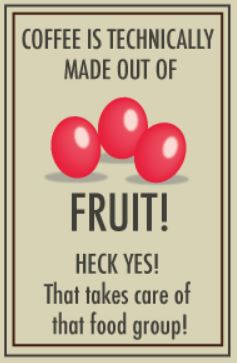
For example, from a website about my favorite fruit, I <Heart> Coffee

Graphic featuring 3 red coffee beans that reads:  "Coffee is technically made out of FRUIT!  HECK YES!  That takes care of that food group."


******

*Assumes a duality that we could argue over — from a philosophical, religious, and/or identity perspective — for days, possibly millennia.

** Outside the fringes of the Republican party.


What’s the wheelchair equivalent of black face? (Guest post!)

[I’m very excited to present a guest post by Frances Lively.  She is responding to Joanne Ostrow’s August 9, 2012 column in the Denver Post.]

Dear Ms. Ostrow:

I have been a subscriber to The Denver Post for a very long time and always enjoy reading your column.  You are a good writer with an enjoyable style and an intelligent approach to television matters.

I wondered, however, about one segment of your “Good News, Bad News,” column in the August 9, 2013, issue, concerning diversity.  You are correct in noting that there are far too many white males and too few Hispanics featured in TV shows.  But how can you say it represents a positive step forward for diversity to have Blair Underwood — an able-bodied person, albeit a member of a minority group — portraying a person with a disability?  This casting makes the same mistake that “Glee” made in one of its teenaged characters and does not really advance inclusion of people with disabilities in our society.

I understand that the networks worry about ratings and would prefer to take their chances on a bankable star in the main role in a new show, but I would hope that you could at least point out this irony in your column rather than lauding the networks for this short-sighted casting.  The irony of your comments only increases with your follow-up regarding Michael J. Fox, who does, indeed, have the illness that is to be portrayed in his new show, but who is himself a very well-known, long-time white male star.  Perhaps your “good news” instead should have been that there are good actors available who happen to have disabilities and who would love the chance to be featured in a network television show.

Please do not file my message under the heading of “Can’t please all the people all of the time.”  Instead, give me credit for not lighting into you regarding your description of Underwood’s character as “a highly capable, sexually active paraplegic.”  Time does not permit a discussion of all of the problems with that statement.

I hope you will put my letter in the file for “How can we keep networks from being ignorant.”  I’m sure many of your readers would appreciate your using your position in our community as a critic to nudge the networks in a better direction.  Thanks very much for your time.

Sincerely,

Frances Lively

Ms. Ostrow responded:

Thanks for writing.

Agreed, it would be better to have a disabled actor playing a disabled character. but at least the character exists.

I’ll return to this topic in the future and keep your comments in mind.

Meanwhile I hope if you watch “Ironside” you’ll see what I mean about his action-hero antics…

Best,

Joanne

No, I’m not “with the wheelchair.”

I’m “with the passenger in a wheelchair” or perhaps “with the passenger who uses a wheelchair,” or most accurately, “with the hot guy using a wheelchair.”

But I guess this makes the distinction clear:

IMG_1004


If you are a “wheel chair” or a stroller, you are not a “passenger.”  You are your equipment.

And airline people, you don’t have “two wheelchairs on the plane.”  As a matter of empirical fact, you have zero wheelchairs on the plane.  You have two people who use wheelchairs who are waiting patiently on your plane for the doofuses (doofi?) in your ramp crew to figure out how to get their wheelchairs to the jetway.

I realize there are other circumstances in which an object associated with a person comes to stand for the person.  “Suits” comes to mind, to mean the dweebs in the organization who are imposing rules on the real people who want to create/get things done/think outside the box.  It’s not a compliment.  “Brass” for officers, perhaps.  “Uniforms” to distinguish beat cops from higher ranking detectives.  I would put “wheelchair” as a substitute for the person in a very different category, though, largely because I only hear it from people in a position to treat the people themselves as objects.

I don’t take a position on the people-first language discussion, that is, whether it is better to say “disabled person” or “person with a disability.”  Both seem better than “the disabled,” but as my disabled friend/friend with a disability Laura Hershey would say, English puts its adjectives before its nouns, so “disabled person” puts the focus on the person, it just does so grammatically.

But once you’ve taken the person out of the equation completely and substituted the thing, you’ve left the realm of grammar and made a decision to depersonalize.

The funny thing is, I always respond — when I hear this — “no I’m not with the wheelchair, I’m with the guy in the wheelchair”  or to the airline peeps, “actually, you don’t have two wheelchairs on board, you have two people who use wheelchairs.”  But no one even gets the difference.

Sigh.

Photo Essay

I know you’ve all been on the edges of your seats to see my photo essay, the final assignment for Digital Photography 201 at Illuminate Workshops.  The wait is over!  Of course, just in time for the final class, I had all sorts of legal adventures — trial prep! settlement! appeal! — and a major head cold.  So I didn’t actually attend the final class.  Or the make-up final class.  Or the make-up of the make-up of the final class.  What can I say – lawyers suck at non-law things.

The assignment read:

Decide on a subject whose story needs to be told.  … A story that is close and personal to you.

Shoot everything you can about your subject.

Make us see the subject from your perspective.

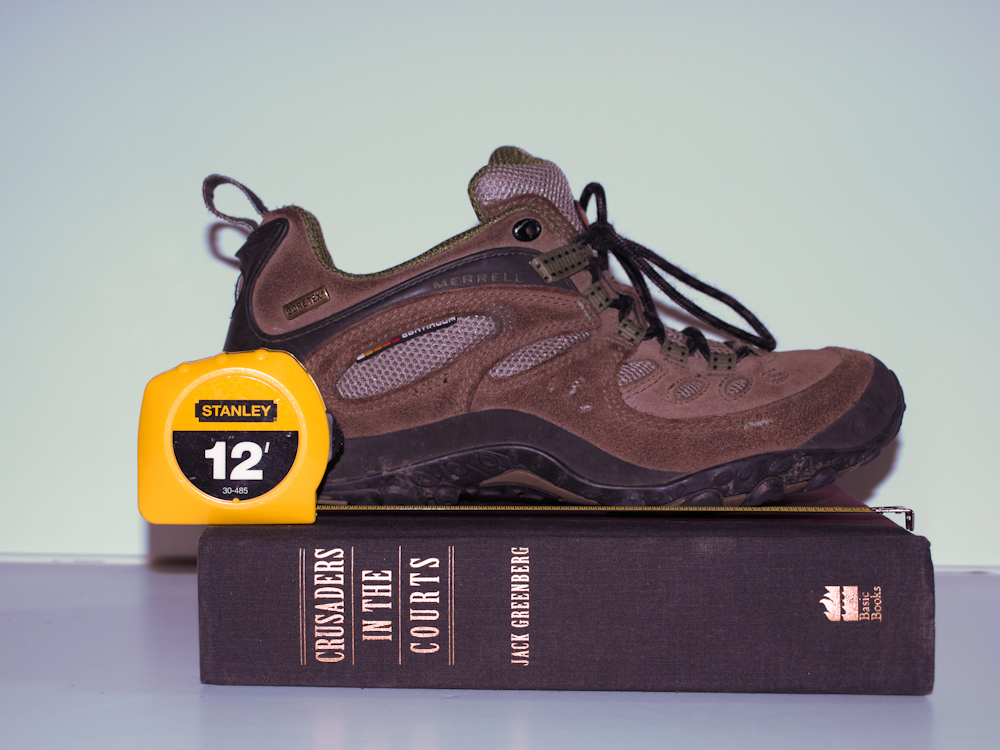
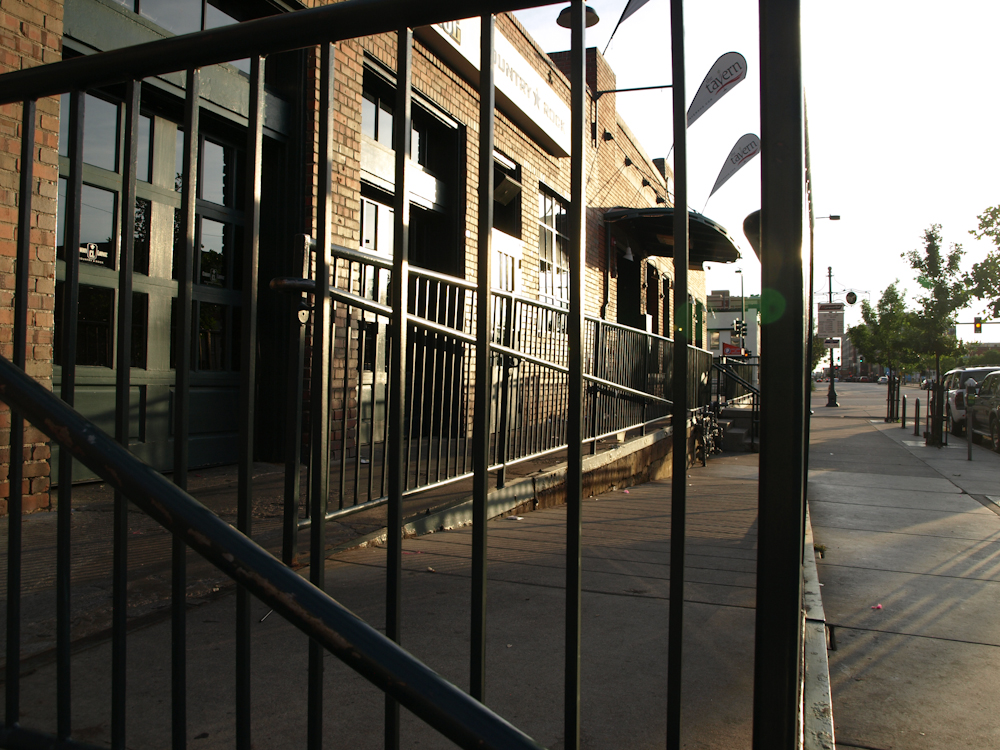
We were to edit down the photos first to 30, then to 12, print them on 11×14 paper, and present them at the last class.  But I missed the last class (twice) and I’m not good at following instructions anyway, so my photo essay has 20 photos, and is blogged, not printed.  It also reflects the fact that I ran out of time — even with an effective two-month extension — and had a cold.  Did I mention the cold?  So some of the photos reflect long walks around Denver thinking about my subject, while others reflect a bit of casting about my office last night for meaningful props.  But I think they show both my subject and some of the composition and developing skills we’re learning at (did I mention?) Illuminate Workshops.*

And the outtake … because nothing happens here without full canine supervision:

********************

* How’s that for apple-polishing?  And I’m not even getting a grade!

Whew!

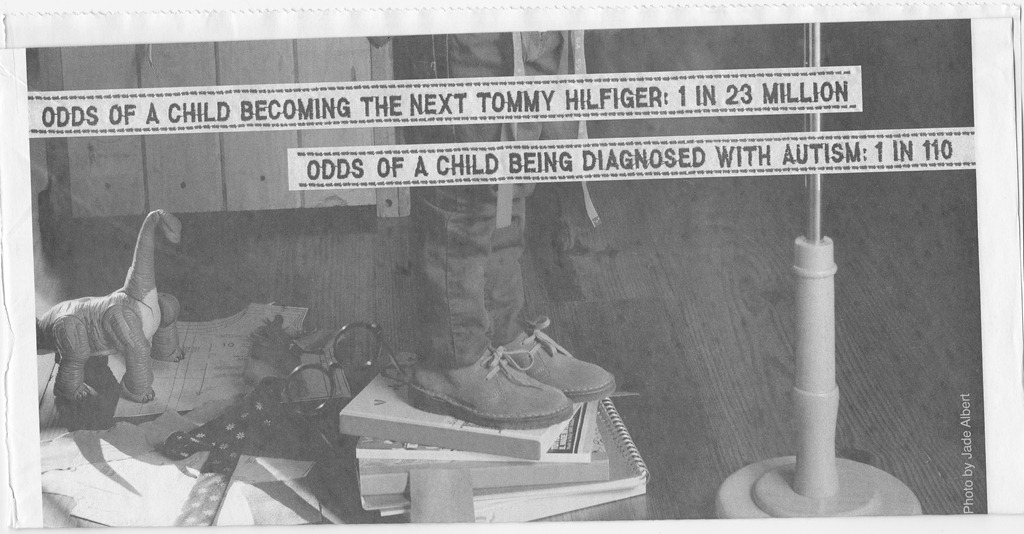
These ads always give me a great sense of relief, because God knows I’d rather my child* be in the company of

Matt Savage

or

grandin

or

Tammet

than these assholes

tommy-hilfiger-ss-2011-by-craig-mcdean-styled-karl-templar

********

* My theoretical child.  I don’t have kids.  But to be clear, I would rather be and/or hang out with people with autism than people in a Hilfiger ad.

“Sh*t people say” jumps the shark.

Shit people say to spouses of people who use wheelchairs:

My favorite “I”m so sorry” experience was in my first trial as a young lawyer, when Tim — who was an associate at the same fancy-pants DC law firm that I was — came to watch.  On a break, our loathsome opposing counsel came up to me and said, out of the blue, “I’m so sorry.”  Given the quantity of serious litigation bullshit he had engaged in, I was glad he saw fit to apologize, but thought it was better directed to the senior partner.  I was starting to say something about that when he added, “about your husband…”  Honestly, I still didn’t understand:  Tim wasn’t assigned to the case; what could this dude possibly mean?  He had to stumble on to say something about “injury” and “wheelchair” before it finally dawned on me.  Needless to say, I was speechless.

Years later, I actually wrote and submitted a “Modern Love” column to the New York Times after some lady walked up to us at a baseball game and said something about me being a good caretaker.  How can you explain in a sentence how ordinary life is?  How care is given and taken in equal measure?  Unfortunately, my column couldn’t compete with other important dispatches from the front lines of human relationships, for example, looking for a date on Craigslist or overthinking your boyfriend’s slippers.

That’s the great thing about the blog:  the only thing standing between my thoughts and publication is my own good judgment.  Such as it is.

Shit Walkies Say

Having thoroughly enjoyed Shit Sighted People Say to Blind People, Shit White Girls Say to Black Girls, and Shit White Girls Say to Arab Girls, I decided it would be hilarious to make a video out of some of the stupid shit people have said to Tim* over the years.  Only problem, of course:  I have no video production skills, not to mention equipment.  So — as with a couple of previous posts — I relied on the cartoon people over at xtranormal and created this.   I’m sure it doesn’t measure up to the videos that inspired it, but on the upside, I only wasted three hours on it.

*  Yes, it’s weird that it’s me (a walkie) and not Tim who made this little video, but he’s busy actually practicing law, or possibly (we can only hope!) drafting his first guest blog post.  Stay tuned!!

More on the “r-word”

Sam Bagenstos has written a thoughtful post on the use of the word “retard” in movies and our response as a community.  He was responding to this post, which was reacting, in turn, to the use of the word “retard” in the Alexander Payne/George Clooney movie, The Descendents.  I tend to agree — on general free expression and artistic license grounds — that we should not be in the business of telling writers what to write.  But I’m hoping for the day when the casual use of the word “retard” carries the weight that the casual use “nigger” or “cunt” would.  (For example, I’m predicting it was pretty jarring to read those words in my blog.  Was it equally jarring to read the word “retard”?)

Given the intersection of language nerdery and disability rights, this is a subject that interests me and that I’ve written about a couple of times.  Sam’s blog post makes excellent points, including that

People use the r-word in real life, just like they use slurs against other groups (and just like they do other harmful and wrongful things), and it would be wrong to say that movies and literature can’t depict that.  (And I think it’s a cheat to say that the use of the word can be depicted but only if the character who uses it “learns the lesson” that it’s wrong or is otherwise shown to be a bad and unsympathetic character.  That’s not any different than requiring purely idealized depictions of people.)

Very true.  In fact, if the word were restricted to movies, books, or tv shows in which lessons were learned, we’d only hear it in after-school specials, where the bully turns out to have problems of his own, reforms, and everyone has a group hug in the end.  No, rather than requiring lessons be learned or the word avoided, I’m hoping the movie-going public evolves to the point where the writer knows that putting that word in a character’s mouth will communicate something deeply negative about that character.  Right now, the choice to have a white character use the word “nigger,” without the quotes, directed to or about an African-American, communicates something very specific and negative:  the speaker is a racist asshole.  Same with “cunt”:  sexist bastard, or denizen of frontier Deadwood, South Dakota.

The truth is, I find it incredibly jarring and disappointing when a character in a movie with whom I sympathize (or perceive that I’m supposed to sympathize) uses the word “retard” as a casual epithet.  It’s similar to the phenomenon that Ta-Nehisi Coates has called “the John Mayer Rule,” and which I called “drinking with white people”:   that moment when someone you thought was cool says something bigoted  . . . and the concomitant urge to avoid situations (in my case, drinking with acquaintances who don’t get disability rights) where this might happen.  There are good reasons why George Clooney would not say a long list of offensive epithets in a movie of the type I understand The Descendants to be.  I’m hoping for the day when writers and actors will think that way about the word “retard” and use it accordingly.

One final thought:  a laser-focus on one word misses is the many ways movies and TV can be demeaning to people with disabilities while remaining pristine in language use.  One of my favorite examples is Law & Order, which has presented a long string of pathetic and/or criminal people with disabilities, without once (that I can recall) showing, say, an attorney, detective, forensic professional, or random witness in a wheelchair.  Two episodes stick in my mind.  In one, a mother is accused of killing her son, a quadriplegic.  The son is presented as unable to get out of bed and as a result we are asked to sympathize with the homicidal mother.  Scenery-chewing DA Jack McCoy tells the jury — as a fact, I promise, not as a negative comment on the mother’s narrow world view — “she knew he’d never grow up to be a doctor or lawyer.”  Seriously – how hard would it have been for the writers to figure out that there are all sorts of quad doctors and lawyers and other professionals?  The other episode I recall was where the hunt for the killer led toward the brother who was paralyzed and as a result bitter and murderous.  While I can’t recall others off the top of my head, I don’t recall any portrayals of people who use wheelchairs straying beyond vegetative and/or embittered.  I’d take 100 George Clooney “retard” utterances over this.  Although we keep watching the damn show,* we know to turn it off the instant there is mention of a character with a disability.  We know, to a 100% certainty, that L&O will screw it up.

********************
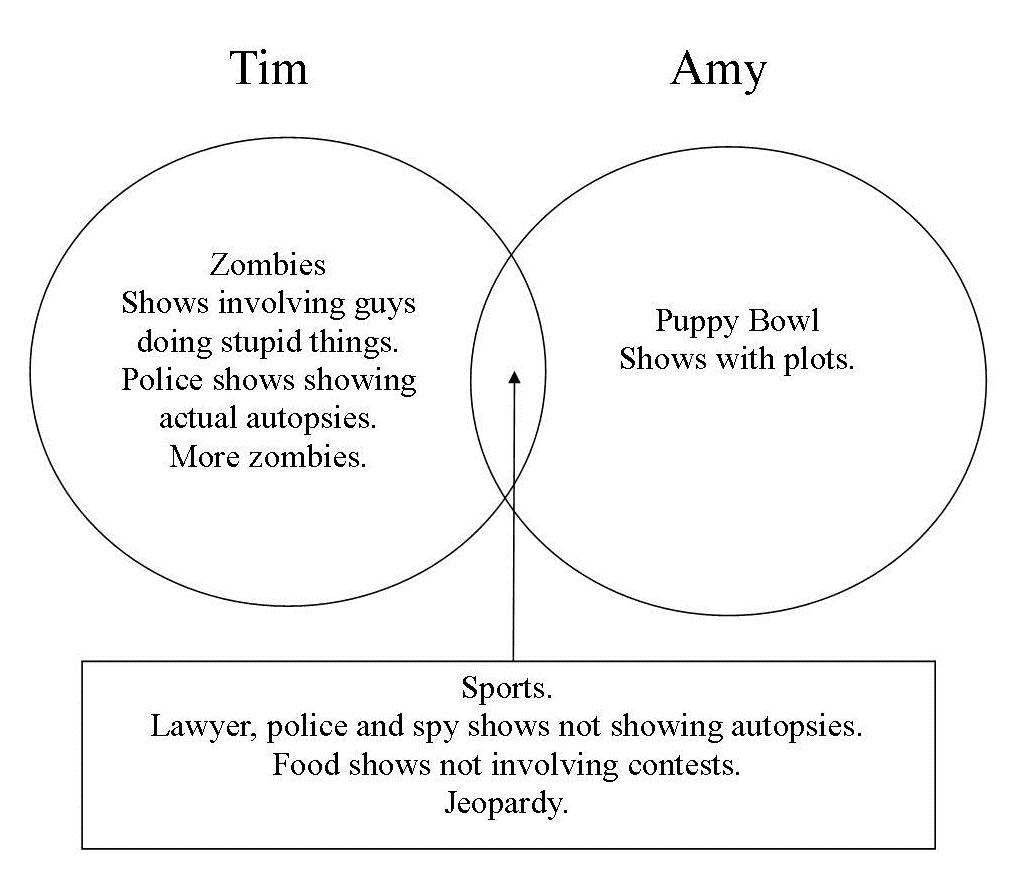
* L&O occupies the very small overlapping area of Tim and my taste in television: