Category Archives: Disability Rights

New Rule: Remedial Scotch

New rule: when we arrive at a hotel at 2:00 in the morning — a hotel that has confirmed by phone and fax that it has reserved for us a room with a roll-in shower — to find, after unloading our voluminous luggage (shower chair; giant duffel; garment bag; suitcase; suitcase; computer wheelie; backpack), checking in, and tipping the helpful bellman who has transported this unGodly collection of luggage to the room, that the room has only a tub and that, in fact, no room with a roll-in shower is available that night (“night”), there will be a member of the ADA defense bar available on-call to secure alternative accommodations and to provide a nightcap of very very expensive Scotch.

These are the facts:

1.    The hotel had at least one room with a roll-in shower.

2.    The hotel confirmed — several times* —  that it had reserved a room with a roll-in shower for us.

3.    This was incorrect. When we arrived, there were no roll-in-shower rooms available.

4.    The hotel had at least one non-roll-in-shower room available — the one with the tub that they sent us to with our mule-train of luggage in tow.

5.    At least one of the rooms with a roll-in shower was occupied by someone who did not need it (this fact related to us by the night manager).

This is the law:

1.    Title III of the ADA prohibits discrimination on the basis of disability in places of public accommodation, including hotels. 42 U.S.C. § 12182(a).

2.    Hotels are required to provide rooms with roll-in showers in proportion to the total number of rooms.  DOJ 2010 Standards for Accessible Design, Table 224.2.  I’m guessing that this hotel was required to provide at least nine such rooms; every hotel is required to provide at least one.

Image: Roll-in shower.

3.    Hotels are required to

[e]nsure that accessible guest rooms are held for use by individuals with disabilities until all other guest rooms of that type have been rented and the accessible room requested is the only remaining room of that type;

    and

[r]eserve, upon request, accessible guest rooms or specific types of guest rooms and ensure that the guest rooms requested are blocked and removed from all reservations systems.

28 C.F.R. § 36.302(e)(1)(iii) and (iv).

So there’s pretty much no question that the hotel violated the law.  And there’s no question that the violation had consequences: after flying across the country and arriving at 2:00 in the morning, Tim would not be able to shower when he woke up later that day.

The problem is, while there were consequences for Tim, there will be no consequences for the hotel.  Title III of the ADA has no damages remedy.  Truth is, we would be fairly unlikely to bring a lawsuit for damages.  We didn’t want damages; we wanted a useable hotel room.  We wanted to be able to do what every weary traveler wants at 2:00 a.m. — to check in and go to sleep; NOT to travel up and down the elevator with our piles of luggage, have a long — pleasant but unfruitful — conversation with the night manager, wait through long sessions between the night manager and his computer terminal, finally settle for the (inaccessible) room at 3:00, and (Tim) be unable to shower the next morning.

In other words, we just wanted the system to work.

But wait!, you say, Title III has an injunctive remedy!  The court can order the system to work, right?

Well first of all, of course, only after a lawsuit, which can take anywhere from two to 12 years.  By then, we’d be home and Tim would have showered, repeatedly, in our very own roll-in shower.

But more importantly, the hotel, in a case like this, would almost certainly argue** that Tim has no standing to sue unless he can specify the date on which he will return to this precise hotel. And while many people travel repeatedly to the same hotel, many don’t.  That’s the point, right?  When you’re planning travel to a new city, you want to be able to pick up the phone or go online, make a reservation, show up, and have a room you can use.   The problem is, under the current system, there is very little incentive for this system to work for people with disabilities:  no damages remedy; and no injunction unless you plan to come back to the very same hotel AND have the time and energy for a lawsuit.  Given this, the hotel knows that it doesn’t really need to comply.

So — new rule: every ADA defense lawyer who makes these bone-headed standing arguments must register on an ADA Compliance Resolution List and provide a number where they can be reached 24 hours a day.  When one of these damagesless, standingless events occurs, they must be ready to solve the problem, provide the room, and send a nightcap of very very expensive Scotch.

Anyone want to help me draft the bill?

[Cross-posted at CREECblog.]

************

*  When we make hotel reservations, we can’t just go online and request the room we want.  We call, we have a long conversation about roll-in showers (“Are you sure?  You’ve seen the bathroom in that room?  Can you ask housekeeping to check?  I heard you roll your eyes — just go check please.”), we often call back at least once, and we send a confirming fax, which we then have on hand when we arrive at the hotel.  None of that matters if it’s 2:00 a.m. and there simply isn’t an accessible room available.

** Indeed, this hotel has made this precise argument with respect to violations known to exist in many of its hotels.  The court held that the plaintiff “must assert an intent to return to the particular place (or places) where the violations are alleged to be occurring.”  Scherr v. Marriott Int’l, Inc., 703 F.3d 1069, 1075 (7th Cir. 2013).  So there is no standing to make them fix the problem in other hotels unless this plaintiff is planning to go to each of them?  Which means, of course, that none of the other hotels in the chain will be fixed until other wheelchair-using hotel guests — in this case, 56 other guests at 56 different hotels — encounter the barriers and sue.  Or unless one guest has the foresight to bring a class action, adding to the length and complexity of the suit and the elapsed time until a discrimination-free stay can be ensured.

Image from the webpage of Fine Design Contractors of Somewhere, MN.

Yes, this was a business trip.

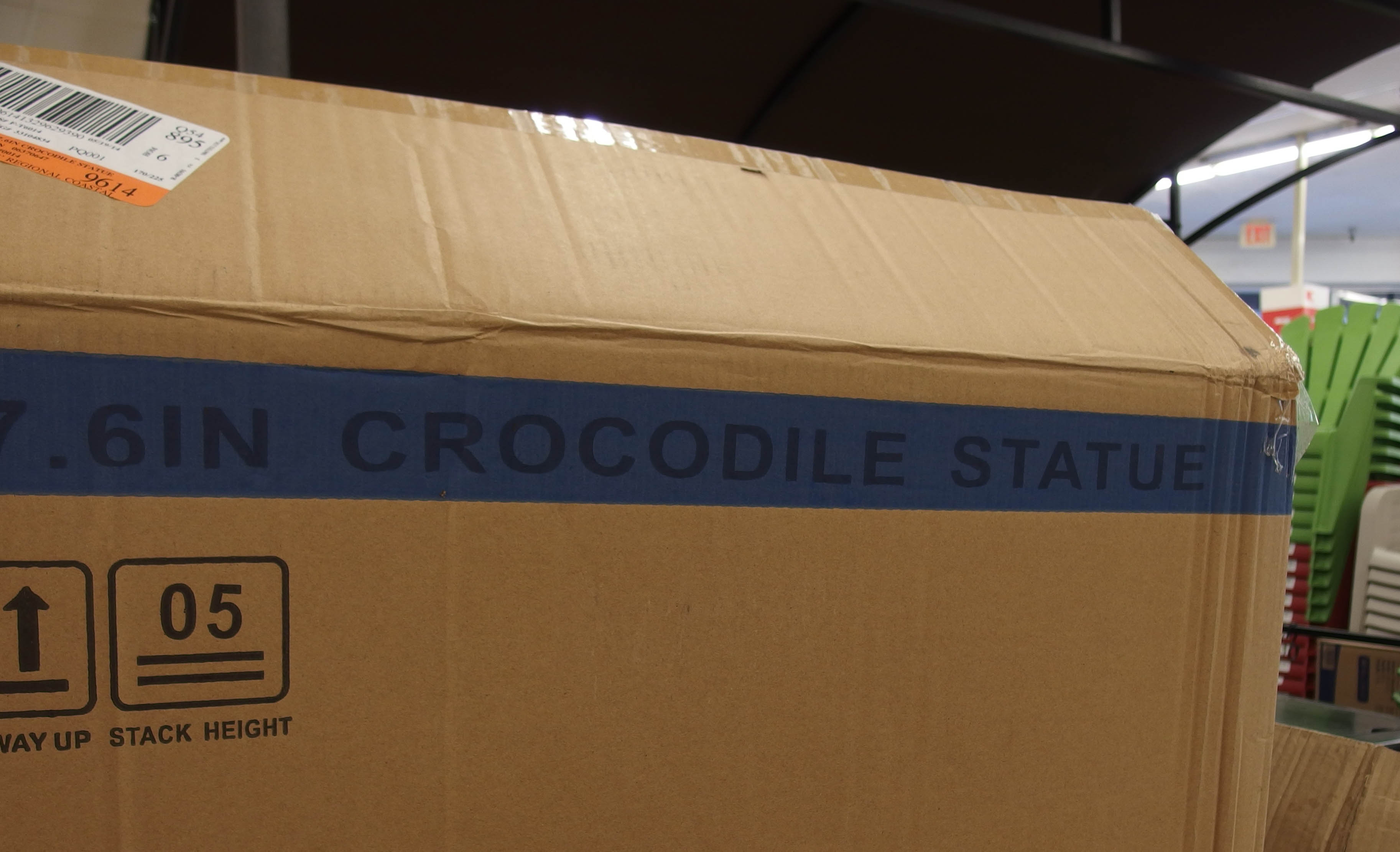
This post is a long-overdue recognition of the amazing work Kmart has done to make its stores more accessible.  But perhaps I was just waiting for the opportunity to include the words — and a photo — “crocodile statue.”*

Once upon a time … yes I feel like the roots of this post are sufficiently deep in the past that it justifies that opening.  Once upon a time, there was a chain of department stores, many of which were pretty inaccessible.

{Image:  A woman in a wheelchair wheeling away from the camera down a store aisle, the sides of which are clutered with boxes and a hand-truck.}

We sued them.  A class was certified.  The company declared bankruptcy.  The company emerged from bankruptcy.  No one, including the judge, could figure out the status of the litigation.  Many motions with creative titles were exchanged.  The company hired new lawyers, then more new lawyers.  And then, finally, in 2006, the case settled.

In the settlement, Kmart undertook to survey all of its then-1,500 stores over eight years and bring them largely into compliance with the DOJ Standards.  They also committed to make rack spacing more accessible and — this  was crucial — to maintain the stores so that people who use wheelchairs could get around them.

Kmart and its team threw themselves into the project with skill and enthusiasm.  It has been a privilege to work with Lori Miller, from the general counsel’s office, and Mark Conway, from the construction side.  Although we spent days during the settlement negotiation laboring over a dispute resolution process, there has not be a single dispute that required access to that process.

OK, I’m rambling without getting to the crocodile part of the blog.

As part of the settlement process, several times each year, Mark and Tim and I travel to a city and survey three or four Kmart stores, both for the accuracy of the physical fixes and the maintenance of the fixes and the accessibility of the stores in general.  We’ve traveled to such glamor spots as Riverside, CA, and Schaumberg, IL.  This time we tossed out the idea of surveying stores in the Florida Keys and, well, here we are!

We surveyed three stores, all remodeled pretty early in the process, and found them to be very accessible.  There were, as always, a couple of notes, but we were very impressed both by the number of fixes that were being maintained and the general accessibility of the stores.  That latter feature has been a consistent source of delight when we do these surveys and when I simply enter a Kmart store:  they have taken seriously the commitment to making the store more navigable in a wheelchair, one of the primary complaints motivating the litigation.  When we started the litigation, there were many aisles in many stores that looked like the one at the top of this post.  Now that scene is very rare.

But what made these surveys especially fun was the added Florida Keys flavoring.

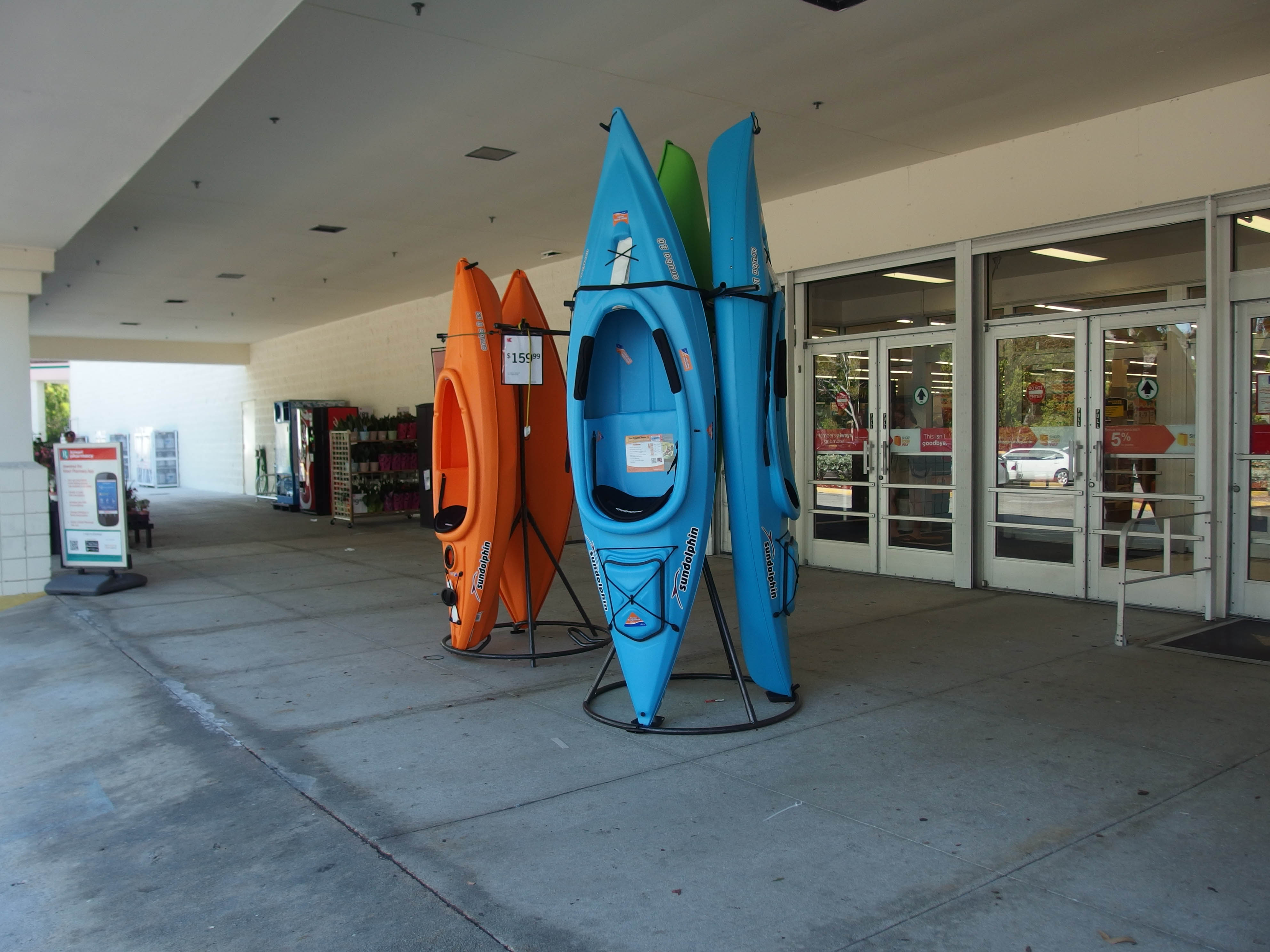
{Image:  orange and blue plastic kayaks displayed in front of a Kmart store.}


{Image:  Coral Cactus, that is, a cactus plant that is wavy and looks like coral.}

I think I’m going to order the Crocodile Statue from kmart.com.  Hope it’s still on sale!

{Image: : Cardboard packing box with the words "crocodile statue" on the outside.}


{Image:  A garden-sized statue of a crocodile.}

Most Kmart stores have a Garden Center; the one in Marathon — uniquely — had a Fishing Center

{Image:  Exterior of a large brick building with red letters that read "Fishing Center."}

What would be the entire garden center area of an ordinary Kmart was given over to fishing gear and — given our lead plaintiff’s love for fishing — Carrie should be happy to know it was very accessible.

{Image:  on the right side of the photo, the display racks on one side of an aisle of a Kmart store, all showing fishing gear of various types.  The left side of the photo showing a clear path down the aisle.}


But my favorite feature of this store was the giant ocean mural on the front.

OLYMPUS DIGITAL CAMERA


{Image:  close up of part of the mural showing a single teal-colored fish.}

{Image:  close up of part of the mural showing a five small teal-colored fish.}

This led to my unsolicited but genius design idea:  paint the floor of the main drive loop aisle around the store like a lazy river pool full of tropical fish!  Wouldn’t that make shopping more fun?  I did originally suggest sharks — hey, I’m a lawyer, what did you expect? — but the store manager pointed out that that might scare the kids.  Good point.  But what kid wouldn’t love to go shopping when they could walk on a stream full of tropical fish?  Imagine the fun this could be around the country:  ski slopes in Colorado; beaches in California; forest scenes in New England.  Maybe I have a future in store design!


***********

* Edited to correct typos.  I originally had “crocodile statute.”  Once a law nerd; always a law nerd!  (Thanks, Terri!)

WWJF

Who Would Jesus Fear?

The residents of Indian Village are fighting mad about the potential location of a group home for mentally ill youth in southwest Louisiana’s Allen parish.

“We don’t have a problem helping people,” said 57-year-old resident Beth Courville. “We are a Christian community, a hard-working community.”

“Our fear is fear itself. We don’t know what’s going to be in our backyard,” said Courville. “We would like to stop this nightmare from happening to another community.”

You keep using that word. I do not think it means what you think it means.

Litigation triumph (with photographic incompetence).

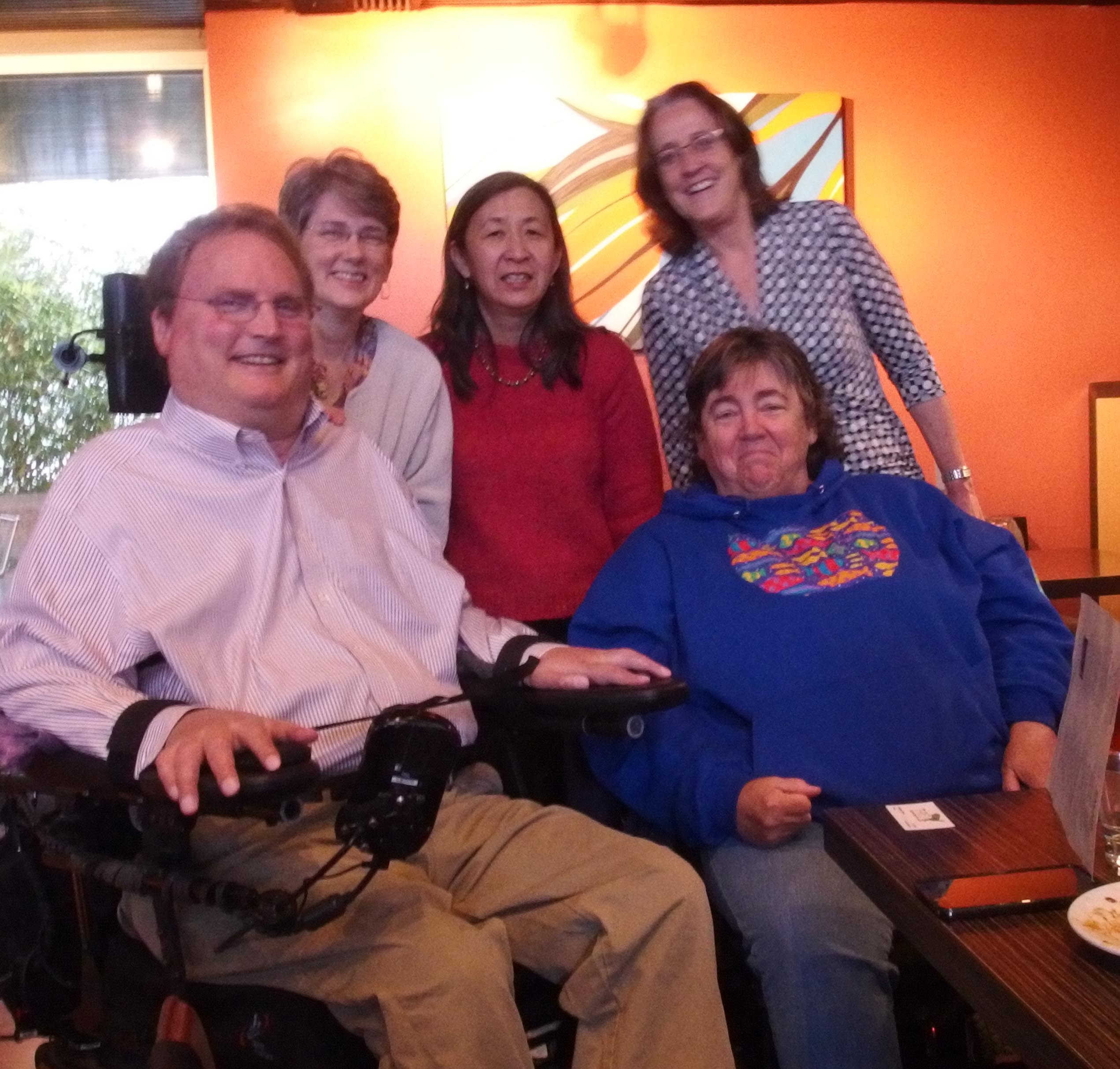
As we announced earlier on CREEC’s website, we finally settled the almost 12-year-old Taco Bell case.  Although the settlement requires notice and court approval, we decided to indulge in a bit of BBQ-based celebration on Thursday evening at T-Rex in Berkeley with most but not all of our wonderful team.   Unfortunately, my stubborn insistence on never using the pop-up flash on my camera resulted in some pretty blurry and/or grainy photos.  Blerg.  I’m now looking for an external flash for an Olympus XZ-2 that can tilt but that does not turn the whole thing into a giant, lumbering, unwieldy piece of photographic equipment.

On to our team!  Here is the core litigation team — sans Tony Lawson, who was in LA, and Brad Seligman, who is now The Hon. and had pre-existing obligations relating to his talented musical daughters. It also doesn’t include the wonderful Dan Goldstein, who joined the team last fall to assist with settlement and who deserves huge heaping helpings of praise (and, later, scotch) for his successful efforts.

Below:  lawyers Tim Fox, me, Mari Mayeda, and Jocelyn Larkin and Named Plaintiff (and disability rights goddess) Corbett.

OLYMPUS DIGITAL CAMERA

Bill Lee, who through his own work and that of his firm, was incredibly helpful to and supportive of our case.

OLYMPUS DIGITAL CAMERA

Co-counsel Robert Schug and Jocelyn Larkin of the Impact Fund and mentor Lainey Feingold.  (I really do need to investigate the flash situation….)

OLYMPUS DIGITAL CAMERA

Future civil rights rock stars Sarah Morris (CREEC) and Meredith Johnson* (Impact Fund) plotting world domination.

OLYMPUS DIGITAL CAMERA

Tim’s assistant Dustin McNa enjoys some of T-Rex’s famed health food.

OLYMPUS DIGITAL CAMERA

And finally, the highlight of the evening:  obscure whiskey tasting!  The bartender told us this was a bottle from the latch batch ever of this whiskey.  “Like drinking a dodo bird,” explained Dustin.

OLYMPUS DIGITAL CAMERA

This post doesn’t even begin to recognize all of the people who helped us out over the past 12 years.  We’ll have a more complete, better-photographed version after (God willing) final approval.

**********

* It turns out Meredith and Tim both went to St. Olaf College in The Middle of Somewhere Very Cold, Minnesota.  We were treated to a brief but inspiring rendition of their college fight song, “Um Yah Yah” (which I think translates as “What Were We Thinking???”).   If you think I’m making that up — at least the song title part — check the school’s website!

Honoring our Dead

[I am honored to provide a platform for Corbett’s latest guest post. – ed.]

“Her life was not worth living.”

“He was such a burden to his family.”

“The parents suffered so much.”

“It’s understandable.”

“There’s no crime here – they did a merciful thing.”

This is how the media often reports on the murders of disabled people. The reports are full of sympathy for the murderers and short on compassion for those murdered.  Disabled people’s lives are framed as useless, tragic, suffering. Media writers ignore the joys and passions of the victims – maybe because that disrupts the sympathy narrative for the murderer.

Since 2012 on March 1st an international Day of Mourning vigil is held to honor and remember those disabled people killed by family and caregivers.  Some vigils also include those murdered by authority figures, such as police and school personnel. This year there are 104 names on the list. These are just the people who got caught. Research by Dick Sobsey and others show that a great many acts of violence against disabled people are never caught. In one chilling report, he discovered that 25% of the deaths of people with cerebral palsy were murders. Even when the murders are reported, the punishment for the murderers is often light.

If my writing seems drier than usual, it’s because I am holding my breath and trying to keep my teardrops off the keyboard while I type. It’s hard to sit with these stories. Hard to know how easy it is for those that we, disabled people, rely on to kill us. Hard to read the sympathetic media reports that say our lives were not worth living. Hard to know that the murderers know that even if they are caught there will likely be few consequences. Hard to sit with these facts while we are fighting every day for society to become just a little bit more accessible.  Hard to look into the faces of these murderers and know that a great many people support them.

So on Saturday I am going to attend my local vigil and honor those killed. I will surround myself with people who know that disabled people’s lives are valuable. I will not let those murdered be forgotten.

RESOURCES

Find an in-person or online vigil here

2014 list of names and causes of death

Dick Sobsey

Kassiane (direct and has profanity)

Ibby Grace

Zoe Gross (who started the vigils) blog

Bad Cripple

s.e. smith

PhotoAbility.Net!

There is finally a stock photography site full of real, active, did I mention real? people with disabilitiesPhotoAbility.net has apparently been up and running for a couple of years; I just discovered it because its founder, Deborah Davis, was featured as New Mobility’s Person of the Year.

We first used stock photography in a monumentally misguided* attempt to settle a case by presenting the defendant with examples of how people with disabilities could be part of its advertising and outreach.  Seeking stock photographs, we ran searches like “wheelchair,” “disabled” and of course “handicapped” in the various mainstream stock photography sites.  What we found were (1) hospital and medical images; and (2) essentially fake images in which obviously non-disabled people had seated themselves in crappy gray-vinyl hospital wheelchairs to undertake random daily tasks.

When we finally found a couple of images that seemed genuine, we bought them, and then discovered such images were so rare, we saw the same folks all over the damn place.  I’m guessing, for example, if you read any sort of disability-oriented publication, you’ve encountered these photogenic folks:

{Image: Photo of boy and man. Both are African-American. The man is on the right, sitting in a manual wheelchair, spinning a basketball on his finger. The boy stands to his side, watching the basketball and holding up one finger as if to imitate the man.}

{Image: a woman and girl, both white, both blond. The girl is in a manual wheelchair. The woman hugs her from behind.}

We had such little luck finding real images that we solicited some from photogenic friends doing photogenic things with photogenic kids, and then took one or two ourselves.  This, for example, is our friend Julie, her two older daughters, and our dog in our backyard.  Think PhotoAbility would be interested?

{Image:  A blond woman (sitting in a manual wheelchair) and two blond girls playing with a golden retriever dog under a tree in a fenced yard.  One girl, perhaps two years old, sits in her mother's lap.  The other girl, perhaps 6 years old, holds a toy out to the dog.}

We continue to use stock images on our website and in educational materials, so I’m very excited to learn about stock photography with gen-u-ine pwds doing genuinely cool stuff.  Also that PhotoAbility is part of a network of great sites at PushLiving.com about inclusive travel, lifestyle, design, etc.  Check them out!

**********

* Part of a hilariously grandiose settlement attempt suggested by new and (as it turned out) temporary co-counsel.  We appeared at a meeting with the defendant’s general counsel and her posse with a bunch of spiral-bound glossy brochures featuring our purchased and home-made stock images and a bunch of powerpoint verbiage about how wonderful and inclusive access was and how it would enhance their image, etc. etc., and of course they could not possibly have cared less.  They wanted to know what it would cost, thanks for making the trip, goodbye.  Luckily, since it was early in our practice, our dear, wonderful copy people “forgot” to charge us for the glossy brochures and spiral binding.  The case finally settled — three general counsels and two outside counsels later.  So it goes.

Hey, Lego, where’s *my* family?

I thought this sounded like a cool idea:

{Lego ad showing sample family of four people standing on two feet, plus a baby carriage.  Text reads "Minifigure Family.  Sending holiday cards was never this much fun!  Minifigure Family lets you create a customized holiday card featuring Minifigure representations of your own family. It's easy!"

Then I got started creating a holiday card with Minifigure representations of my own family, and found that it was not only not easy, but downright impossible.  Even though Lego appears to sell a variety of Minifigures With Disabilities (“MWD”), including Determined Wheelchair Tennis Player,

{Image of lego minifigure woman in a wheelchair holding a tennis racquet.  On her face is a very determined look, with eyes wide and yebrows constricted.}

Pissed Off Wheelchair Soccer Player,

{Image of lego minifigure man in a wheelchair kicking a soccer ball.  On his face is a pissed off look, with his mouth ticked off to the side and his eyebrows constricted.}

Really Pissed Off Wheelchair Basketball Player,

{Image of lego minifigure man in a wheelchair holding a a basketball.  On his face is a very angry look, with his teeth gritted and his eyebrows constricted.}

and Reasonably Emotionally Well-Adjusted Khaki Shirt Guy,

{Image of lego minifigure man in a wheelchair wearing a khaki shirt with a benevolent expression on his face.}

their Minifigure Holiday Card Generator does not have any wheelchair-using options.

Hey, Lego, what’s up with that?

Of course, that didn’t stop me from trying my best within Lego’s narrow-minded constraints:

{Image of two people and a dog on the surface of a distant planet, surrounded by flying asteroids, with a volcano and meteorite in the background.  The first Lego Minifigure on the left is labeled "Amy."  She has a helmet with antennae, a green shirt hanging with knives and other implements, and -- hanging from her belt -- a skull, a tooth and a test tube containing a spider.  The middle figure, labeled "Tim" is a man with blond hair, glasses and a wooden leg.  His shirt contains dials and meters.  The third figure is a yellow dog.}

Yes, Tim’s entire disability experience is represented by… a wooden leg.

Because the biggest f*****g problem with the ADA is too many f*****g drive-by plaintiffs

This evening we went back to the completely gutted and remodeled Izakaya Den restaurant and found that they installed a raised sushi bar with no ramp.  Here’s a photo from Westword with my added mark-up.

Photo of the inside of a restauarant.  To the lower left of the photo, a raised area is visible with seats at a lowered sushi bar.  The raised area is circled in red, with an arrow pointing to it from text that reads "Step up to sushi bar."

Sigh.

Just that, by itself, is deeply frustrating.  As we’ve discussed in connection with our lawsuit against the El Diablo restaurant, you can’t take an empty space and make part of it inaccessible.  While this should be obvious, it’s also illegal.

But what made this depressing, frustrating, infuriating and really sad was that we have been patronizing Izakaya Den and its sister restaurant, Sushi Den, for years.  They know us in both restaurants, well enough at Sushi Den that we had a table where we always sat, and most of the waitstaff had served us so often they automatically brought me a phone book to sit on.*  We had participated in a private sushi tasting with a chef visiting from Japan, and at that point (and others) met the owners.

It’s bad enough that Izakaya Den got seriously bad architectural advice.  It’s really depressing that no one ever stopped to think, this isn’t just a theoretical legal question; we have a regular customer who will want access to the sushi bar.   And what’s funny:  they have an elevator.  They added a second floor and an elevator.  Very fucking cool.  But damn!  Why on earth add an unnecessary, new, inaccessible raised area?

We proceeded from Izakaya Den to Kaos** pizza, which was also inaccessible,  then*** on to the Black Pearl which had this gorgeous ramp

Photo showing front of restaurant with a ramp to the front entrance adjacent to a patio area with tables and seats.

as well as truffle fries, an excellent cheese plate, and a nice refreshing bottle of 90 Shilling.

************

*  Yes, I’m that short and have that little pride.  But it’s nice to be able to look my fellow diners in the eye.

** Sounds like Maxwell Smart should be nearby, talking on his shoe phone.

*** I’m leaving out the part where I crossed the street from Kaos to where Tim was waiting, swearing my ass off, while he made “maybe you don’t want to use those words just now” eyebrow motions.  Turns out he was chatting with a nice woman — hidden to me by a parked car — and her cute Lab puppy.   I was embarrassed, she was understanding (“that’s OK; let it all hang out!”), and the puppy was really really cute.

Your accessible garage is “not in the best interest of the neighborhood.”

[This is cross-posted from CREECblog, though I would like to revise and extend by noting that the HOA in the post below was in violation of not only the Fair Housing Act, but of course the Anti-Butthead Act as well.]

My theory is that homeowners associations (HOAs) are run by the same people who bullied their fellow students in high school for not wearing the right brand of jeans.  Only now they have power over the house you bought and live in.

This post is about the Fair Housing Act and the fact that it requires landlords and HOAs to make reasonable accommodations in their policies and to permit residents to make reasonable (physical) modifications to property at their own expense where necessary because of the resident’s disability.* HUD and the DOJ have collaborated on excellent explanatory memos on both reasonable accommodations and reasonable modifications.  [Both pdf.]

Seth and Lisa Moates lived in a development called Plantation Oaks** outside of Montgomery, Alabama.  Mr. Moates uses a manual wheelchair, but was moving toward having to use a power chair which, in turn, would require a lift-equipped van.  The Moateses wanted to build a garage to fit their new van as well as Mr. Moates’s therapy equipment.  Of course, they couldn’t just build the structure they needed for Mr. Moates’s disability.  They lived in an HOA community, in which an “Architectural Review Committee” asserted power over decisions like this.  And of course

[t]he ARC denied the Moateses’ initial request on April 8, 2013 for the stated reason that alternate garages and structures were inconsistent with the other Plantation Oaks homes and not in the best interest of the neighborhood.***

That’s right, Mr. Moates, you can’t park your new van in a garage or store your therapy equipment because that would not be “in the best interest of the neighborhood.”  And just to be sure nothing as tacky as a van-accessible garage ever besmirched their plantation, “[t]he Covenants were changed to make the building requested by the Moateses prohibited.”****  You see, originally you just needed special permission for your van accessible garage, but now, in response to the request, that garage and others like it are simply prohibited.

The HOA finally relented after the Moateses reduced the size of the planned garage, BUT only on the condition that, when they sold the house, they demolished the garage and returned the property to its original, pristine, plantation-like***** condition.

The ensuing lawsuit is only at the motion to dismiss stage, but generated a well-reasoned decision denying the motion.  The judge noted that “equal opportunity to use and enjoy [a] dwelling” means

that handicapped[******] people must be afforded the same (or ‘equal’) opportunity to use and enjoy a dwelling as non-handicapped people.  . . . [O]thers in the neighborhood are allowed to park their vehicles in garages, thus affording protection.  Affording Mr. Moates a similar opportunity by allowing a larger garage wherein he can park his car, in the same way as his neighbors, plausibly will grant Mr. Moates the same peace of mind and security as everyone else in Plantation Oaks.

Luckily the Moateses have connected with a good attorney and the Central Alabama Fair Housing Center and filed suit.  The HOA — rather than coming to its senses, doing the right thing, and avoiding imposing attorneys’ fees for its stupidity on everyone else in the plantation, er, development — is fighting the suit, arguing not only that it did not violate the Fair Housing Act, but that the Moatses were not injured (did not have standing) and that the suit isn’t ripe for review because the new power wheelchair hasn’t arrived yet.

The judge properly denied those arguments in his well-reasoned decision; I would have been tempted to deny them on the grounds of “gimme a break!”

In this case and so many others, you really shouldn’t need a federal law to make the HOA do the right thing.  All it should require is a bit of common sense  . . . and the realization that we don’t all have to wear the same brand of jeans.

**********************

42 U.S.C. § 3604(f)(3)(A) & (B).

** I swear I did not make up the name.

*** Moates v. Plantation Oaks Homeowners’ Ass’n, 2013 WL 5532626, at *2  (M.D. Ala. Oct. 7, 2013).

**** Id.

***** Slight editorial license.

****** Unfortunately, the Fair Housing Act still uses this terminology, so lawyers and judges have to follow suit.

Why I love Autistic* women (and you should too). (Guest post!)

[I have been blessed with a guest post by Corbett O’Toole, longtime activist and kickass good writer. ]

My life and disability activism entwined since my early childhood with polio.  I got the good, bad and ugly of the 1950s Poster Child years.**  I got to be the “problem” at my public school (they threw me out after kindergarten because they said my climbing the school stairs would be a ‘liability’), and then an “inspiration” at my Catholic school as the only person with a visible disability (where I climbed 2 flights of stairs everyday).

After I graduated from college, I moved to Berkeley, California with a friend and fell into the Disability Rights Movement.***  We made history (well I just followed along and did what I was told (mostly)).  We got curb cuts on city sidewalks, stopped inaccessible public buses with ADAPT, even shut down HEW director offices in the 1977 Section 504 sit-in.  I saw lots of folks come to Berkeley and then start their own dreams.  It was a time of action (and a whole lot of sex, drugs and rock and roll but that’s another blog).

But by the mid-1980s a lot of disability activism disappeared.  We went mainstream and many folks saw our organizations as service providers not activist centers.  And we started to narrow who was included in “disabled”.  When the first generation of AIDS folks came to our centers, we gave them minimum services (and some places just turned them away).  When the hemophiliac folks started dying from tainted blood, we acted like they were not us and turned away.  Little by little our public face became more about getting public acceptance for specific groups of disabled people (i.e. “us”) and less about disability justice.****

I continued to participate in disability rights work but increasingly I was on the margins – working on queer disabled issues, building bridges with other marginalized crip folks like disabled people of color.  We were not being invited to the official disability tables (not even as token speakers).  Often it felt like the days of serious activism – in your face, on the streets – had passed.

Then I met the Autistic women.  They blew my mind with their honesty, compassion and stunning intellect.  Have you read some of their blogs? I did.  They name injustice.  They call for action.  They help each other out.  They prize kindness. And they are over-the-top smart.

And for their efforts, they are routinely derided, receive hate mail, and are largely ignored (and often shunned) by people in other disability communities.

Here are some of the things I learned from Autistic women (and a few men).  Remember these are folks who are usually excluded from disabled and nondisabled communities; their disability-related needs are ignored; they have no money (or jobs) – yet – they, in my opinion, are leading the way towards disability justice.

SPEAK OUT

Every week there is a news report of an autistic child or adult who was murdered (or nearly murdered) by someone close to them.  In response to the latest one, Alyssa called for a new blog to respond.  Within an hour, a group of Autistics created “Voices for Justice” – a place to fight the public complacency about these murders.

Nearly all the press coverage is ‘explaining’ why the murderer ‘needed’ to kill the disabled person who was a ‘burden’.  There’s been hardly a ripple from the other disability communities – except for the National Council on Disability  – even though this happens with lots of non-autistic disabled folks too.  Here is a great response from Beth Ryan, a parent of an autistic kid.

TAKE CARE OF EACH OTHER

The Autistics I know and follow online acknowledge that there is a lot of diversity among folks so they encourage people to ask for help as they need. They support each other and teach each other successful life survival skills. They also reach out to parents of autistic children.  Elizabeth (Ibby) Grace has a blog just to answer questions from parents.

They created systems to communicate nonverbally.  My favorite is for public spaces like conferences where people use “Interaction badges.” Kassianne explains it best.  Using red, yellow, and green pieces of colored paper we indicate our social availability.  When I am open to social interaction I display my green paper.  If I am feeling less social then I show yellow.  If I am out of juice and need to recharge, I show red.

TELL THE TRUTH

Most of the non-Autistic disabled folks that I know pretend that their disability doesn’t really impact them all that much.  Oh yeah, we complain about our stuff when it’s breaks our patterns – like when a wheelchair breaks – but we rarely talk about what works and doesn’t work everyday for our bodies/minds.

But the Autistic women do talk about this in a much more public way.  Someone might blog about how they can either get work done or clean because they don’t have enough energy for both (I can totally relate to this).  They even created a blog for all the stuff even they don’t like to discuss publicly to help parents of autistic children get some insight, support and strategies.

FIGHTING BACK

They are fighting back against ignorance (“autism = inability to feel empathy”), abuse (electroshocking of young children for “education”) and active annihilation (the murders mentioned above and public “education” campaigns that urge people to “prevent autism before it steals another child”). They challenge the methods and messages of organizations that want to “eliminate autism” (as if it was an scratchy coat) and spread misinformation.

WHY YOU SHOULD TOO

It took me a while to find a bridge into the Autistic world.  Autistic lawyer Shain Neumeier got me started and university professor and Autistic Elizabeth (Ibby) Grace brought me in.  I’m writing this post (THANK YOU AMY) because the kick-ass, fight-back, David-and-Goliath-work these Autistic folks are doing is amazing and needs your support.  They are an incredibly literate bunch and an easy way to find them is through their writings.  It will be well worth your time.  Here’s a taste:

Alyssa Z is a triple major college student (math, engineering and Chinese) who writes Yes, That Too.

Elizabeth (Ibby) Grace is a queer Autistic married mother of two who writes two blogs: Tiny Grace Notes AKA Ask an Autistic and NeuroQueer.

Autism Women’s Network has lots of fabulous writers.

And some great parent blogs:

Brenda Rothman writes Mama Be Good.

Ariane Zurcher writes Emma’s Hope Book.

****************

* I figure that since this is Amy’s blog, I need to follow her protocol and put in as many *footnotes as possible.   I think her record is 5 – I’m hoping to break it.  Back on topic: “Autistic” is the preferred term by many autistic activists.

**  In the 1950s, and for a long time after, children with disabilities were traipsed out like dogs at a Kennel Club show to raise money for organizations run by (and often for) nondisabled people who said they were “helping the handicapped”.  Neither we, nor our families, received any compensation for our ‘performance’.

*** You can read about this history at the Disability Rights and Independent Living Movement Oral Histories.

**** Before you start yelling at me (well, really at Amy since this is her space), I acknowledge that lots of good legislative changes happened because of our ability to be more effective and mainstream.  Lots of college kids got support.  But this blog is about activism and not mainstream stuff.