Category Archives: Disability Rights

You look great! …

… I recently told a friend who had lost weight.

“Not to be sizist about it, but you do, you look terrific.” She thanked me and talked about the time she had put in at the gym. And she did look great. But then, she looked great before she lost weight, too. And as you can tell from my smartass qualification, the exchange had me thinking — mid-exchange — about fat shaming and how to respect one person’s goal for her body while equally respecting other bodies of different shapes.  I’ve been thinking a lot about it since I stumbled on the a blog called Dances with Fat.  (Motto:  “Life, liberty, and the pursuit of happiness are not size dependent.”)

It’s easy: just respect every body.  Everybody and every BODY.

This concept is at the core of the disability rights movement. That bodies of all shapes and functionalities — and the people inside them* — are equally deserving of respect. Hell, it’s at the core of the civil rights movement: that people, regardless of the color of their skin or shape of their privates, are equally deserving of respect.

But it seems like the last group of people it is respectable to out and out ridicule — besides lawyers — are fat people.  From Conan’s mocking of Kirstie Alley and a female Olympic weightlifter (who pwnd his sorry behind), to Jiminy Glick a/k/a Martin Short in a fat suit, we hear and apparently tolerate jokes about weight that we would never, in a million years, tolerate about, say, race or religion.**

And we’re supposed to “fight obesity.”  In one of many examples, the Denver Post reported in July

A 2011 state law requiring 30 minutes of physical activity a day for elementary students was supposed to mark a new tool in the fight against childhood obesity . . .

OK, that’s not a report, it’s a sentence fragment, but in that one fragment, you see the problem:  can we encourage physical exercise without “fighting obesity” — which is really asking us to fight against someone else’s body?  Why on earth is the shape of your body any of my business much less something I should fight against?

Health risks?  Everyone gets to take their own risks.  Health care costs?  If that’s the real worry — and not our judgmentalism —  then encourage healthy eating, not fat shaming.

Here I have to take issue with the First Lady — on whom I otherwise have a totally embarrassing girlcrush.  I’m very sorry she decided to label her cause “the epidemic of childhood obesity” rather than keeping the focus on kids eating a lot of stuff that’s really bad for them. You can be a healthy fat kid and you can also be a scrawny kid who eats only poptarts, peanut butter, and microwave pizzas. Though I doubt that either Lady Bird Johnson or Pat Nixon could have gotten me to eat more fruits and vegetables.

Moral:  Be happy with your body; don’t judge other people’s bodies; eat more fruits and vegetables!

For example, from a website about my favorite fruit, I <Heart> Coffee

Graphic featuring 3 red coffee beans that reads:  "Coffee is technically made out of FRUIT!  HECK YES!  That takes care of that food group."


******

*Assumes a duality that we could argue over — from a philosophical, religious, and/or identity perspective — for days, possibly millennia.

** Outside the fringes of the Republican party.


This is why I never read comments on news stories

On Friday, the judge in our case against Hollister stores and their inaccessible front entrances ordered that the violations be remedied within three years.

Red Alert Politics — “an online publication written by and for young conservatives” — gave the case a straightforward, factual write-up.  There are two comments.  The first is I guess a typical conservative response:  it’s their store; they can do what they want.  Not respectful; not even legal; but plain vanilla conservative.

The second comment was this, by someone designated with a little star as a “Top Commenter”:

yeah well obama is all about controlling and lying…he’ll cost anyone money he can, direct the DOJ to infringe on multiple constitutional rights and keep doing it…

think about this, any speech charge, using what you say in court against you – is against the first amendment, that is saying that you’re freedom is speech can be used against you – that’s a law to the contrary, or the second ammendment – you have the right to keep and bear arms….

article 6 is the supremacy clause and the oath that judicial branches, judges, senators, congressmen, even the president takes….

any charge for a speech or a gun is unconstitutional — ever wonder why when they charge people with murder charges, the gun NEVER EVER comes up? lawyers of that caliber would shit on it….just like america needs to shit on obama, and carry guns, and exercise their god given rights, that their ancestors fought to ensure were protected.

So in response to the fact that Hollister stores will be required to fix their raised front entrances to make them accessible to customers in wheelchairs, we are supposed to “shit on obama and carry guns.”  Ladies and Gentlemen, I present:  Conservative Logic and Spelling 101.


The ramps of Route 1

[Cross-posted at CREECblog.]

Every summer or so, we visit my brother and his family at their place in Maine.  To do this, we generally fly into Boston and then drive the four hours from Logan to mid-coast Maine.  The first three hours are on I-95; the last hour or so on Route 1 from Brunswick to Thomaston.  It has long struck me, as we meander up the barely two-lane road — often at 30 mph behind a giant RV or tractor — the amazing number of very small businesses that have ramps.

This past weekend I made the trip with no deadline and no one else in the car, so I had the time* to take some photos of these examples of readily-achievableness. (Ready achievability?)**

Disclaimer, because every now and again some defense-side attorney (hi, guys!) may read this:  I did not evaluate these ramps for compliance with the Standards.  I don’t know their dimensions or slope.  If you try to introduce this as evidence in one of my cases, I will file a Motion for Judicial Notice of Completely Missing the Point.

The first couple were actually near Manchester, NH, where I had taken a detour to visit a college classmate.

Small free-standing store with parking lot.  Store has steps in front and a ramp up the side starting from the back of the store and rising to the middle of the right hand side.
These next two are churches, which aren’t even covered by the ADA (unless they have some sort of commercial business on the side):

Front view of white building with three steps at the front entrance (in the middle of the front of the building) and a ramp extending from the entrance along the front to the left side of the building.  Ramp has a sign that reads, "Christ Died for Our Sins."


Photo of beige church building with the words "Saint Peter" on the front and a ramp curving around to the right side of the building.


Onward to Rte 1:

One story building with front porch accessible by a short ramp in front of the building.

This actually might have been someone’s house.  Along Route 1, the distinction between house and business is often sort of vague.

Gabled grey house with wooden ramp extending from the front door and curling around to the right in the front yard.  The base of the ramp is white lattice work and flowers grow along the front of the base.

Just north of Wiscasset.

Small free-standing red building with a ramp extending from the middle of the front off to the right.

Jean Kigel Studio, Damariscotta.

One-story building viewed from the side where a ramp provides access up onto the porch.

Cheap cigarettes in Waldoboro.

One-store store with a sign in the front reading "Cheap Cigarettes."  The front door is served by a short apparently level ramp with a slighly sloped portion at the end.

Somewhere south of Thomaston.

House or business with approximately five steps to the front door and a ramp to a side door on the left.

The Hair Loft, Warren, Maine.

One-story building with a sign reading "Hair Loft."  The front entrance is on the left side of the photo, served by approximately six steps.  The door is also served by a ramp from the door leading to the right of the photo.

Unidentified business, Warren:

Front of a two-story house or business with a wide metal ramp leading to the front entrance.

The famous Moody’s Diner, Waldoboro:

White building with neon sign reading "Moody's Diner" on the roof.  A ramp is positioned along the left side of the building leading up to the entrance in the middle.

Ralph’s Homes, Waldoboro:

Freestanding white building with a long switch-back ramp serving the front entrance, which is up approximately six steps.

Random business south of Waldoboro:

Red building with approximately 3 steps to a porch serving the front entrance.  A ramp serves the porch as well.

The Nobleboro Antique Exchange:

Blue two-story building with a switch back ramp serving the porch and front entrance.  Sign in front of the building reads "Nobleboro Antique Exchange."

So next time you hear some fancy store or chain claim that it’s not readily achievable to ramp their business, here are some examples to, in legal terminology, call baloney.***

*****************

* My leisurely pace turned out to have been a good plan for another reason:  when I got to my brother’s house, he and his family were out and their house was guarded by their snarling goldendoodle.  Seriously.  This dog

Benign-looking light brown dog, sized somewhere between a poodle and a golden retriever, with a multicolored color, sitting on a lawn looking to the right of the photo.

exiled me to the hammock until my hosts returned to chaperone my canine interaction.

I was not suffering:

Legs and feet of photographer on hammock, sunny Maine seascape in the background.


** Under the ADA, buildings built after January 26, 1993 were required to be accessible.  42 U.S.C. § 12183(a).  Those built before that date and not altered since must remove barriers — by, for example, ramping entrances that are only accessible by steps — where it is “readily achievable” to do so.  42 U.S.C. § 12182(b)(2)(A)(iv).

*** I might have used a different word if not for the cross-posting, but I’m trying to keep it clean on CREECblog.

No, I’m not “with the wheelchair.”

I’m “with the passenger in a wheelchair” or perhaps “with the passenger who uses a wheelchair,” or most accurately, “with the hot guy using a wheelchair.”

But I guess this makes the distinction clear:

IMG_1004


If you are a “wheel chair” or a stroller, you are not a “passenger.”  You are your equipment.

And airline people, you don’t have “two wheelchairs on the plane.”  As a matter of empirical fact, you have zero wheelchairs on the plane.  You have two people who use wheelchairs who are waiting patiently on your plane for the doofuses (doofi?) in your ramp crew to figure out how to get their wheelchairs to the jetway.

I realize there are other circumstances in which an object associated with a person comes to stand for the person.  “Suits” comes to mind, to mean the dweebs in the organization who are imposing rules on the real people who want to create/get things done/think outside the box.  It’s not a compliment.  “Brass” for officers, perhaps.  “Uniforms” to distinguish beat cops from higher ranking detectives.  I would put “wheelchair” as a substitute for the person in a very different category, though, largely because I only hear it from people in a position to treat the people themselves as objects.

I don’t take a position on the people-first language discussion, that is, whether it is better to say “disabled person” or “person with a disability.”  Both seem better than “the disabled,” but as my disabled friend/friend with a disability Laura Hershey would say, English puts its adjectives before its nouns, so “disabled person” puts the focus on the person, it just does so grammatically.

But once you’ve taken the person out of the equation completely and substituted the thing, you’ve left the realm of grammar and made a decision to depersonalize.

The funny thing is, I always respond — when I hear this — “no I’m not with the wheelchair, I’m with the guy in the wheelchair”  or to the airline peeps, “actually, you don’t have two wheelchairs on board, you have two people who use wheelchairs.”  But no one even gets the difference.

Sigh.

Prior litigation: admissible; evidence of life with a disability: inadmissible.

[Cross posted at FoxRobBlog, which is involved in some sort of DNS attack.  Whatever that is.]

In Yates v. Sweet Potato Enterprises, Inc., 2013 WL 3662645 (N.D. Cal. July 12, 2013), the plaintiff — a guy who uses a wheelchair — alleges that he encountered barriers at a Popeyes restaurant.  In the order, the judge addresses questions from both the plaintiff and the defendant about what evidence can be used at trial.  In so doing, she does two things that are stunning individually, but that — taken together — turn the plaintiff into the defendant, defending his right to equal access to the businesses that non-disabled people patronize everyday without a second thought.

First, the court grants the defendant’s motion to exclude “sympathy-inducing evidence regarding Plaintiff’s disability” that is not directly relevant to his experience at Popeyes, including “testimony regarding his day-to-day hardships.” The court just doesn’t see how that’s relevant.

Second, the court denies the plaintiff’s motion to exclude evidence that he has filed a large number of other access lawsuits.

Pause.

If people who use wheelchairs filed a lawsuit challenging every illegal barrier they encountered each day, most would file — I’m guessing — five to ten lawsuits each day.  Instead, most people go about their days, swearing at the illegal and thoughtless barriers, but without the time or resources to file those tens and eventually hundreds of lawsuits.  A brave and energetic few take the time to bring the lawsuits that remain necessary — twenty years after the effective date of the ADA’s architectural provisions and thirty years after California’s — to achieve a modicum of compliance.  For their trouble, these people are dubbed — in the press and in court — “serial litigators.”

The Ninth Circuit — the court with appellate authority over the Yates court — has recognized the role of these brave and energetic people in enforcing the law:

Courts must tread carefully before construing a Disability Act plaintiff’s history of litigation against him. As we have noted more than once, “[f]or the [Disabilities Act] to yield its promise of equal access for the disabled, it may indeed be necessary and desirable for committed individuals to bring serial litigation advancing the time when public accommodations will be compliant with the [Disabilities Act].” We must therefore be “particularly cautious” regarding “credibility determinations that rely on a plaintiff’s past [Disabilities Act] litigation.”

Antoninetti v. Chipotle Mexican Grill, Inc., 643 F.3d 1165, 1175 (9th Cir. 2010) (internal cites omitted; emphasis — though not nearly enough — added).   One of the cites I pulled out to make that quote more readable was Sam Bagenstos’s excellent article The Perversity of Limited Civil Rights Remedies: The Case of “Abusive” ADA Litigation, 54 UCLA L.Rev. 1 (2006).

So despite the fact that the Ninth Circuit has instructed courts to be particularly cautious about credibility determinations relying on past litigation, the Yates judge — without citing Antoninetti — holds that

Plaintiff’s  filing  of  well  over  a  hundred  disability  lawsuits  in  which  he  alleges  identical injuries bears directly upon his credibility.  . . . Plaintiff’s  alleged  scheme  to  generate  income  through  the  serial  filing  of  lawsuits  in  an  effort  to  extract  settlements  from businesses, may, in fact, be probative of his credibility.

More than simply disregarding controlling precedent, this decision has the very immediate and apparently intended effect of converting Mr. Yates from a real, live person who navigates his day to day world  in a wheelchair to a greedy serial litigant, judged on the fact that he has filed other complaints, the legitimacy of which he will likely not be able to prove before the jury.  (This question is not addressed in the decision, but my strong guess is that the defendant will be allowed to show the fact of hundreds of lawsuits, while the plaintiff will not be permitted to show that, in each one, the facility in question was indeed out of compliance.  That would, in essence, require hundreds of mini-trials within this single trial.)

On another level — about which I’ll write more later, as I have to get back to the other outrages on my desk — this is part of the broader scheme on the part of the business world to spin the fact that — 20-30 years after the federal and state standards took effect — there is still massive noncompliance.  When you’re really really wrong, accuse the other guy of “serial litigation” to correct your many many failures.

More coverage of our Hollister case

Hey, you guys!  Check it out!  We made Jezebel!  OMG OMG!

Surprise, Surprise: Hollister Discriminates Against the Disabled

A federal judge has ruled that Hollister is in violation of the Americans with Disabilities Act. Hollister’s stores are supposed to resemble Southern California surf shacks. Most Hollister stores in the U.S. feature entrances that are built to look like front porches. Front porches with stairs. And that’s where the problem lies.

And UK’s Daily Mail, in a section with the unfortunate name “Femail,” as well as Salon, and The Gloss:

Hollister Spent Four Years Refusing To Accommodate People With Disabilities Because Of Course They Did

If you’ve ever been near a Hollister store, you know that it reeks of mildewy cologne spilt in a hot bathroom. But you also may know that its storefront is inaccessible to those with disabilities, as they are made to look like porches to “surf shacks,” stairs included (as you can see above). After a four-year class-action lawsuit against the company for discrimination, a judge has ruled that Hollister’s stores violate the Americans With Disabilities Act.

Here is a link to the original story in the Colorado Independent.  Thanks to Susan Greene for the excellent coverage!
Updated to add Qusair Mohamedbhai’s blog post, providing some excellent context for the case.
Update 2:  It’s been picked up by something called Madame Noire.  (h/t Sam Bagenstos (@sbagen)).
[Cross-posted at FoxRobBlog.]

The upside down logic of executing Nathan Dunlap

Arapahoe County DA George Brauchler lives in an upside down world where strapping someone to a gurney and injecting him with lethal chemicals is “courageous” and deciding not to do this is “cruel and unjust.”

In a letter to the governor supporting the execution of Nathan Dunlap, Mr. Brauchler

questioned the motives and ethics of those who have argued on Dunlap’s behalf, and those who diagnosed and treated him for mental illness.

“Questioned the motives”?  Questioned?  The motive is, um, to keep Colorado from executing Mr. Dunlap.  Not sure what’s in question.  It’s right out there in the open.

Pause for disclosure of my motive:  My view is that the death penalty is wrong and that my state should not execute Mr. Dunlap.  Even if you generally favor or are undecided on the death penalty in the abstract, however, there are many, many reasons why it would be wrong in this case. You can read the clemency petition here, write to Governor Hickenlooper, or call him at 303-866-2471.  5280 magazine published a long article in 2008 that spelled out the history of the case.

Back to snarking on the DA.

Mr. Brauchler decries the “abandonment of professional ethics.” The ethics of trying to keep someone alive?  I don’t think that word means what he thinks it means.  I have scoured the Colorado Rules of Professional Conduct and can find nothing suggesting it is unethical to urge the governor not to kill someone.

The DA characterizes as “convenient ‘scientific’ epiphanies” — the scare quotes around “scientific” are his — the now widely-accepted conclusion that Mr. Dunlap had a severe, undiagnosed mental illness when he committed the crime for which he is to be executed.  The diagnosis at which Mr. Brauchler sneers is one that has, since Mr. Dunlap’s sentencing, been confirmed and treated by Department of Corrections doctors.

More scare quotes.  Can’t you just see him wiggling the first two fingers of each hand when he complains that

our state’s leaders are asked to accept as ‘objective’ evidence the conclusions of the anti-death penalty movement’s ‘best and brightest’ experts, and to ignore their obvious collaborative biases . . .

Well, the movement does have some excellent (“best”) and very smart (“brightest”) people, who work together (“collaborate”) to do what they think is right (“bias”?).  Ouch!

And his letter

called assertions by the defense that race plays a role in imposing the death penalty in Colorado “vile, disgusting and offensive.”

Those are the adjectives you use when you don’t have facts.  In fact, as of 2010, 41% of prisoners under sentence of death in the US were black, while only 13.6% of the population as a whole is black.  There are three people on Colorado’s death row; all three are black.  Studies in other states have shown that blacks killing whites are much more likely to get the death penalty than any other permutation, and that prosecutors are much more likely to seek the death penalty for black defendants.

Ultimately, it is the racism in our criminal justice system that is vile, disgusting, and offensive; not the act of calling attention to that fact.

The clemency petition provides measured, fact-based arguments why it would be a very bad idea to execute Nathan Dunlop. Many people, of many different faiths and backgrounds, agree with this:

Dunlap letters

All the DA has to offer in return is a salad shooter of insults: cruel; unjust; slap in the face; questionable motives; unethical; “objective” “scientific” evidence; collaborative bias; vile; disgusting; offensive.  And the unsupported pronouncement that Mr. Dunlap “took the lives of four Colorado citizens, and justice requires he now pays with his own.”

There is no good reason for this execution; just the satisfaction of the primitive desire for revenge.  Guess that’s my bias.

El Diablo closed. Donate to CCDC. QED.

This may be the strangest charitable donation request you’ve ever gotten.  I’m asking you to donate to the Colorado Cross-Disability Coalition because the El Diablo restaurant closed.*

photo(65).JPG

Huh?

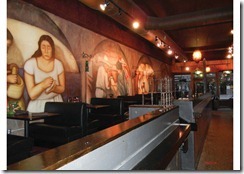
CCDC’s legal team of Kevin Williams and Andrew Montoya represented CCDC and several Mexican food enthusiasts who use wheelchairs in challenging the fact that the owners of El Diablo took an accessible space — in, btw, a beautiful old building in a booming neighborhood — and turned it into a largely inaccessible restaurant by adding raised areas that were not originally there.

Two years, summary judgment for plaintiffs, and a couple hundred thousand in legal fees later — just at the point where the judge was about to order El Diablo to restore accessibility — the city shut it down for (unrelated) code violations.  It reopened, reshut, reopened, reshut, declared bankruptcy, reopened, and — after the latest violation notice from the city — closed for good.

Bottom line:  CCDC spent a lot of attorney time on this case, won the case on summary judgment, and will not see a dime in attorneys’ fees.  Please join us in contributing to CCDC.**

If you’ve heard enough, just click on through to the donation page and send them some cash.  If you want to know more about this case, here are some links:

  • More snarky commentary about the defense counsel’s accusation that alleging discrimination when an accessible space is rendered inaccessible constitutes defamation.

This part of the ADA — requiring businesses to be accessible — has no damages remedy.  The only way lawyers can bring these cases is because the ADA makes defendants pay the plaintiffs’ attorneys’ fees when they lose.  But lawyers like the great team at CCDC always work under the threat that they’ll spend years on a case — and achieve excellent legal results — only to have it disappear.  That happened here.

Please support CCDC’s excellent legal work.  Thanks!

**********

* This photo is actually from January, but it’s more dramatic than anything I could find for the Final Shut Down.

** If you’re not comfortable with the online donation site — which seems highly unlikely if you’re reading a cutting edge blog like this one! — you can send a check to CCDC at 655 Broadway, Suite 775, Denver, Colorado 80203.

“Feds Probe Denver for Violating Deaf Prisoner Rights” – what we’re up to at FoxRob World Headquarters

The Colorado Independent has an article up about our Scott case.  The journalist had previously written about our Ulibarri case, and was thus able to put Mr. Scott’s situation in this astonishing perspective:

Scott isn’t the first deaf prisoner whose disability has gone ignored by Denver’s jail. Even as the city failed to provide Scott with an interpreter, it was defending itself against a lawsuit brought on behalf of three other deaf prisoners – one of whom hanged himself in his cell. Shawn Vigil spent a month in jail without an interpreter before his suicide in 2005. The Sheriff’s Department knew Vigil was deaf but apparently didn’t take note that he was functionally illiterate and unable to understand a question on his intake form asking if he needed accommodations for his disability.

We’re hoping this lawsuit will finally get some effective policies in place for deaf people detained or incarcerated by the City and County of Denver.

[Baloney] ADA Defenses

In my non-lawyer life, I’m a bit of a smartass, especially in the presence of what I’ll politely refer to as [baloney]. I’ve been unsuccessful at completely eliminating this tendency from my professional life — I once smirked so aggressively at an opposing counsel’s, um, inaccuracy that the judge asked me whether I was having a facial spasm — but, given its public nature, I’ve tried to limit case-specific smartassery on the blog. I’ve also been working on my in-court poker face.

But it’s hard to completely eliminate blogsnark, chiefly because we run up against so many defenses in our cases that are sheer, unmitigated [baloney]. Here’s one. And what’s special about this one is that events of the defendant’s own creation gave us a rare glimpse of just how full of [baloney] it was.

When we first moved into our current office, we were thrilled to learn that the empty corner space across the street would soon be occupied by what we anticipated would be an excellent Mexican restaurant.  Our office neighborhood is sort of mixed, by which I mean — as we point out on the main website — we are close to excellent restaurants, an independent movie theater, and a bondage and domination shop. And a couple of gay nightclubs, vintage bookstores, and a knitting shop. I really, really love our neighborhood.  A high-quality Mexican joint would be a great addition.

Anyway, the space across the street was completely gutted, but one day as we strolled past — you have to stroll at least once per work day if you have office dogs — we noticed that they were installing raised areas in the space. We chatted with the highest-ranking person we could find on site, and explained that this was not permitted under the ADA. Apparently didn’t matter: the El Diablo restaurant opened with most of its seating on inaccessible raised platforms, and a couple of — also inaccessible — high tables at grade.

003-Montalbano_thumb

Before renovation: flat; accessible.


P000276-long-shot-north-raised_thumb

After renovation: raised; inaccessible.

We called. We wrote. More accurately, Tim did both, trying to explain that we were really psyched about the restaurant, but not the lack of access. To no avail. So Tim did something he doesn’t usually do: became a plaintiff. Represented by our awesome colleagues at the Colorado Cross-Disability Coalition, and joined by several other would-be restaurant patrons who use wheelchairs, Tim filed suit alleging that El Diablo* was in violation of the alterations provisions of the ADA.

Drama ensued.** But through CCDC’s excellent legal work, Judge Matsch granted Plaintiff’s’ motion for summary judgment. Plaintiffs then requested an injunction requiring El Diablo to provide access to the raised areas, which it opposed on the grounds that that would be a hardship, a defense that was not actually legally available, given that the owners had created the problem by installing the raised areas in the first place.

The Court rejected the whining hardship defense and granted the injunction, with some pretty powerful words on discrimination:

The injury to the plaintiffs and those persons represented by the Colorado Cross-Disability Coalition is that when they patronize this restaurant, they must suffer the indignity of discriminatory treatment by their exclusion from 840 square feet of the dining area solely because they use wheelchairs. The elimination of that discriminatory treatment goes to the very purpose of the ADA and it can only be remedied by requiring such modification to those areas as to make them accessible to wheelchairs.

More drama ensued, as it turned out*** that the owners had received funding from the City of Denver, promised to bring the premises into compliance with a variety of applicable codes, and then [apparently] [allegedly] didn’t. So the City shut down El Diablo and Sketch, the bar next door, for code violations. Even more drama ensued, this time between El Diablo and the City, culminating with the owner filing for bankruptcy.

When a company files for bankruptcy, it has to tell the court and the public who its major creditors are. A review of the owner’s public (did I mention public?) bankruptcy filing revealed this, from the folks who complained that it would be a hardship to provide access to the raised areas they created when they renovated the restaurant.

Page-from-2012-12-14-1-Voluntary-Pet

The defendant, while complaining about hardship and refusing to consider installing a ramp — or even spending the money to hire an architect to analyze the feasibility of a ramp — owed the attorneys on that very case $318,455.53. We can probably assume that the defendant had been paying those lawyers for at least part of the case before it stopped paying them, so this over-$300,000 debt is likely only part of the legal fees the owner had decided to spend to fight against what would almost certainly be a far less expensive solution, one that would integrate people who use wheelchairs into the restaurant.

And of course, think how cheap it would have been to comply with the ADA in the first place!

**********

*Yes, we were suing The Devil. Many of you plaintiffs’ lawyers probably often *think* your opponent is The Devil, but ours actually was.

**I’ve previously blogged about one of the dramas: the defendant’s accusation that CCDC was defaming them by posting publicly-available legal pleadings on its website.

*** Please pay attention, journalism students, to the way it should be done. The Westword article at the link contains these gems of impartiality:

Danger. That’s the sign on the door of Sketch, which is supposed to host an opening for a showing of 9News reporter Kirk Montgomery’s photographs tonight.

and this, by the column’s author, a lion in the field of journalism here in Denver:

A few hours ago, I was sitting in [the owner’s] office on the second floor, which didn’t seem to pose any immediate hazard to me … except that [he] was about to blow his top.