Flourishing: Calling Bioethical Bullshit

Bioethics is much too important to be left to bioethicists.”  So sayeth Michael Bérubé.  Accurately.  And here’s why:  because they argue in bigoted tautologies.  That’s right:  loathsome and intellectually empty.

Digression/throat clearing:  I love reading anything by Michael Bérubé.*  Anything.  I would read the phonebook cover to cover if he wrote it.  One of the beauties of reading his writing is you don’t have to be an expert in cultural studies or criticism to get what he’s talking about (even if not all the references) and to enjoy his attitude of critical good humor.   Armed only with my vintage 1983 BA in linguistics and philosophy, however, the prospect of trying to respond to one of his posts has always felt like trying to jump on a merry-go-round** that’s going by very fast.

I have neither the time nor the skills to master the literature and vocabulary necessary to contribute a coherent comment.  But now I have my own damn blog, where I can say whatever I want without feeling too self-conscious that I’m interrupting a learned conversation.  Here goes.

This post responds to two Bérubé posts, one on Crooked Timber; the other on a site called “On the Human.”

Without attempting to summarize either the posts or the materials he’s criticizing, I’ll jump onto the carousel at the point I’d like to discuss:  the concept of “flourishing.”  Bérubé tees off of a book by Jonathan Glover (Choosing Children: Genes, Disability, and Design), which he is careful to credit with some level of disability consciousness:  

Choosing to have a child without certain disabilities need not come from any idea that disabled people are inferior.  Nor does it entail that the world, or the gene pool, should be cleansed of disabled people”  Id. at 28 (as we cite in the law biz).

But Glover also says

“I think that, other things being equal, it is good if the incidence of disabilities is reduced by parental choices to opt for potentially more flourishing children.”  Id. at 35.

Bérubé’s post then outlines a number of thought experiments designed to … do what I’m not sure.  For example:  you have to choose between two tests, one that detects and cures a disability in utero vs. one that detects the likelihood of disability pre-conception, so the parents can avoid conceiving a disabled child.  I think, in retrospect, that shit like this was why my phil minor focused on philosophy of mathematics.  Rather than discussing who should or shouldn’t be born, we discussed what it meant, in an absolute sense, to measure something.  This has come in freakishly handy in my legal career.  (ADAAG in-joke.  Sorry.)

Anyway, here’s another doozy — Glover quoting Frances Kamm who:

discusses a hypothetical case … of a woman who knows that, if she conceives now, her child will have a life worth living but will be mildly retarded. The woman also knows that, if she waits, she will be able to have a normal child. Frances Kamm accepts that, having a life worth living, the child with mild retardation will not be harmed by being created. But she thinks the woman will still have done wrong by not waiting. … She says “even if she could produce no child except a mildly retarded one, it might be better for her not to produce any” and that the woman “would do wrong to produce a defective child when she could have easily avoided it.”  Id. at 55.

Bérubé attacks these hypotheticals on the legitimate grounds that they make no sense.  “There is no scenario — I repeat, no scenario, none whatsoever — in which any woman knows that, if she foregoes conception now, she will have a normal child later on.”

Here’s where I jump into the middle of this discussion with what I really, truly hope is an obvious point that has been covered extensively in other literature that I’ve been too busy measuring toilets (in the absolute sense) to have read.  And that point is:

WTF*** DO YOU MEAN WHEN YOU SAY “FLOURISH”?

The question of what constitutes flourishing — and what parents do before, during, and after pregnancy to influence the flourishment of their child — is far far broader than whether the child has or does not have a disability.  That is, there are as many ways to flourish and not flourish as there are children, the vast majority of those ways (I would argue) uncorrelated with disability.

At the simplest, non-comparative AND MOST OBVIOUS level, there are multitudes of flourishing disabled people.  I’m tempted at this juncture to list a bunch of awesome pwds I know and know of and contrast them with a bunch of deeply non-flourishing non-disabled people I know and know of.  But that dignifies a question that does not deserve dignity.

OK so we’ve established that you can flourish with a disability.  But it’s also true that, in many cases, children (disabled and nondisabled) flourish in ways that parents (since that was the original thought experiment) can influence in greater or lesser degrees.  Do children with Down Syndrome, osteogenisis imperfecta, or cerebral palsy whose parents have inexplicably consented to give birth to them flourish more or less than children with parents who are:  drunk; abusive; divorced; helicoptery; rich; poor; strict; lax; human?

Can any child flourish in an abusive family?  How about one so coddling that the child never learns to fend for him or herself?  Can a gay child flourish in a homophobic family?  A curious child in a fundamentalist**** family?

I know, I know — the bioethicists would condemn parents who were alcoholic, abusive, homophobic, or fundamentalist.  BUT THEY WOULD NOT DENY THOSE PARENTS’ CHILDREN THE RIGHT TO EXIST.   They would not say to the homophobes or fundamentalists or overprotective parents:  hold on – your kid’s not going to flourish – don’t get pregnant!  It is bioethically wrong for you to have a child.  We can have whatever discussion we want about good and bad parenting; it’s only when a child might have a disability — with unknown effect on flourishment — that we talk about making sure the kid doesn’t even exist in the first place.

And here is where I’m glad I studied the unhip logical positivist philosophy that I did because what we have here, folks, is a simple problem of definition.  Bioethicists have defined “flourish” in a completely circular fashion.  “Flourishing” doesn’t mean “loving” or “loved” or “happy” or “curious” or even (not my definition, but maybe others’) “blessed” or “sacred.”   It means “physically and mentally typical in a way that bioethicists deem worthy of survival.”  Or it may in fact mean “physically typical with a high IQ” — that is, the sort of person that the average bioethicist would want his or her kid to be.

But the saddest thing of all is:  Bioethicists — or at least Glover — may already know this.  I’m not in fact pointing out something incisive or new.   Despite graciously (sort of) conceding that pwds are not “inferior,” Glover states, “in this book disability has been contrasted with human flourishing.”  Id. at 88.  That is, the entire discussion starts from a point of circularity.   And euphemism.  Instead of saying “parents shouldn’t have babies who are disabled,” which sounds sort of discriminatory, you say, “parents shouldn’t have babies who won’t flourish” and then, to address the fact that you really aren’t talking about, say, your colleague’s fucked up teenager or other mainstream, middle class, ways of not flourishing, you define “flourish” to mean “nondisabled.”

Here is my bioethics:

1. It is never OK to decide for someone else whether that person is flourishing, especially when

2. “flourishing” is defined based on a single, culturally-specific set of values, that excludes disability a priori, and especially when

3. the definition determines who gets to be born.

And here is the list of hard questions I’m ignoring:

1.  When is it OK to cure disability?

2. Is is ever OK to withhold medical treatment without consent, for example, when death is imminent?  (Even I am willing to define “dead” as “not flourishing.”)

3.  And what about war?  And that goddamned trolley?

************

* The only thing about Bérubé that pisses me off — and it *really* pisses me off — is that he stopped blogging.  He used to write at www.michaelberube.com, and if you check out some of his archives, you’ll see what I mean.  I’m guessing that writing 10,000 words a day on top of his professoring duties — not to mention husbanding, dadding, hockeying, lecturing, administering, and apparently wet-vaccing the basement every week or so — got to be a bit overwhelming, but couldn’t he just have cut back to 9,999 or so?  Or even 1,000?  Per week?  They’d still be the most enlightening and entertaining words you’d read all week.

** Why merry-go-round and not train.  I’m not sure, and it’s sort of bugging me.

*** That’s another reason, btw, to blog rather than write journal articles.  Besides the fact that it’s quicker, easier, and intellectually lazier, there is nfw they’d let me write “wtf” in a journal article, however appropriate it was — as it is here — to the point I’m making.

**** I’m going to define my own terms here.  By “fundamentalist” I mean any family that adheres to a single orthodoxy of thought and punishes or ostracizes the child for exploring or adopting other views.

Special Interest Groups

I finally have empirical proof that “Special Interest Group” just means “group that wants to do something conservatives oppose.”

I’ve always known this in a sort of episto-sarcastic way.  “Oh yeah right,” I’d say, sarcastically, “gays and lesbians are a special interest group because getting married, visiting your spouse in the hospital, and not having the crap beaten out of you are such special things to do.”  In contrast to companies that don’t have to pay taxes or answer in court when they violate the law – a very ordinary, unspecial approach to citizenship.

Indeed, any group advocating for civil rights – that is, the same rights that straight, non-disabled, white people take for granted – is a “special interest group” advocating for “special rights.”  For example, here’s Juan Williams,* with the standard line that people with disabilities are a “special interest group.”

But I finally found a naturally occurring example of the flexibility of the term “special interest group.”  To graduate from being a “special interest group” to “fine upstanding Americans,” you just have to find a group that annoys conservatives more.   Here is a Republican politician in New Hampshire, reacting to the fact that a liquor store has parking reserved for hybrid cars near the front entrance where the accessible parking usually goes:

To choose to display such blatant priority for special interests over seniors, wounded veterans and others who have mobility difficulty is deplorable.

Voila!

*******

*  This link contained a paragraph so classic I have to paste it in its entirety.  Here is Juan Williams making the all-important link between speaking respectfully about people with cognitive disabilities and the downfall of western literature:

That’s ridiculous. These special interest groups say you shouldn’t say retarded. You should say developmentally disabled. It’s silly to make a big deal about it. It’s like language police. You’re made into a villain. It’s being done to enforce a certain speech code. It leads to resentment, anger. It leads to people thinking we’re not allowed to read books by dead white men even if they’re great books. What a waste of time. Just have an honest conversation.

Off to Sonoma!

We’re finally getting a vacation!  Going to spend the week in Sonoma, chilling, biking/rolling, reading, and perhaps tasting a wine or two.  We’re not really wine appreciators – let’s just say a vacation to the microbreweries of Oregon or the stills of Kentucky might have been more appropriate.  But Sonoma is gorgeous.  The place we’re staying looks relaxing and wonderful.  And look how much fun I had last time we visited:

Actual photo of me at about 9, learning early wine-tasting skills.  Thanks, Dad!

I realize I have no standing to discuss Black hair

I get that. In Emily Hauser’s words, “This is not my business. Not.My.Business. I know that, and if any African-American readers want to tell me as much, I won’t be able to argue.”

I also get that there are things that African-American women do to their hair that is arduous, painful, and time-consuming. I can’t even be motivated to dry my hair unless I have to appear in court before 10:00 a.m., so I am in awe of the effort. But I also realize that what many African-American women do to their hair is motivated by generations of internal and external prejudices about what constitutes good hair, meaning, most of the time, hair like white people have.

With all those caveats here is my small contribution to the conversation: our family’s micro-level Kenneth Clark experiment.

I have a November birthday. When I was ready for kindergarten in 1965, the Jefferson City, MO, public schools were not ready for me, so my folks sent me to the kindergarten affiliated with Lincoln University, an historically black university.* As a result, my kindergarten class was almost entirely African-American, but for me and one other white kid. Our teachers were all African-American, many of them being student teachers from Lincoln U. I still remember Miss Flowers — pictured below — who I totally idolized. My fifth birthday — Mom brought cupcakes:


Anyway, what the hell does this have to do with hair? I’ll tell you. Apparently one day during my year at Lincoln U’s kindergarten, my folks discovered me in our bathroom applying Vaseline to my hair, in an effort to make my hair look like my classmates’ hair. I don’t actually remember doing this, though I do remember thinking that being able to braid your hair effortlessly into multiple braids was way cooler than anything my hair could do. OK, the photo shows that really almost anything would have been cooler than my hair,** but the cute ‘dos of my two female classmates were out of reach even if I (or, let’s be candid, my mother) had had any hairstyling sense at all.***

So I think about this every time I read about what African-American women go through with their hair, or even what teenage girls of all races do to conform to the (skinny, racy) images that confront them constantly.  I wonder if you sent a skinny girl to a school full of fat girls — and deprived her of access to fashion magazines — whether she’d come away with an earlier recognition of this life truth:  fat people are generally cooler than skinny people.

*********
* While getting the link for their website, I learned that Lincoln U’s mascot is a blue tiger.  I wish I had known that all these years.  That is seriously awesome!  I’m thinking of acquiring a blue tiger sweatshirt — my earliest alma mater!

** Memo to my brother:  comment on this at your own risk. I have photos of your haircuts from the late 60s and early 70s. You know what I’m talking about.

*** I can’t tell from the length whether this was before or after the “one more word out of you and I’m cutting it all off” incident, but let’s just say that I did not spend much of my childhood with long hair.

Veterinary prescription for style

Our most recent veterinary adventure involved no small about of drama and gore* — and resulted in Chinook getting stitches to close a three-inch gash on his elbow.  The vet has recommended that we keep his elbows padded at all times,** but it’s incredibly hard to keep a bandage secured around his angular, bony elbow.  Being good, nerdy dog owners, we Googled.  And came up with this:  the S&M dog look.

It also turns out it would cost $68 to dress our dog like a hooker, so we held off pending further advice from the vet.  She had the simple yet genius solution of putting a long sleeve t-shirt on him.  I thought a fleece would afford more padding, found a fleece that I hated, cut off the bottom half and:

You can see why I hated the fleece and felt no compunction about cutting it up for Chinook.  But — over Tim’s protests that “he’s a dog, fer pete’s sake!” — I just couldn’t bear subjecting Chinook to this heinous color.  Luckily I remembered that I have a black fleece that was too small,*** so I created a new jacket for him that — after one look — clearly required a hat to complete the look:


********

* I mean some serious gore, and I am not at all a gory person.  So the purpose of this footnote is to request the praise I so richly deserve for dealing calmly with the three-inch gash despite a squeamishness level that goes up to 11.

** Actually, her first recommendation was that we make sure he only lies on padded surfaces, like his bed or a rug.  This is simply impossible in with a stubborn dog in hot weather.  At night, we stack up layers of bedding stuffed to the edges of his 30 x 40 inch crate, open the window and turn on the swamp cooler and still, by morning, he will have burrowed through the layers to find a nice cool, hard surface on which to rest his elbows.  And that’s not to mention the daytime challenge of convincing the stubborn dog to lie on his canvas dog bed instead of the cool hardwood floors.  Nuh-uh.

*** Fleece shrinks, right?  RIGHT?

When is it OK to sympathize with terrorists?

When you’re a professor of ethnic studies at the University of Colorado?  or when you’re writing for the Wall Street Journal’s op-ed page?

Here’s my tentative answer:  if you agree with the political views of a terrorist, the immediate aftermath of his terrorist attack is an excellent time to STFU.  We can all wait to hear your views, perhaps in a rationally argued piece, after a decent interval, that does not manifest the simultaneously revolting and self-promoting need to tie your views to those of the terrorist.

Yes I know these guys have First Amendment rights.  I’m not suggesting the government prevent them from putting their feet in their mouths.  I’m just exercising my First Amendment right to tell them:  Seriously, Ward Churchill, Bruce Bawer, STFU.

****

[Update: edited for typos.]

I don’t think that word means what you think it means

Memo to media outlets reporting on things that go boom:  terrorists come in more than one color.  From the New York Times article about the bombing and shootings in Norway:

Initial reports focused on the possibility of Islamic militants, in particular Ansar al-Jihad al-Alami, or Helpers of the Global Jihad, cited by some analysts as claiming responsibility for the attacks. American officials said the group was previously unknown and might not even exist.

There was ample reason for concern that terrorists might be responsible.

Folks, a terrorist was responsible.  A white terrorist.  Like Timothy McVeigh.  Like Eric Rudolph.  Like Ted Kaczynski.   Like Scott Roeder.  Terrorism is defined as “[t]he use of violence and intimidation in the pursuit of political aims.”   When white conservatives shoot abortion providers or federal judges, or blow up gay night clubs, it’s terrorism.

Perhaps a more honest paragraph would have read:

Because of the pre-existing, race- and religion-based categories of the Official Journalism Verbiage List, we initially and mistakenly referred to the events in Norway as “terrorism.”  When it turned out that it was a white guy and not a brown guy blowing shit up, we returned to the Official Journalism Verbiage List, and concluded that the proper term was, instead, “extremism.”  You know, just an extremely pale guy, with some extremely conservative views that he held extremely passionately, leading him to commit extremely violent acts.  But not terrorism.  Glad we cleared that up.

For anyone questioning Rep. Bachmann’s ability to govern with migraines…

… would you be asking the same question if it were blindness, deafness, quadriplegia or diabetes?*

As you can imagine, I’m not a big fan of Michele Bachmann’s policy positions.  But I’ve been appalled at how quickly folks on both sides of the political aisle have decided that even the possibility of a physical disability might disqualify her from the presidency.  And what’s even odder, the only criticism of the question has come from a gender perspective:   is it sexist to point out migraines?  C’mon, folks!  Whether you agree with her or not, it’s pretty inappropriate to question her ability to govern based on a disability.

And this is different than the question whether it’s OK for the LGBTQ community to wonder whether Marcus Bachmann is gay.  I find that a bit awkward, given that it’s based on stereotypes, but at least its a community on some level claiming Mr. Bachmann as one of their own.  The pearl-clutching about Rep. Bachmann’s migraines is all from the outside:  allegedly concerned non-disabled people furrowing their brows about whether someone with a physical impairment could possibly govern the country.

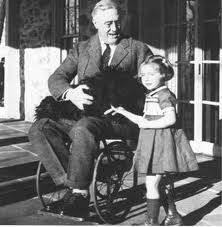
This does not bode well for the first time a candidate using a wheelchair runs for office.  Oh, wait:


*********

* If you answered “yes” to this question, please report immediately to your nearest qualified disability rights organization for enlightenment.

I’m grateful to those with the courage to tell their stories.

We recently went to trial against a fast-food chain for lack of wheelchair access.  In trial, three of the chain’s customers who use wheelchairs and the son of a fourth, now deceased, took the stand and described their experiences.  They described these experiences as a practical matter — a door that closed on an ankle, a queue line that was too narrow, employees who ignored them or told them they could not even wait off to the side of the line — and as an emotional matter — what it felt like to encounter these barriers, to be ignored, to be told to wait somewhere else. They talked about their own lives, too:  a lay pastor who counseled people with disabilities; an advocate who is working with the Smithsonian on a disability history project; a woman whose parents took her to see Martin Luther King, Jr. and taught her to stand up for her rights; a man whose mother had worked to integrate people with disabilities into her chorus.

The fast-food chain’s response was:  you’re lying.  You’re lying and you’re greedy.  The chain’s lawyers called the restaurant’s assistant manager to the stand to testify that she didn’t recognize any of them.  The lawyers pointed out — in cross-examining the customers — that they might recover damages, that they had filed other lawsuits to challenge other inaccessible conditions, that this wasn’t the closest restaurant to their homes.  The chain’s hired expert — who uses a wheelchair — took the stand to say he didn’t mind the barriers, that he didn’t consider it discrimination.

Four people who took time out of their day, their days, to be deposed, to take the stand in trial.  Work hours missed, long rides on public transportation.  Just to be accused of greed and dishonesty.  To be challenged on the fact that they had a life that took them farther afield than the restaurant closest to their homes.  To be accused — rather than celebrated — for standing up to other facilities and other defendants who had excluded them.

We defended them in the language permitted us by the law, by the rules of civil procedure and evidence.  Objections to relevance.  Quotes from the governing appellate court:  “[f]or the ADA to yield its promise of equal access for the disabled, it may indeed be necessary and desirable for committed individuals to bring serial litigation advancing the time when public accommodations will be compliant with the [ADA].”*

But as always, the late poet Laura Hershey says it best:

Telling**

What you risk telling your story:

You will bore them.

Your voice will break, your ink

spill and stain your coat.

No one will understand, their eyes

become fences.

You will park yourself forever

on the outside, your differentness once

and for all revealed, dangerous.

The names you give to yourself

will become epithets.


Your happiness will be called

bravery, denial.

Your sadness will justify their pity.

Your fear will magnify their fears.

Everything you say will prove something about

their god, or their economic system.

Your feelings, that change day

to day, kaleidoscopic,

will freeze in place,

brand you forever,

justify anything they decide to do

with you.


Those with power can afford

to tell their story

or not.


Those without power

risk everything to tell their story

and must.


Someone, somewhere

will hear your story and decide to fight,

to live and refuse compromise.

Someone else will tell

her own story,

risking everything.

A brilliant call to arms — to words? — for those who risk so much in speaking up.  It feels mundane to quote it in the context of a fast food restaurant.  But that’s the point:  in simply describing a visit to a restaurant, ordering food, interacting with staff, you risk being called a liar and having your motives and experiences questioned and belittled.

I devote my professional energies to disability rights law, but mostly I do that sitting at a computer researching or writing.  From that sheltered vantage point, it’s easy to lose sight of the courage it takes to tell your story in a courtroom and to be challenged, belittled, and accused of lying.  I am deeply grateful for those who are willing to tell their stories.

***************************

*  Antoninetti v. Chipotle Mexican Grill, Inc., — F. 3d —, 2010 WL 3665525, at *7, slip op. at 16016 (9th Cir. Sept. 22, 2010).

** Quoted with permission. Thanks, Robin!