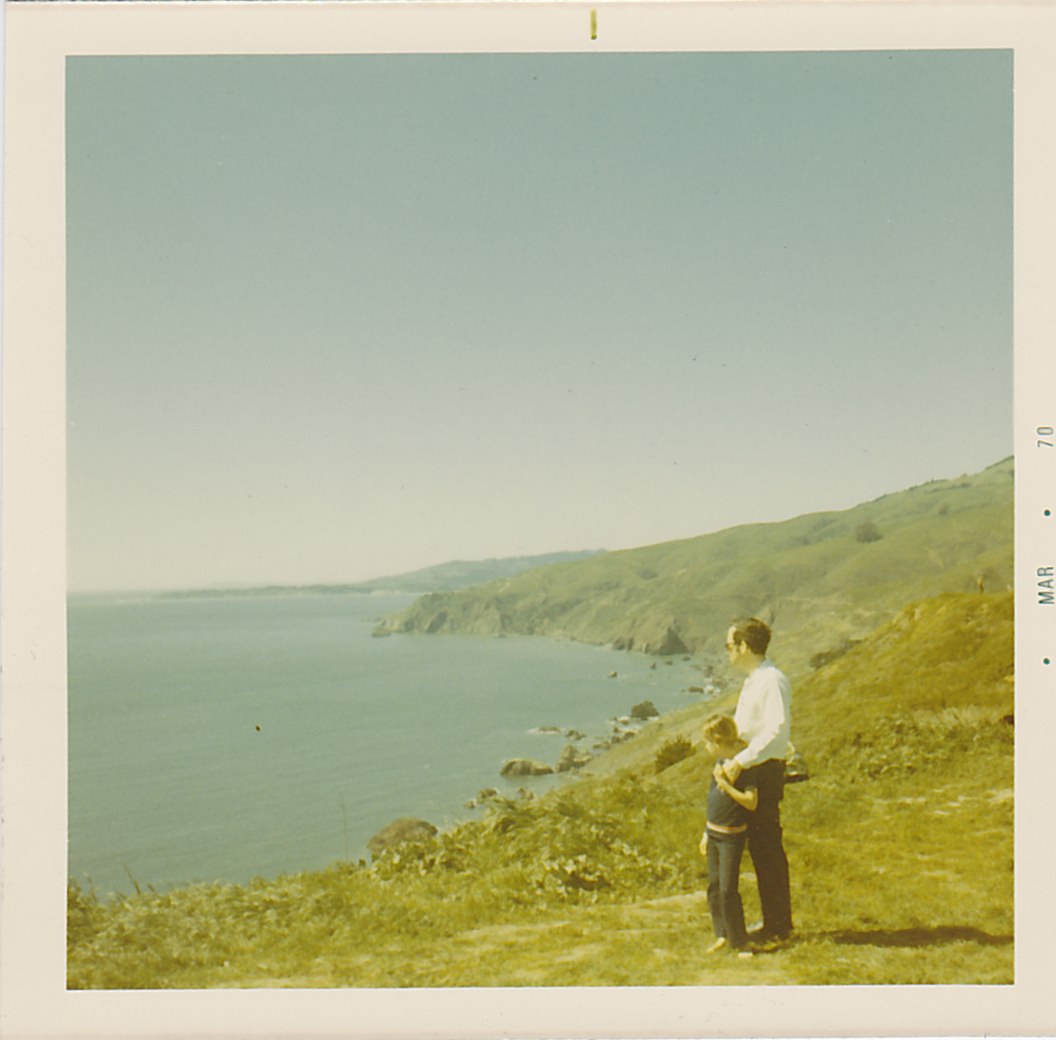
Me with my Dad on a family trip to the west coast in 1970ish.

Me with my Dad on a family trip to the west coast in 1970ish.
With love and appreciation for all that they taught me and the ways they enriched my life, and sadness for those no longer with us.
Dad in Beijing in 1981.

Grandfather Clarence Blau (and his granddaughter) in 1992.

Grandfather Clen Robertson with brother Bruce Robertson at Bruce’s college graduation in 1984.

Step-father David North on the occasion of his 85th birthday earlier this year with my Mom doing one of their favorite things: exploring an interesting new restaurant.

Father-in-law Denver Fox this past Easter, which we celebrated in the traditional fashion of being the least hip people at the Denver Biscuit Company. (Thus the cigarette machine in the photo relates to DBC’s hipster status and not to any bad habits of my father-in-law.)

Extra bonus dad: my brother Bruce with my niece.

I am so very blessed.
I’ve been gradually scanning my father’s photos, posting them to Flickr, and encouraging my family — especially my mother — to comment so as to identify names and places that are unfamiliar to me. I recently scanned the photos from my parents’ travels during the summer of 1959, including a trip to the Soviet Union.
I posted the photos and invited my mother to tag and comment . . . and ended up with mentions on a number of Russian websites, a couple of Russian commenters on Flickr offering their thoughts on the photos, and over 50,000 views since the photos went up a week ago.
With the help of Google Translate and my mother, who speaks Russian, I’ve been learning more about the photos and commenters.
For example, here is a Live Journal page by “Finnish Passenger”
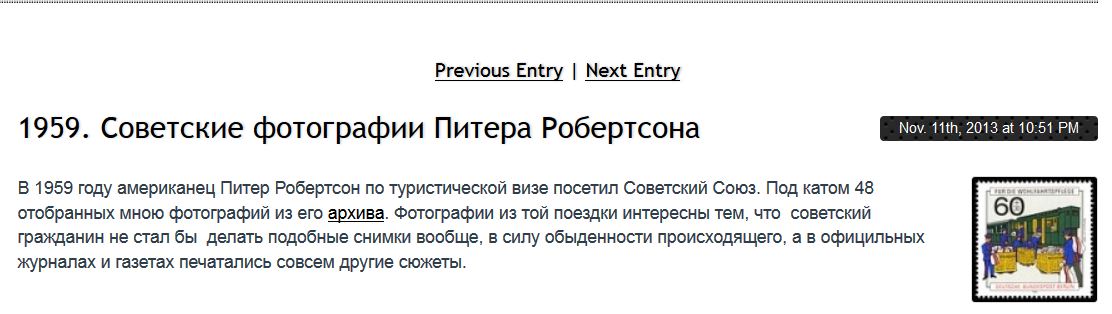
Google translates this as:
In 1959, the American Peter Robertson on a tourist visa to visit the Soviet Union. Under the cut I have selected 48 photographs from his archive. Photos from the trip are interesting in that a Soviet citizen would not do at all these pictures, because ordinary is happening, and in ofitsilnyh magazines and newspapers printed entirely different subjects.
Yeah, the translation is a bit rough.
Another Russian blogger turned the photos into a guessing game and then provided answers (in addition to the answers in the comments).
My favorite of the bunch is this photo and some of the commentary around it:
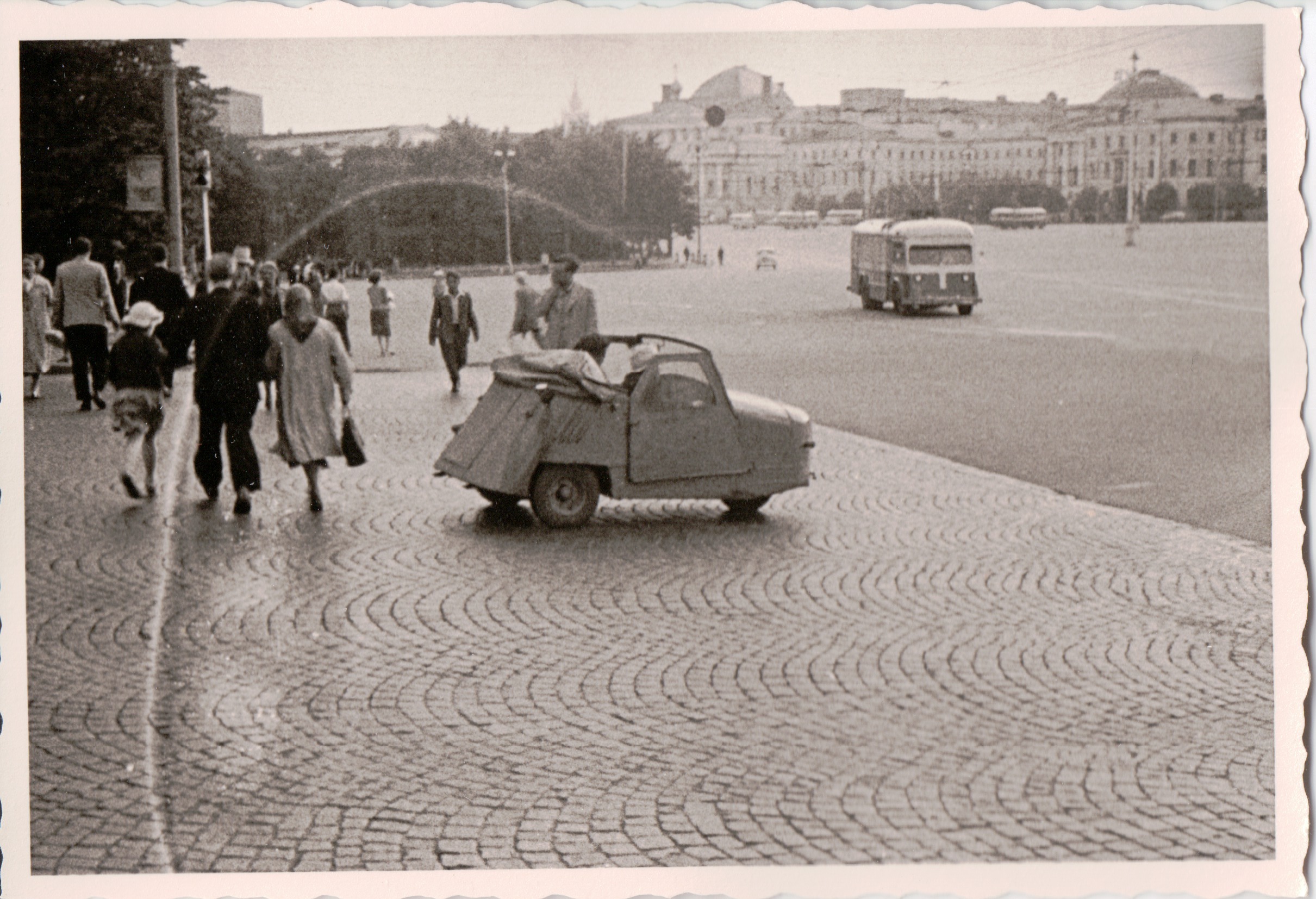
I had no idea what this was. A Flickr commenter, Leonid Paulov, explained,
Machine for the disabled. When I was 8 years old living in Kazakhstan. Roads there was not. After the rain this car off the road. The driver of a war veteran with Germany very loudly berated those who made this car
Remember, this is Google Translate talking, so it’s not that everyone in Russia actually sounds like Boris and Natasha. Mom did a better job with the translation:
It’s a machine for disabled people. When I was 8 years old, I lived in Kazakstan. There were no roads for automobiles. After it rained, this machine could go out on the shoulder. A bus driver who participated in the war with Germany loudly berated those who made this automobile.
I asked:
So this is car that would be used by a disabled person? Like a wheelchair with an engine?
Mr. Paulov responded,
Yes, this is the first vehicle for persons with disabilities in the Soviet Union manufactured 60 years ago.
Still not clear on the role of the veteran/bus driver. Here’s another Russian site commenting on the same photo.
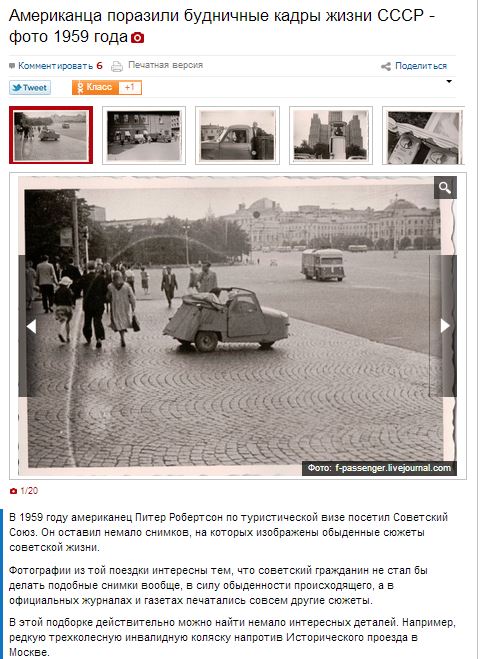
The last paragraph reads,
In this collection you will actually find a lot of interesting details. For example, a rare three-wheeled wheelchair in front of the historic journey to Moscow.
There were a number of photos of women working on roads or in the fields. One commenter noted — tersely but (to me) poignantly — that, because of the war, there was a dearth of men:

(Pretty buff commenter, though, eh?)
A theater showing “War and Peace.”

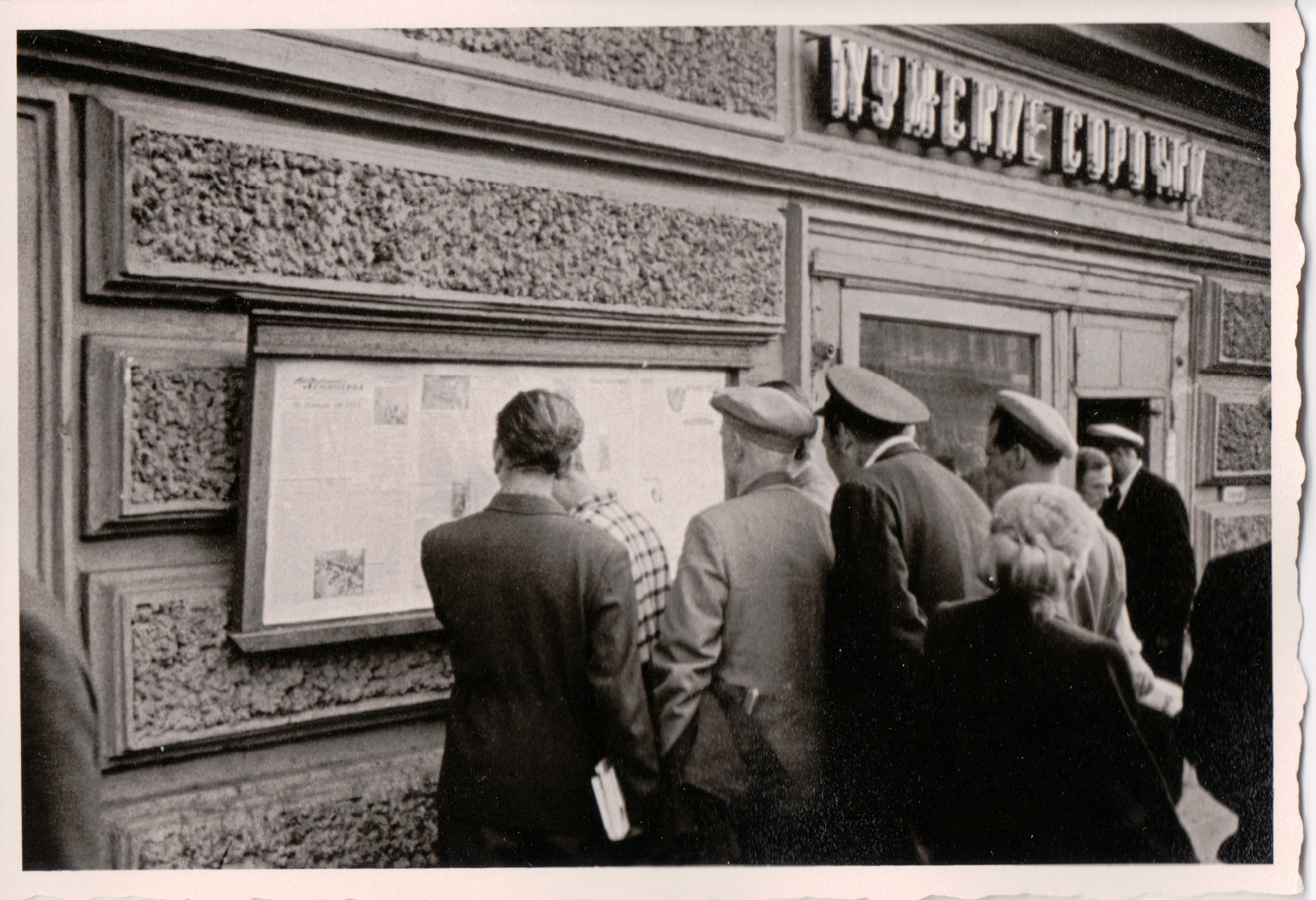
Reading the newspaper:
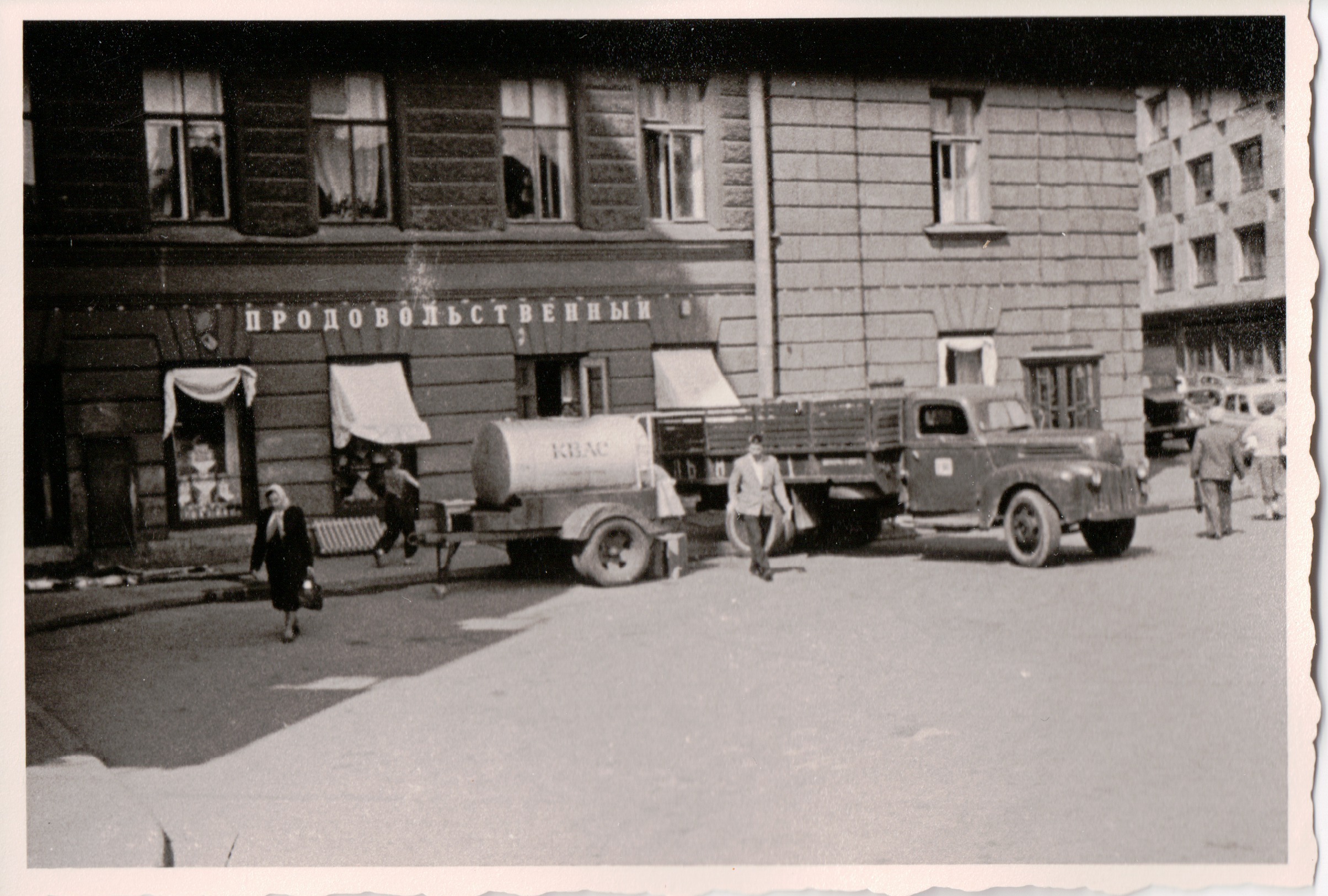
The photo below is apparently a tank of something called kvass, which my mother described as a drink made from fermented rye bread. Truly a testament to the ingenuity that can arise from the combination of great deprivation and great thirst.
The sign says “place for feeding pigeons.” And that’s Mom — in her travel gear — a far cry from the jeans and hiking shoes I wore for my post-college travels.

The requisite giant portrait of Khruschev.

and the people tasked with schlepping the giant portrait:

More to come in a future post — by me or perhaps a guest post by Mom!
Thinking of my Dad on what would have been his 78th birthday. 
You always lifted me up! Miss you every day.
My grandfather, Arthur Clendenin (“Clen”) Robertson, became a soldier at the age of 37. That’s him, second from the right:

And on the far right of the back row here:
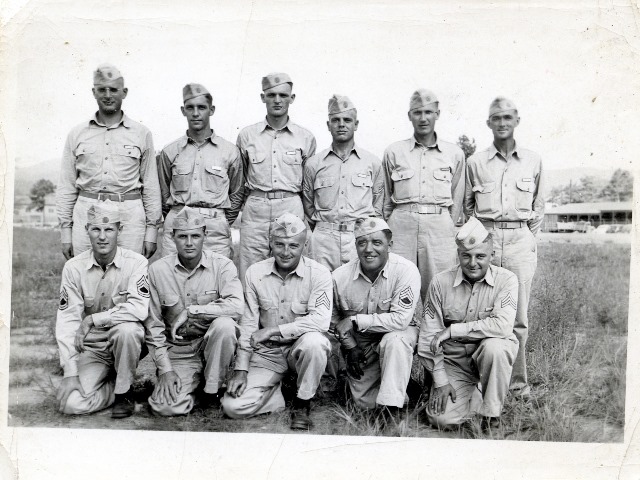
He tried to enlist following the bombing of Pearl Harbor but was turned down based on his age. From a letter to my Dad:
I then wrote Charlie Nelson, Chairman of Davidson County Draft Board no. 6 asking to be transferred from 4a[*] dependents to 1a., which was granted. I was inducted at Ft. Oglethorpe June 18, 1942, did basic training at Ft. McClellan, alabama; admitted to OCPS in September and to OCS at the Infantry School in Ft. Benning, graduating as a Second Lieutenant December 23, 1942.
He served from 1942 to 1946 — including a stint in the occupation government (“Office of Military Government”) in Wurttemberg-Baden — achieved the rank of Major, and received a number of commendations. From his official record:

According to the letter to my Dad, he also received the Croix de Guerre and the Legion d’Honneur from the French government for his service in that country. I knew very little of this when we traveled to France together in 1981. While there, he wore small colored bands in his lapel — called, I just learned, “lapel threads” — which turned out to be real conversation-starters and respect-generators among the French people we met.
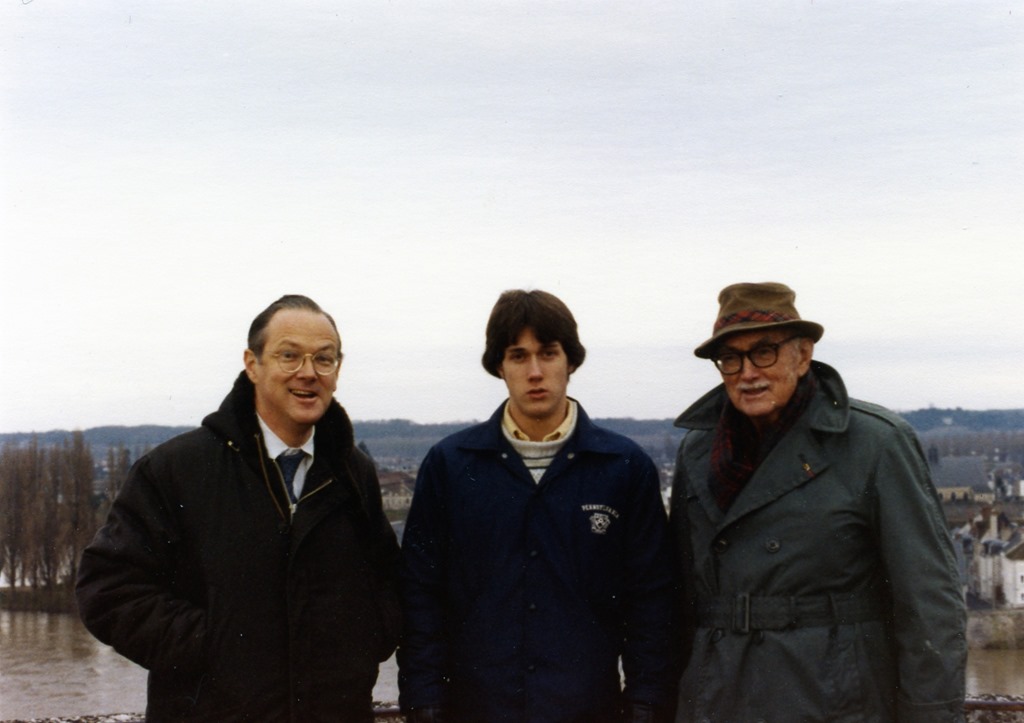
Here are the Three Clendenins (Peter, Bruce, Clen) traveling in France in 1981. Can you tell Bruce has (1) a cold and (2) a bad attitude about driving around France in a small car with his father, grandfather, and sister?
Granddaddy’s military service provided a lifetime of interesting stories, deep respect for national service, and some of the weirdest political views I’ve ever encountered.** After he left the army, he got a master’s degree at Colorado College, and taught and tutored in various locations. He eventually retired to Wisconsin to fish,
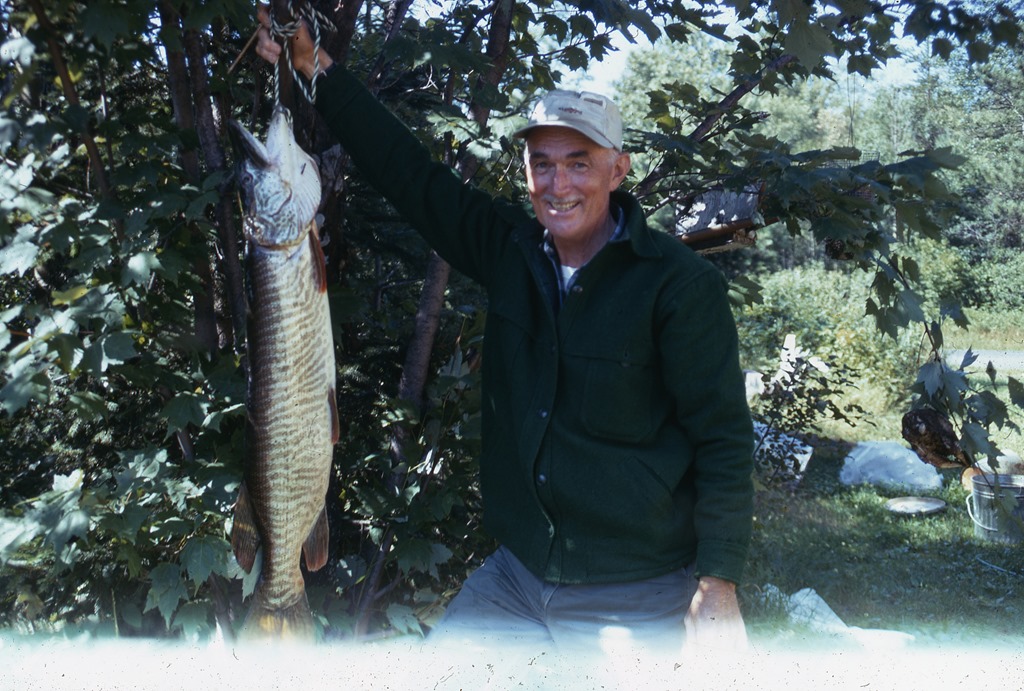
and when he could not live alone in a cabin in the woods, re-retired to my father’s house to write the definitive but sadly unfinished history of the Alger Hiss case and argue with my Dad over the proper number of squares of paper towel appropriate for any given use. Here I am listening respectfully but skeptically to an in-depth, fully-researched, well-thought-out, utterly-off-the-wall political disquisition.
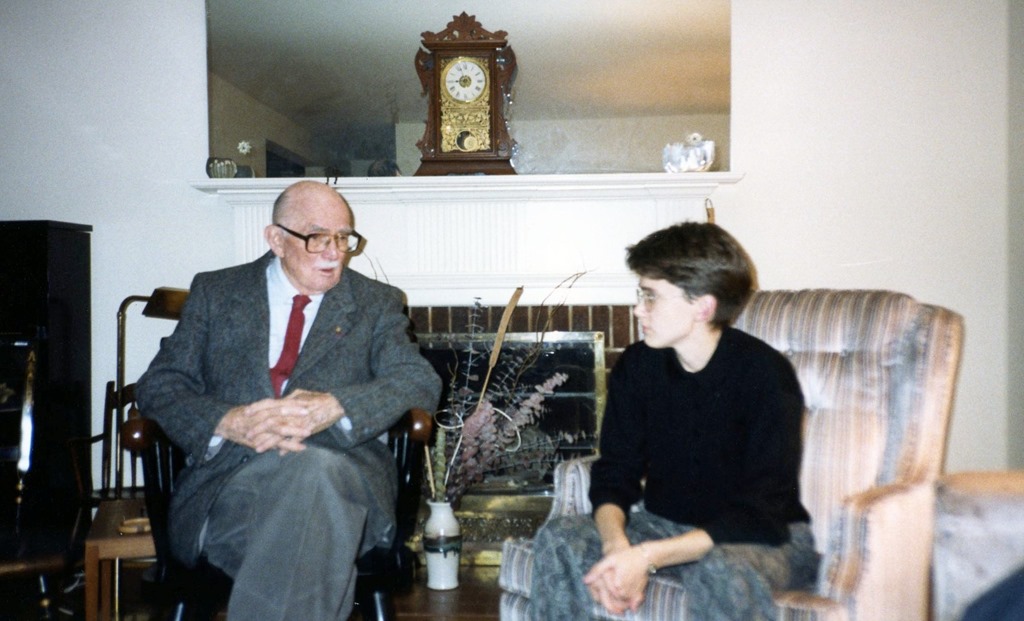
Miss you, Granddaddy, and thank you for your service.
***********************
* A bit of research on Wikipedia suggests that he meant “3-A” which was the classification that permitted deferrals for men with dependents. 4-A was for men who had previously served which, to my knowledge, he had not. While it was very brave of him to change his draft status to serve, and I honor his service to our country, as a point of fact in 1941, he had dependents: my father and my uncle. He and my grandmother had divorced, and I suppose joint custody wasn’t quite as popular as it is now. Nothing’s ever simple.
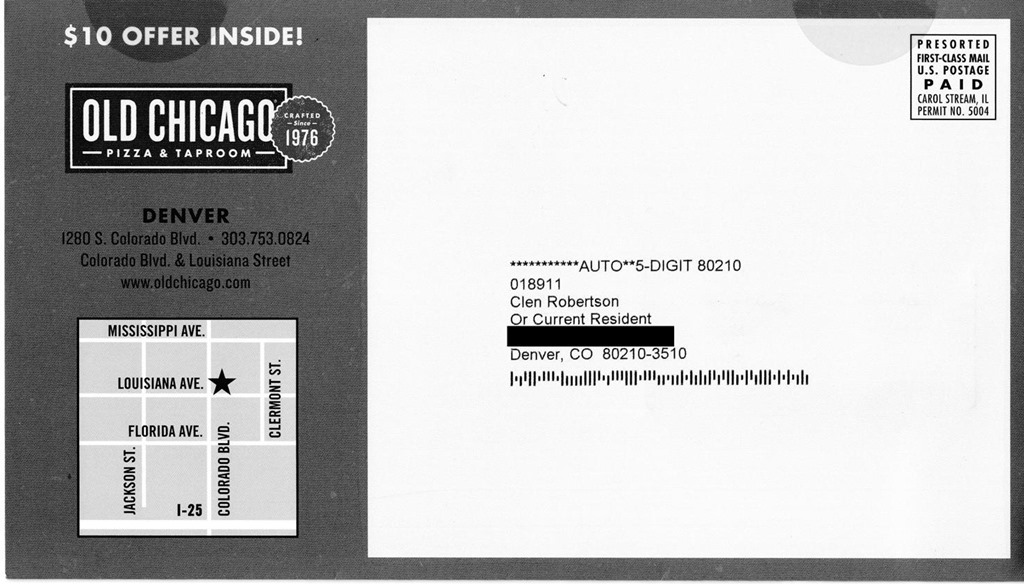
** This will have to be the subject of a separate post. After Granddaddy passed in 1997, we had his mail forwarded to me. His political interests were such that he was on the mailing list of almost every fringe group on the far left and far right. And God knows who buys what mailing lists, because he just received — at my address — an offer for $10 off an Old Chicago pizza
I have finally started on the project of archiving and (selectively) scanning my father’s photographs. He was an avid photographer, if by “avid” you mean “relentless.” In a pre-digital age, when developing photos was costly and time-consuming, he would take massive numbers of similar photos. I can’t remotely imagine what his archive would look like had he lived to own a digital camera.
His photos span his own teenage years in the late 40s and 50s to the years just preceding his passing in 1997. From skinny ties

to sideburns
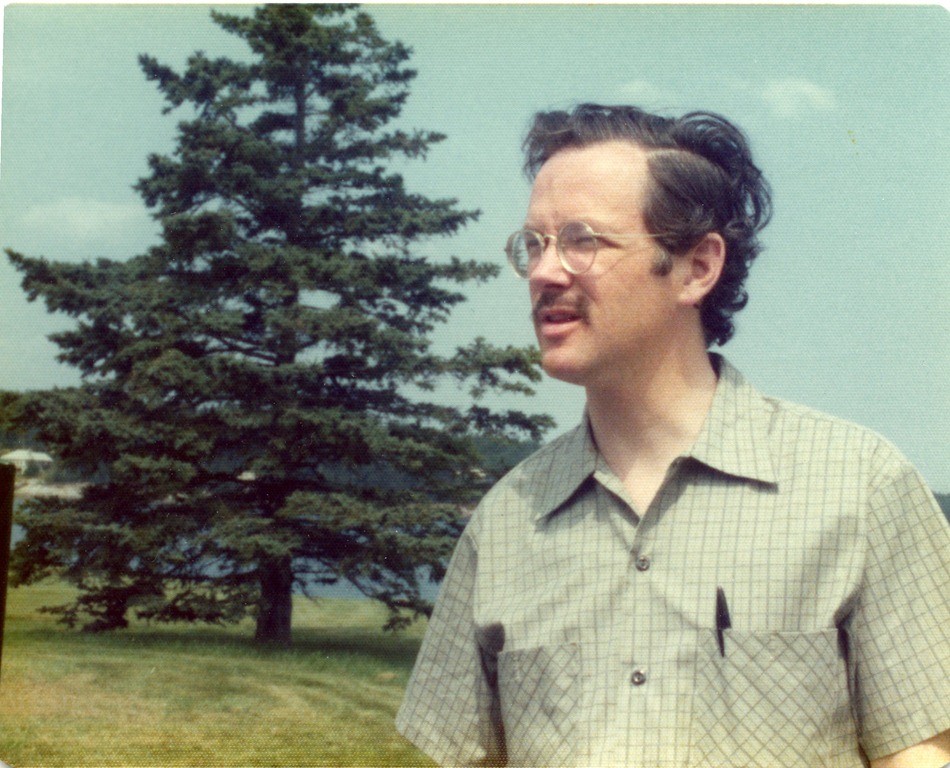
to grandfatherhood
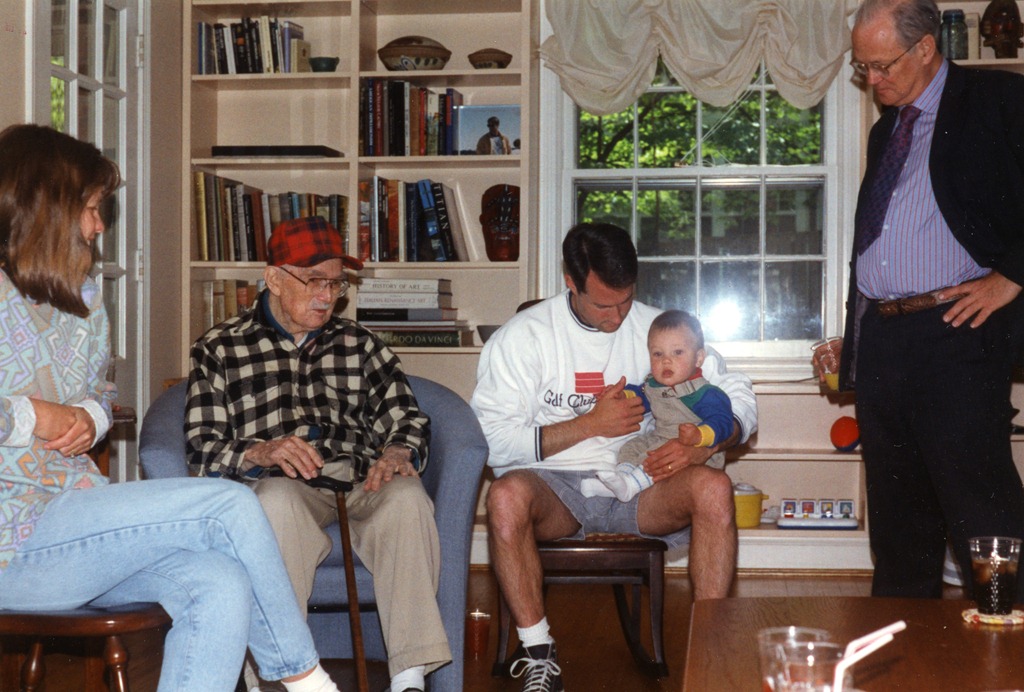
His equipment spanned the Minox to the Poloroid, but he really hit his stride in the disposable camera era. I’m not sure he used a non-disposable camera after about 1990.
The organizing challenge is also more intense for more recent photos, that is, those taken after One Hour Photo began offering two-for-one prints. Dad often got three- or even four-for-one, resulting in giant stacks of photos for each roll, or more frustrating, duplicate rolls scattered throughout the collection.
I should have taken a picture of the starting point: three large (3’ x 3’ x 3’) boxes of unsorted photos — most stored in all of the variations on envelopes that developers used from the 40s to the 90s, but many loose photos and negatives as well. I have now gone through all of the photos that remained in envelopes and more or less figured out their year or at least decade. This process brought home the need for some sort of consistent way to organize them — and a search for what turns out to be a rare thing: a no-frills way to store large numbers of photos.
Working hypothesis: Damn you, scrapbookers!
A search for “photo envelopes” yielded sites willing to sell me heavy-duty envelopes just thick enough to mail one presumably very important photograph, but no envelopes sufficient to hold a roll of 36 (or 72 or 108) photos. I moused around for a couple of days, and then hit our local Mike’s Camera to see if perhaps they sold in bulk the sort of envelopes you used to get your developed photos back in.* They didn’t but the guy behind the counter recalled he’d purchased them in bulk back in the day when his store actually developed photos. He had the name, no!, not the name, but he did have the 800 number. And bless the internet, a search on the 800 number took me to the Mackay Mitchell Photopak company, which sells “print boxes,” 100 for $25.10, in two sizes.


So, I figured, I had just been using the wrong term. Clearly all I’d have to do would be to search on “print box” instead of “photo envelope” and I’d have a wide range of choices. Not! Here are typical results for “print box”:

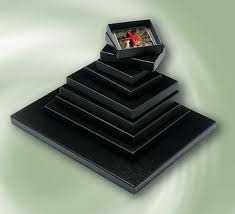

And here’s where I blame scrapbookers: it is apparently no longer acceptable to store photos in cheap, plain, buy-in-bulk envelopes or thin cardboard boxes. They have to be archived — no, make that “curated”** — in something cute, expensive, and space-consuming.
I placed my bulk order with Mackay Mitchell.
This post took a sort of unexpected Andy Rooney turn, so I’ll wait til the next to start posting some of my Dad’s more remarkable photos.
************
* Yes, I did that grammar on purpose. Grotesque but sorta cool, no?
** It will not surprise you to learn that I’m planning a post on the overuse of the word “curate,” which has escaped its home in the museum and wandered off to cover any set of two or more things that someone has chosen to put side by side for any reason in any medium. For example, “I curated my eggs and toast this morning.” See! How awesome is that?!
Miss you every day.

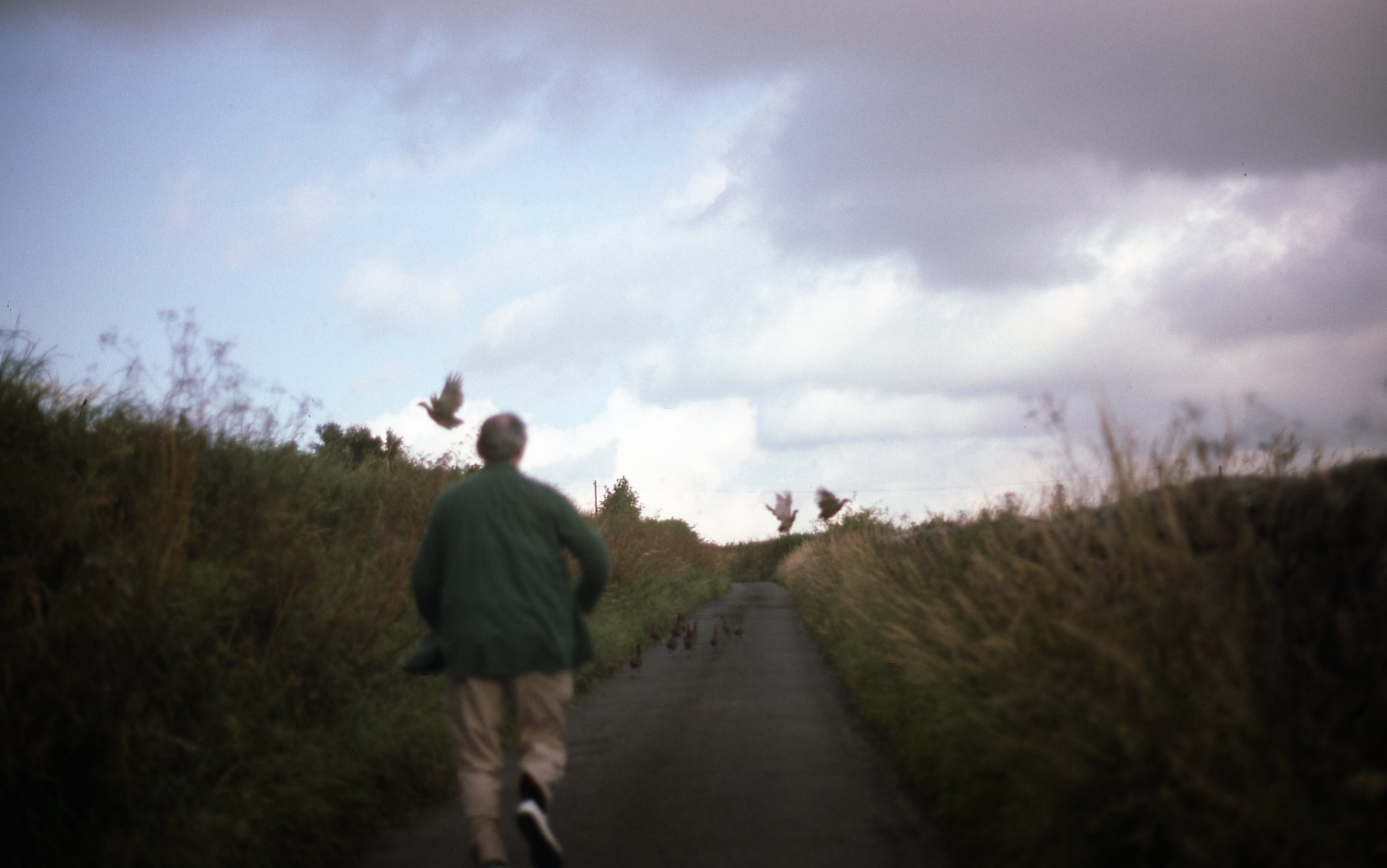
Photo from a trip to Scotland in 1985. I was taking the long way home from Taiwan to start law school in the fall, and we met up in London, drove around England and Scotland, and ended up at a friend’s wedding in Edinburgh. Driving was an adventure, including England’s almost impossibly narrow country roads, which we shared with all types of wild and domesticated animals. Here’s Dad attempting to clear the road of flock of ducks who insisted on waddling rather than flying.
And where but Scotland could he find a store bearing his name:

The copy of Ulysses that my grandfather bought in Paris in 1928, at which time it was banned in the US.
.
He was, of course, much smarter and more literate than his granddaughter, but I enjoy displaying the books I inherited from him so I look well-read. Biography of Henry James? History of the English Speaking Peoples?* Of course! Um… how about that Peyton Manning!?
*************
*Clarence was actually my Jewish grandfather, though his reading tastes tended toward the WASPy and Anglophile. My Christian grandfather, on the other hand, was a big-ass Zionist and Nazi-conspiracy-theorist. And you wonder why I’m confused!
And a tribute to the awesome mothers in my life. Thanks for all you’ve taught me.
Mom Ruth Blau and mother-in-law Nora Fox at our wedding in 1993.

Grandmother Edith Blau sometime in the 1980s.

Grandmother Helen Farr Smith (Robertson) Love sometime in the 1950s.

And my sister-in-law Terri Robertson with my niece & nephew and their Aunt Amy — my favorite title! Photo ca. 2000. The kids are graduating from middle school & high school, respectively, next month; I have waaaay more gray in my hair; and somehow Terri still looks the same!

Late comment: What does it say about my obvious genetic heritage as a nerd that both of my *grandmothers* are wearing suits? Between that and the fact that I was partially gestated at a law school, my inevitable nerdiness was predestined.
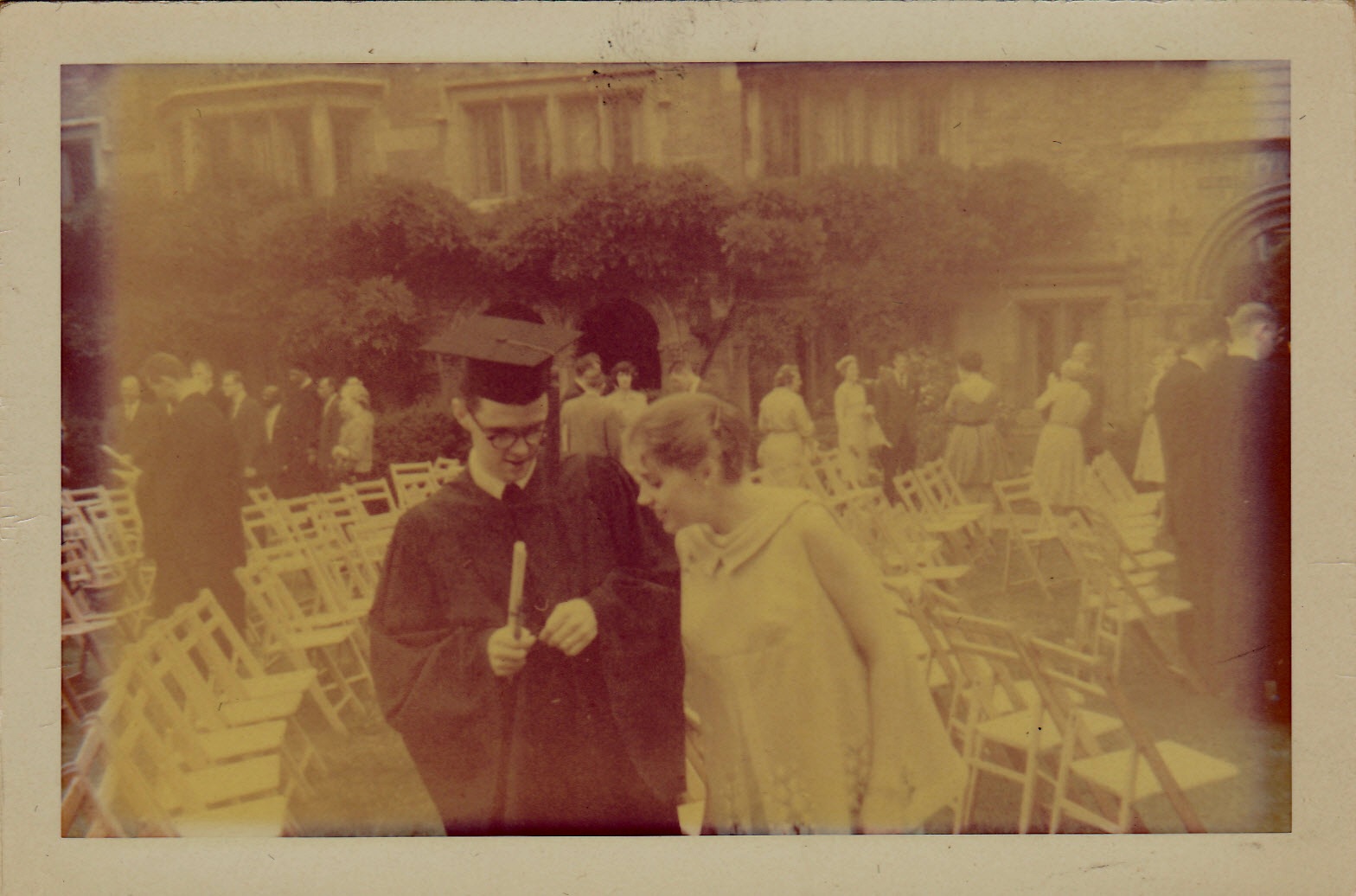
My mother is lucky I wasn’t born with a copy of Black’s Law Dictionary in my hands!
If you have a relative who is completely deluded politically with whom you graciously disagree on various political matters, you may have trouble from time to time coming up with something to talk about at family gatherings. As regular readers of both of our blogs have discerned, my brother is completely deluded politically a Republican and I am correct in all things a Democrat. Yet we have many fascinating, non-political things to talk about. Herewith, as a public service at these family-oriented holidays, a working list of the things that can completely occupy our conversation in the absence of politics:
Your mileage may vary.


 Thought Snax