We have the immense good fortune to live two blocks from an excellent mechanic. I never thought of it before we moved in, but this is the sort of thing that should feature on real estate ads. Close to schools? Shops? Restaurants? Who cares! You can drive there. Nothing beats the ability to drop your car at the mechanic and walk home.
But Weaver’s Automotive and U-Haul is cool for many other reasons, including the fact that Tom Weaver has, on many occasions, examined some perceived problem in my car and returned it to me with the reassurance that nothing is wrong. What’s more, he has somehow managed to do this without making me feel like the automotive incompetent that I truly am. He has, from time to time, walked over (or sent someone over) to our house to rescue me from my automotive incompetence. I’m confident that the 1988 Honda got many more years of life from living two blocks from Weaver’s.
But I’m blogging this today because
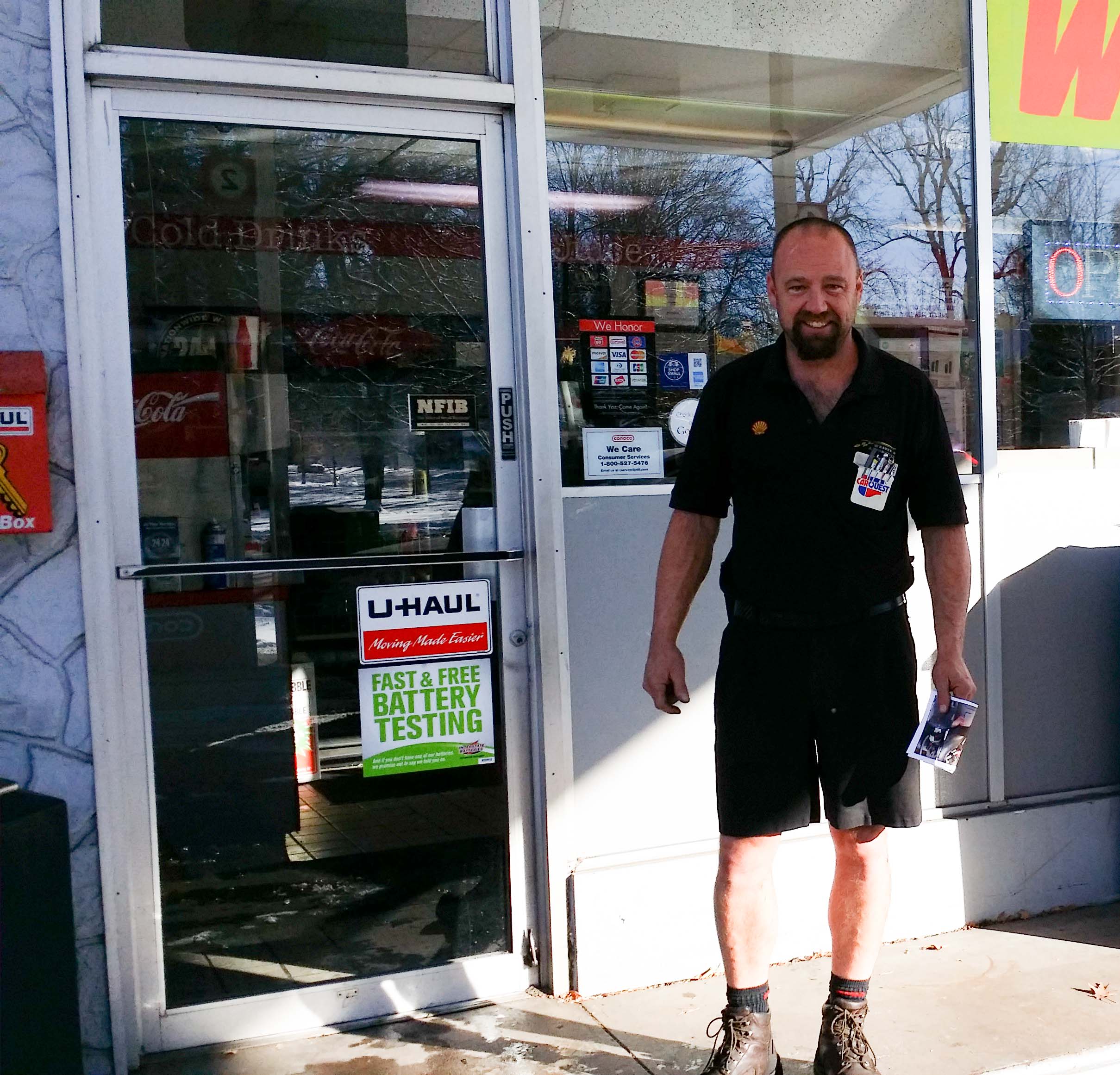
this is how Tom is dressed, every workday I’ve ever seen him, including our Wednesday morning dog-walk when it was several degrees below zero. (This photo is a dramatic re-enactment, as I didn’t have my camera with me on Tuesday. It was taken on Friday morning, when it was a balmy 20.) For the record, I was in triple-layers, including snow pants, and even Saguaro was wearing boots. But there was Tom, working around the U-Haul trucks on site, in his trademark shorts.
So if you live near DU and need a good mechanic — or need your U hauled — definitely check out Weaver’s Badass* Automotive.
**********
* WordPress’s spell check still doesn’t think this is a word. After blogging with me for three and a half years, you’d think it would have learned.
It finally happened: I converted from WordPerfect to Word. Like my father, I was an early-adopter-never-let-goer. I first worked on a commercial word processing program in Taiwan in 1984, when I was a translator at Lee & Li and learned the proprietary Wang word processing system. (IIRC, Swarthmore in 1983 had a student-created system available on terminals in the computer center. It was a huge improvement over my Smith-Corona and Wite-Out strips, and I wrote my thesis on it when I could reserve time. Still didn’t top my Dad’s late 1970s adoption — and never-let-go-tion — of the Lexitron.)
I came back from Taiwan to go to law school in 1985 and acquired the then top-of-the-line approximately-the-size-of-a-lawnmower IBM PC. I had heard that a program called MultiMate mimicked the Wang program, so I was determined to buy and install it. My mother — thanks, Mom! — talked me out of that and into WordPerfect. Thus began a 29-year relationship that only ended this year with my inevitable assimilation to the Borg: Microsoft Word.
Top reasons for assimilation:
4. Annoyed co-counsel (“the formatting in the Word version is all effed up!”)
3. Awkward emails to opposing counsel (“we draft in WordPerfect, but send us your changes on the pdf version and we’ll incorporate them”).
2. Track changes!!!!
But my favorite feature is
1. Comment boxes.
I started using them as they are supposed to be used: to expound on tracked changes or make a general comment on a section of text. Now they’ve become sort of like “The Word” in the Colbert Report:
a way of letting my id come out while drafting a brief, one that entertains me as I write but that is easy to delete and sanitize before I file.
or even
I miss WordPerfect’s “reveal codes” feature, and I still maintain that outlining in Word is a random-number-and-indentation-generator, but I’m generally adapting to the change.
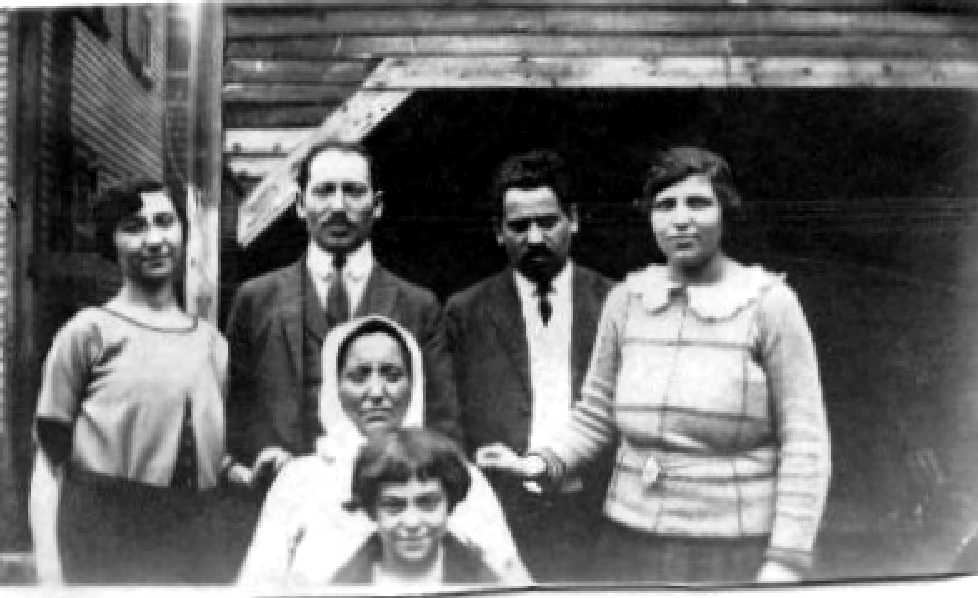
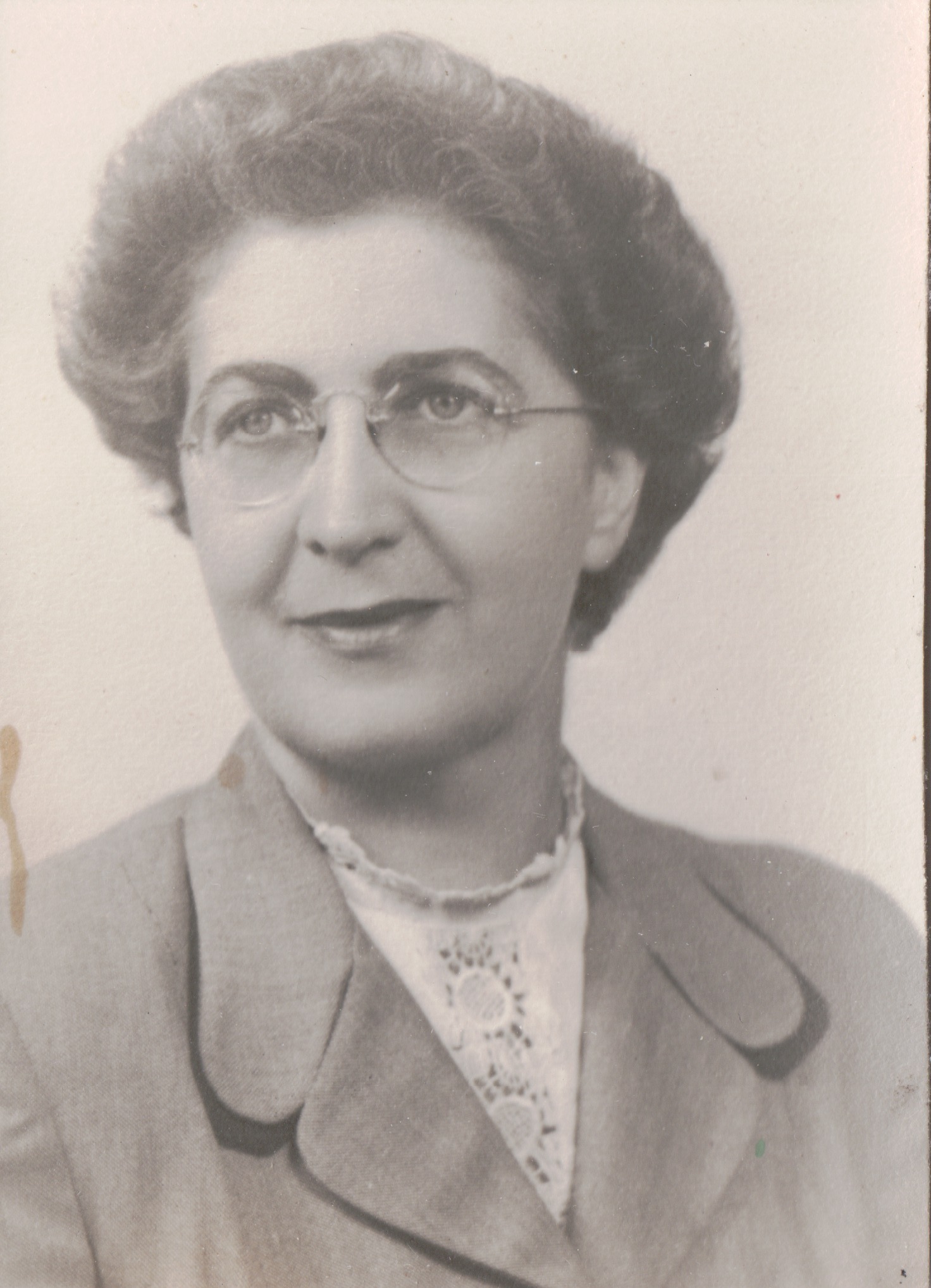
My Jewish grandmother, Edith Spivack, was born in Kiev, Ukraine in 1904 or 1905. The family immigrated to the U.S. when she was young, and her remaining four siblings were all born in America. She’s not in this photo, but her father (my great-grandfather), Zacharias, is the second from the right in the back row, and next to him is his sister, Fanny. The older woman in the middle is Zacharias’s mother, my great-great-grandmother.
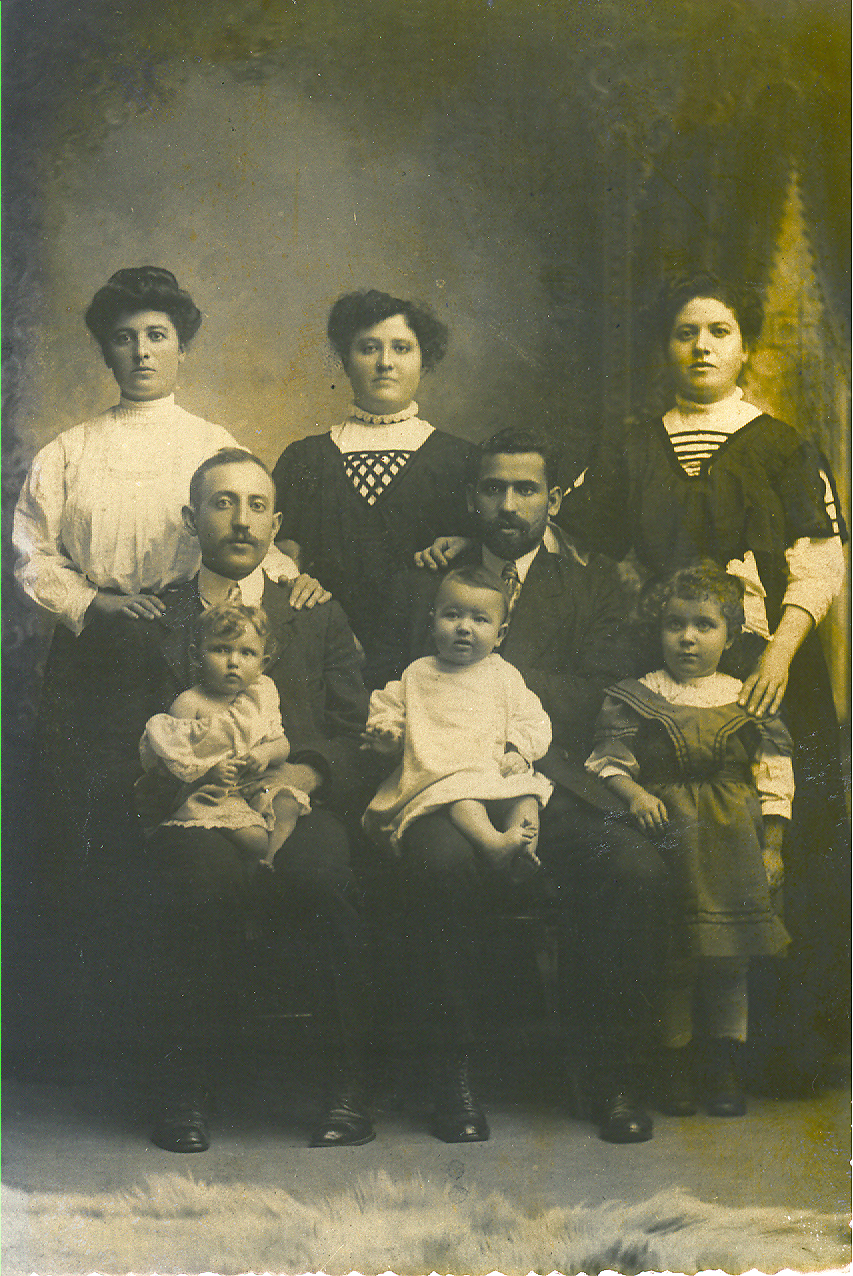
Update: My mother just sent this excellent old-world photo, though by dint of the cast of characters, taken in the U.S. in about 1907 or 1908. (Thanks, Mom!)
From my mother’s description, with my commentary: Back row: Rachel (Toporovskaya) Palkin; Ida Toporvskaya (apparently not yet married when this photo was taken); Fanny (Toporovskaya) Spivack [my great-grandmother]. Middle row: ? Palkin (Rachel’s husband); Samuel Spivack [Fanny’s husband; my great-grandfather; Zacharias from the photo above — Samuel was the English name he selected]. Front row: Palkin child; [my great-uncle] Max Spivack (on Samuel’s lap); [my grandmother] Edith Spivack (later Blau; standing, her mother’s hand is on her shoulder). Rachel, Ida, and Fanny were sisters.
On the Protestant side, you have to go back a couple more generations: my great-great-great-grandfather was born in Colne, England. I have fuzzy memories of my father — an enthusiastic if not terribly well-organized genealogist — telling me that that he or another early family member essentially absconded from England with a patent that he did not, technically, own to start a manufacturing business in Massachusetts.
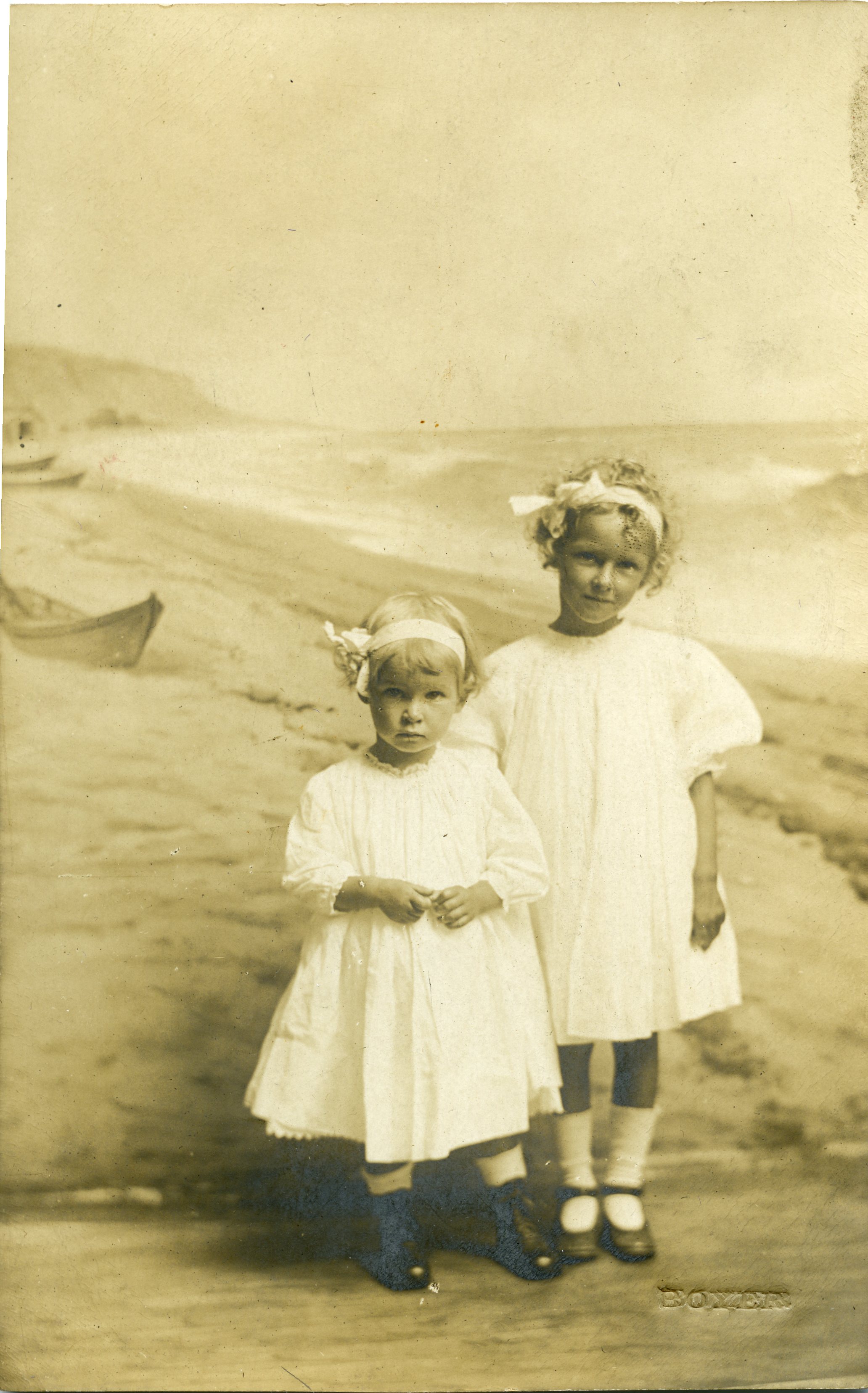
Update: My Protestant peeps deserve a photo, too, right?
My grandmother Helen Farr Smith [Robertson] [Love] and my great-aunt Elizabeth (Betty) Lees Smith [Carey], in 1911.
So we were strangers, once, and possibly of that criminal immigrant element you keep hearing about. And yet here we are, a largely productive and law-abiding bunch. I am grateful for the country that welcomed these people from such different places. I’m grateful for the opportunities that allowed my grandmother to go from the shtetl to Radcliffe in the span of a single life.
I’m grateful for the mixing bowl that allowed a Protestant college guy and a Jewish college gal to meet and marry and have the quintessential American mutts that are my brother and me. I’m grateful that many of us still welcome the strangers from many places, and hopeful that those who don’t will gradually find room in their hearts for their fellow immigrants.*
Scripture tells us that we shall not oppress a stranger, for we know the heart of a stranger – we were strangers once, too.
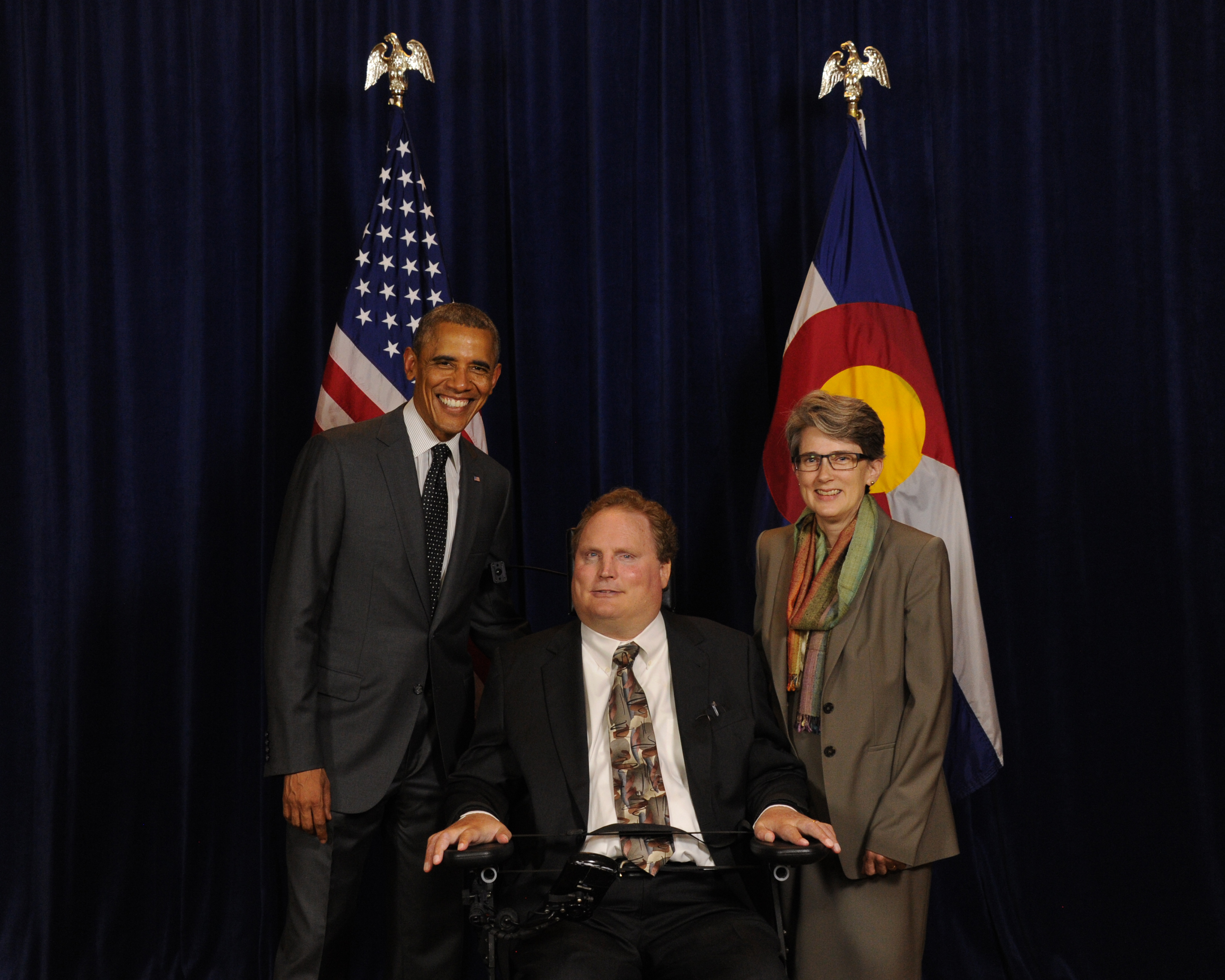
My fellow Americans, we are and always will be a nation of immigrants. We were strangers once, too. And whether our forebears were strangers who crossed the Atlantic, or the Pacific, or the Rio Grande, we are here only because this country welcomed them in, and taught them that to be an American is about something more than what we look like, or what our last names are, or how we worship. What makes us Americans is our shared commitment to an ideal – that all of us are created equal, and all of us have the chance to make of our lives what we will.
Barack Obama, November 20, 2014.
*************
* Well, most of us. I realize these heart-warming words need some editing for those whose ancestors crossed the Atlantic in the hold of a slave ship or were already here when our ancestors got here and started waxing eloquent about welcoming each other. Bottom — un-heart-warming — line: white people who would close our borders need to stfu.
When I saw Mighty Girl’s post on Rosie’s Girls summer camp, “a trades exploration day camp for school girls” where girls can learn welding, carpentry, auto repair, etc., I was moved to comment (on Facebook) that I wish this had been an option for me instead of figure skating camp. I thought I’d expound.
Yes, figure skating camp. But first, I got to spend a summer attending the Flint Hill Day Camp, where (IIRC) we spent up to six hours each day making plastic lanyards. I’m confident that there must have been other activities, but that’s the only one I recall. I loved it just as much as you would expect a nerdy introvert to love engaging in six hours a day of non-book-oriented activities with random unfamiliar kids.
By the time I was 12, I was launched on my figure skating career, which was ultimately as successful as you would expect for a klutzy nerdy introvert, but did provide good money-making opportunities in college, teaching private lessons to local kids. But back to skating camp. In 1973, there was no year-round ice rink in the DC area, and the Skating Club of Wilmington ran a summer program for skaters of a wide range of abilities, from Olympic trainees to klutzy kids from locations without year-round rinks. So off I went.
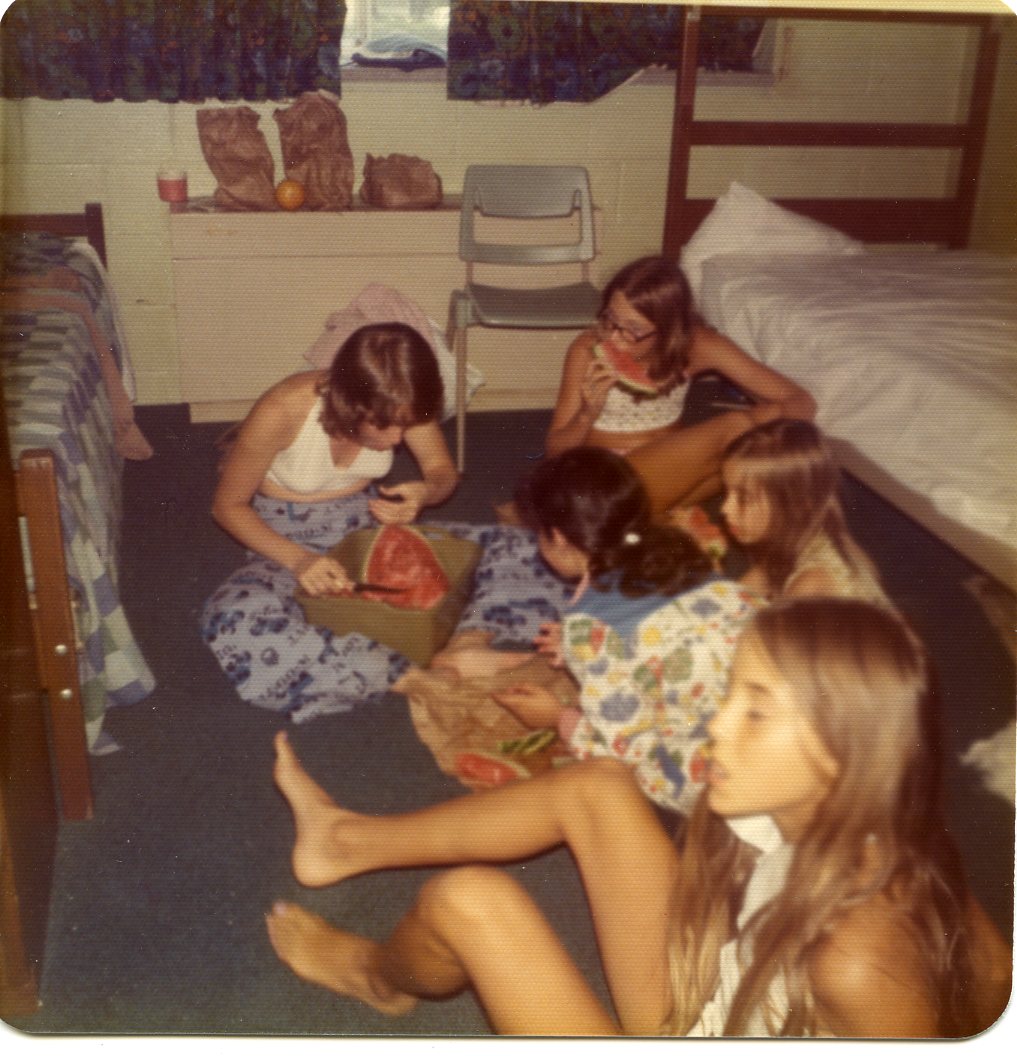
Activities consisted of skating, hanging around the skating rink, and hanging around the dorm. When I think of the sort of enrichment and structure that my friends expect from their kids’ camps these days, I don’t think they envision the sort of enrichment and structure the Wilmington summer skating program dorm provided:
The back of the photo reads, “Laurie and Dr. John.” So, yes, one of my dorm-mates — already much older than me — had a much older, beer-drinking boyfriend who had dubbed himself “Dr. John.”
What’s amazing is that — at 12 — I wasn’t even the youngest kid living parentless in this enriching environment.
More of my hall-mates.
The back of that photo reads, “Laurie, Jill Cosgrove, Carrie Applegate, Amy Keilly, Bruno, Patti Downst.” Through the miracle of Google, I learn that Jill Cosgrove went on to have a successful career as a figure skater and choreographer. Couldn’t find the others.
Since I was the photographer, there are — sadly — no photos of me. Wait, what? No. That’s not me. No way. Seriously?
I also found this one, of me with my coach, Uschi Keszler, whom I totally idolized and who turns out — who knew?* — to be minorly famous herself, complete with Wikipedia page.
Yes, I’m holding a toy lobster. Deal with it.
I tend not to have very fond memories of the whole skating camp experience. It was my choice — my parents were not stage parents, though God knows the skating world had plenty of those — but in retrospect I’ve come to believe that neither the program nor figure skating in general was a very healthy experience. It was a world that encouraged kid vs. kid (generally girl vs. girl) competition, with no sense of teamwork. We heard rumors of kids ruining each other’s skates or program tapes before big competitions. And, at bottom, I just sucked at it. So wish there had been a Photography and Reading for Introverted Klutzes camp. My peeps!
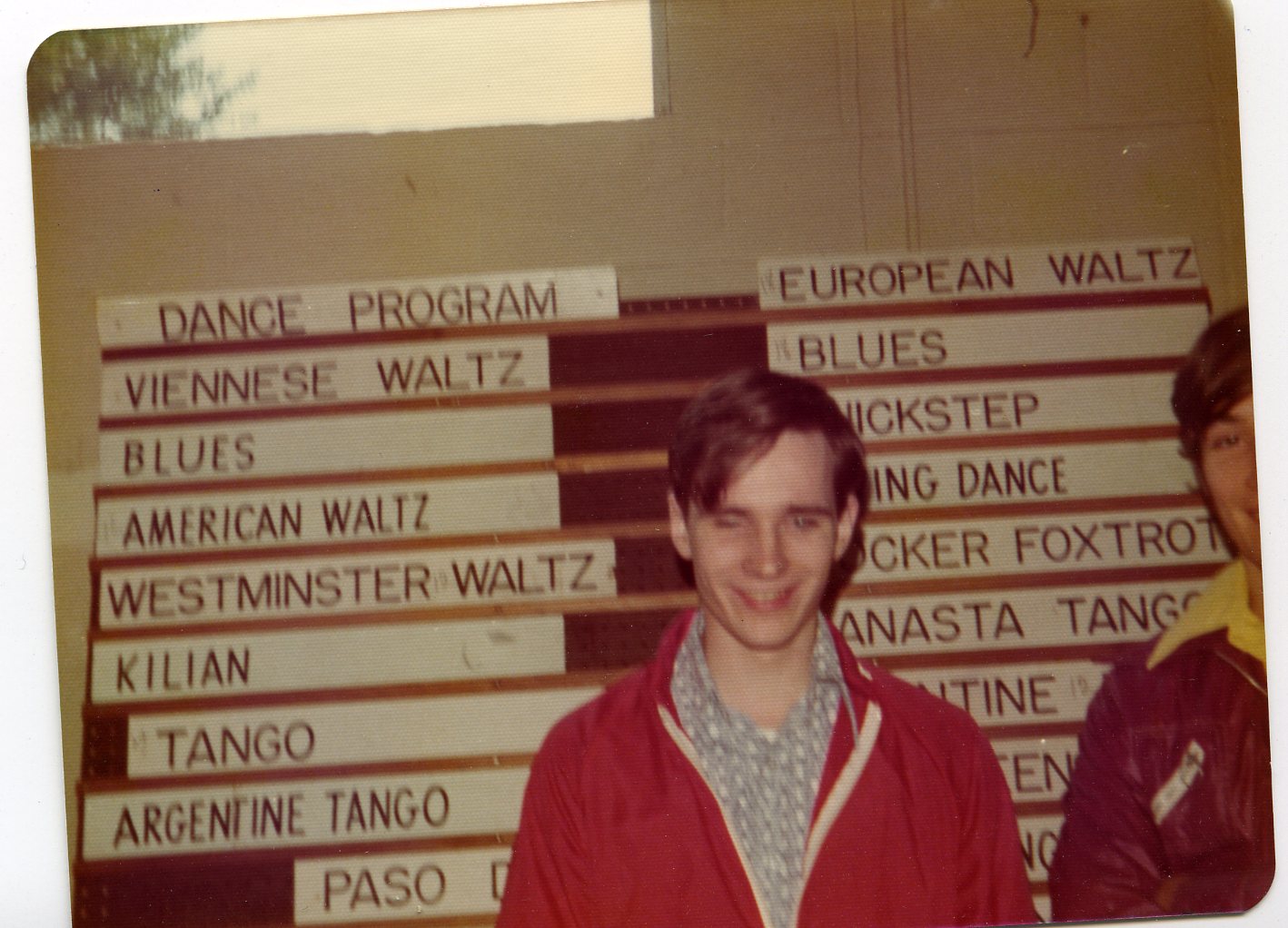
But going back through the photos made me remember a couple of other cool things (besides the early introduction to wardrobe-coordinated beer drinking). Wilmington, in 1973, had a number of blind skaters. One, Stash Serafin, shown here in my 1973 photo,
has (thanks again, Google!) gone on to have a successful skating career.
And finally, in 1973, you could get an entire basket of fries for 35 cents!
********
*Well, I suppose many Germans whom she represented in the Olympics knew, but I was stunningly unaware of who she was. In retrospect, I can only imagine her thinking — watching me skate — “I left my homeland for THIS?”
For all the griping I hear on the left and right, I remain a huge fan. It was an amazing moment for me, so I’ll be enforcing a “Thumper Rule” for comments: “If you can’t say something nice, don’t say nothing at all.”
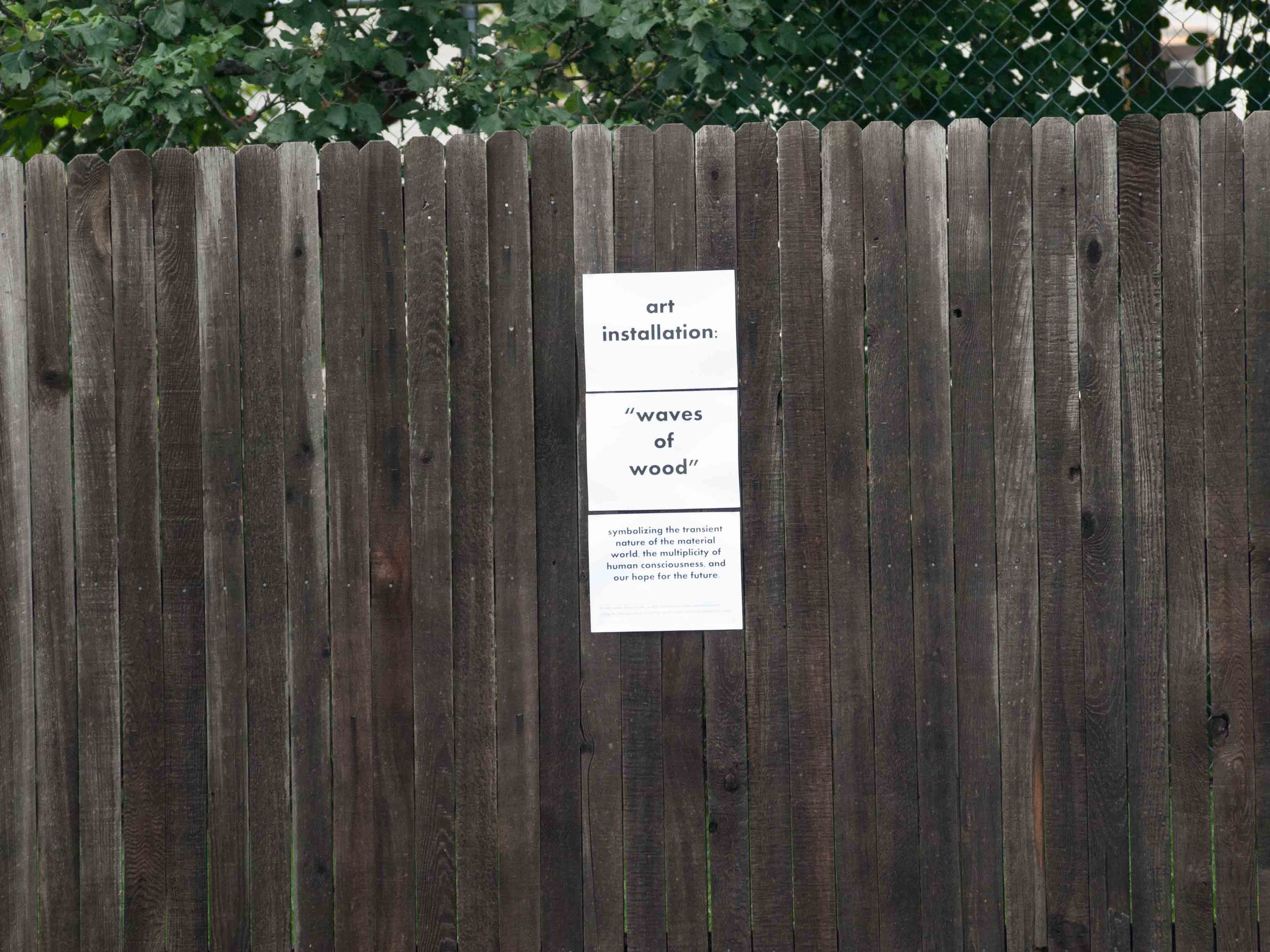
Our yard has a long expanse of fence that faces a fairly busy road. The fence was in need of upkeep before our recent wind and hail storms, and is now looking pretty dilapidated.
We’ve scheduled a handyman, but we were busy and he was busy and one thing after another . . . he’s set to fix it on July 29. But the fence was getting a lot of, um, neighborly commentary, so I decided on a bit of fence art:
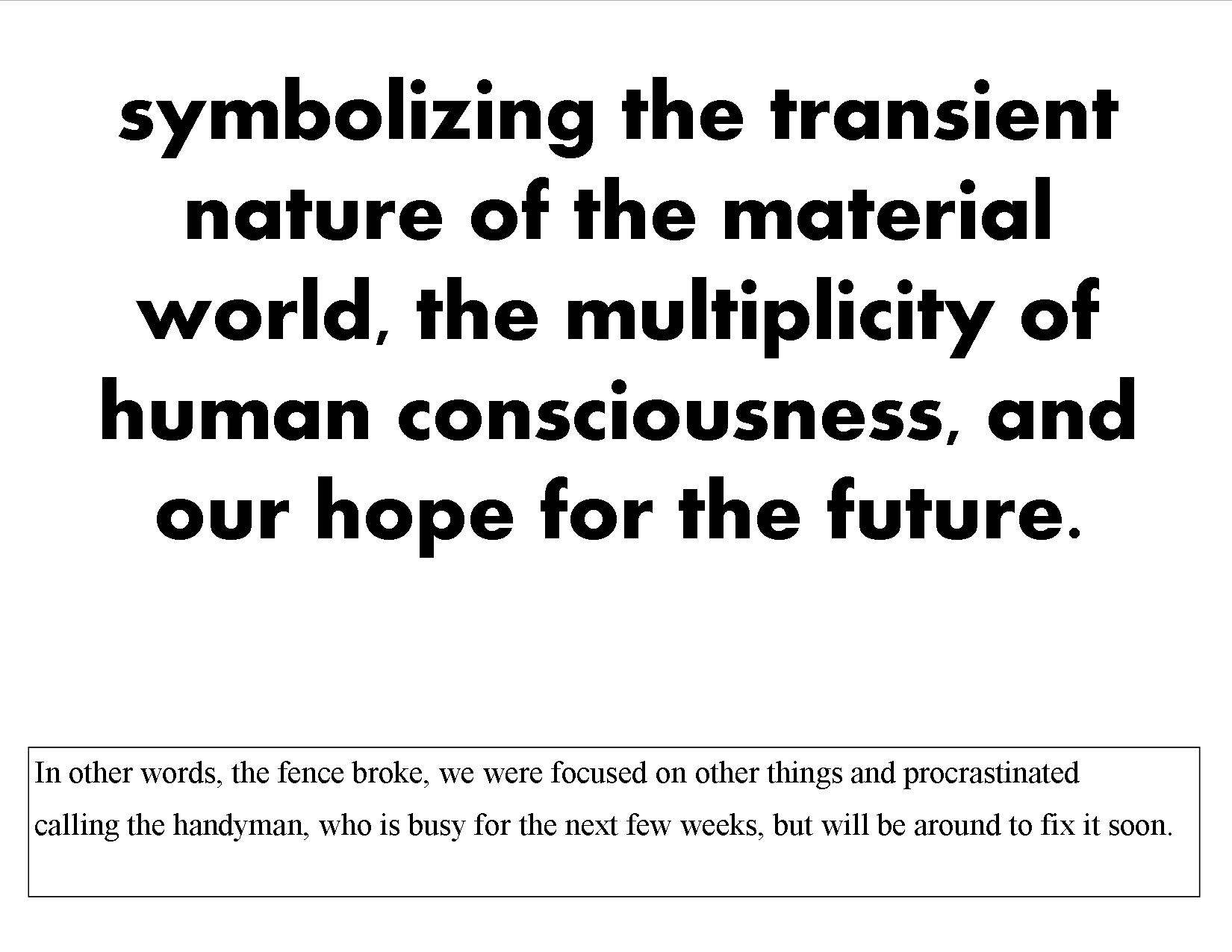
Text of signs: “art installation: ‘waves of wood’ — symbolizing the transient nature of the material world, the multiplicity of human consciousness, and our hope for the future.” A text box at the bottom reads, “In other words, the fence broke, we were focused on other things and procrastinated calling the handyman, who is busy for the next few weeks, but will be around to fix it soon.”
Not too transgressive, but at least I crack myself up!
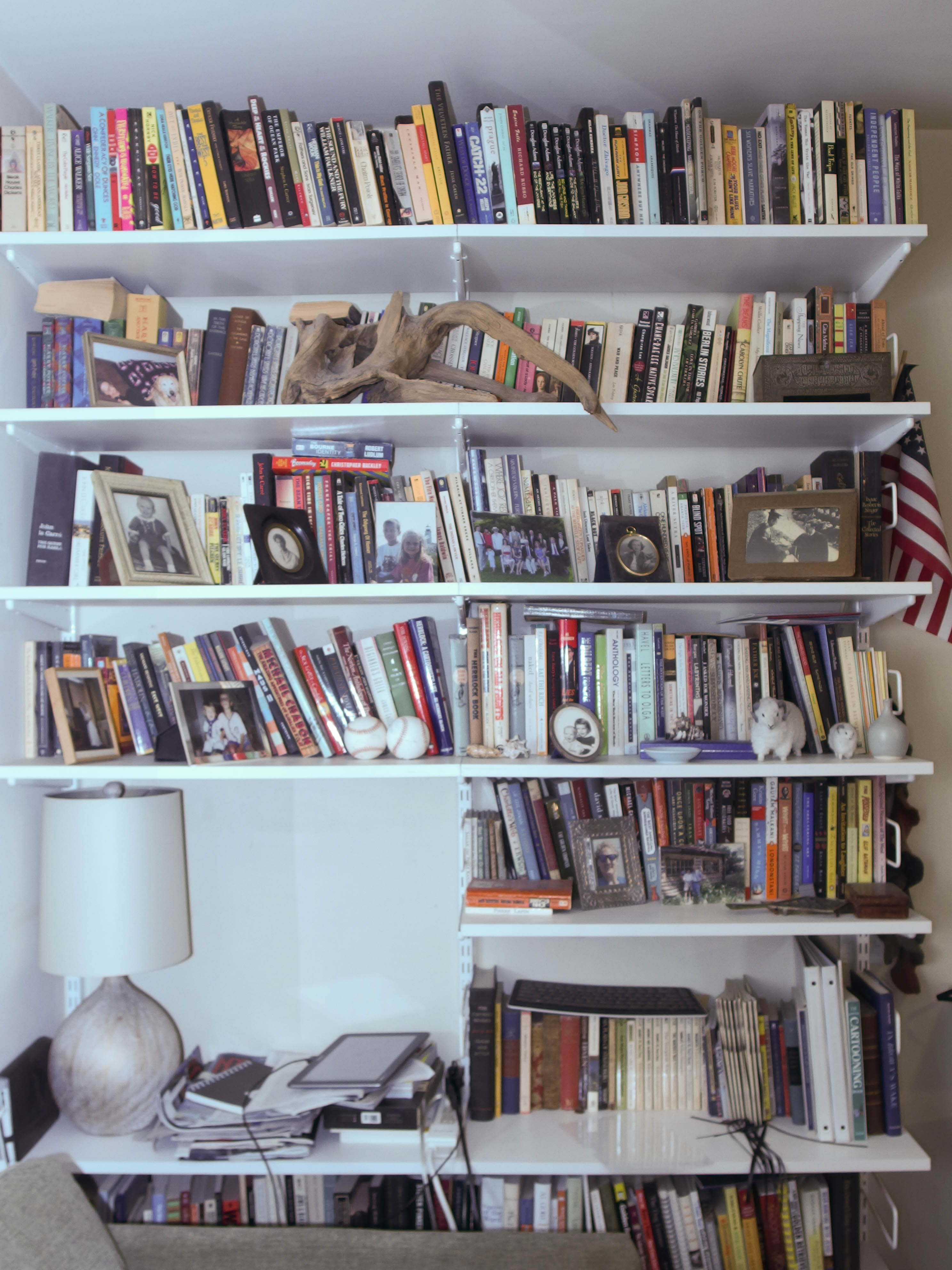
In a Denver Post article entitled “Book lovers rejoice! How to coexist peacefully with your collection,” — by a woman who claims to be a “book lover” in search of “suggestions of how best to display [her] book collection” — we find the following appalling advice, passed along uncritically:
Amy Trager, a certified professional organizer based in Chicago, suggested flipping the books around so the pages are facing out, instead of the spine, to cut down on the visual clutter of the books’ different colors and sizes.
This caused in me a reaction of disgust and aversion not unlike my reaction to [the prospect of ever being exposed to] the brain-eating scene in a zombie movie. The article goes on to explain, helpfully:
That only works, of course, if you don’t need to quickly access specific books, but it’s a great way to add texture and a neutral, toned-down feeling to your space, Trager said.
Like using your oven to store your shoes only works if you don’t need to bake.* WTF?
Trager had another client who needed to keep her books in the living room but hated the way they looked. She created covers for each of her recessed shelves out of thin paperboard. When she wanted a particular book, she could pull the covers down, but when they were up, it looked like a solid colored wall, fading into the background.
The only answer here is to arrest this woman and force her to donate her books to the local public library.
I realize that, as a dog lover who bought a light-colored, linen-upholstered sofa and as the proud owner of a gray formica kitchen counter, I should not be giving design advice, but I feel very strongly that there is only one good way to display books: out and proud.
*****************
*This, on the other hand, is not totally out of the question as a design solution in our house.
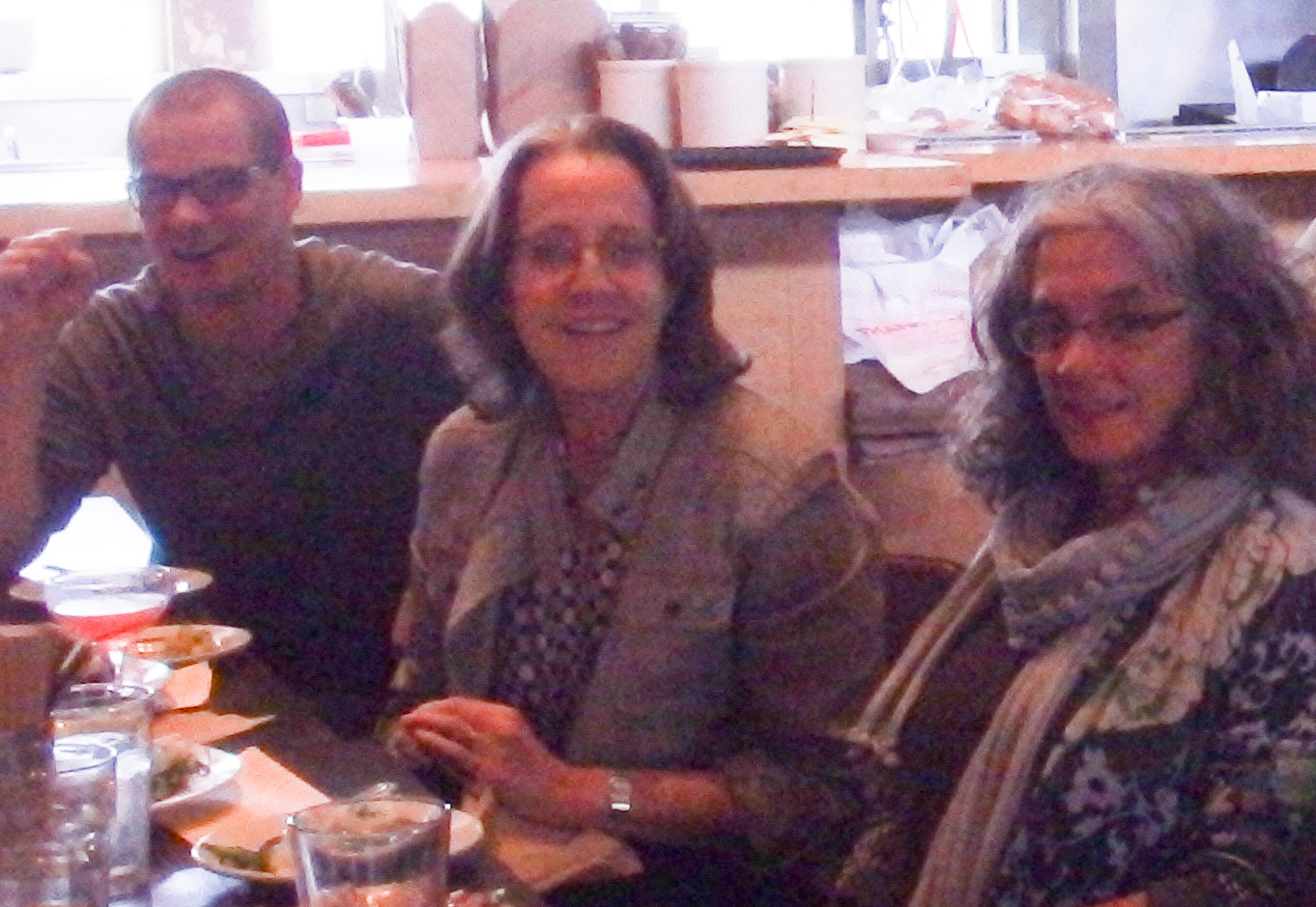
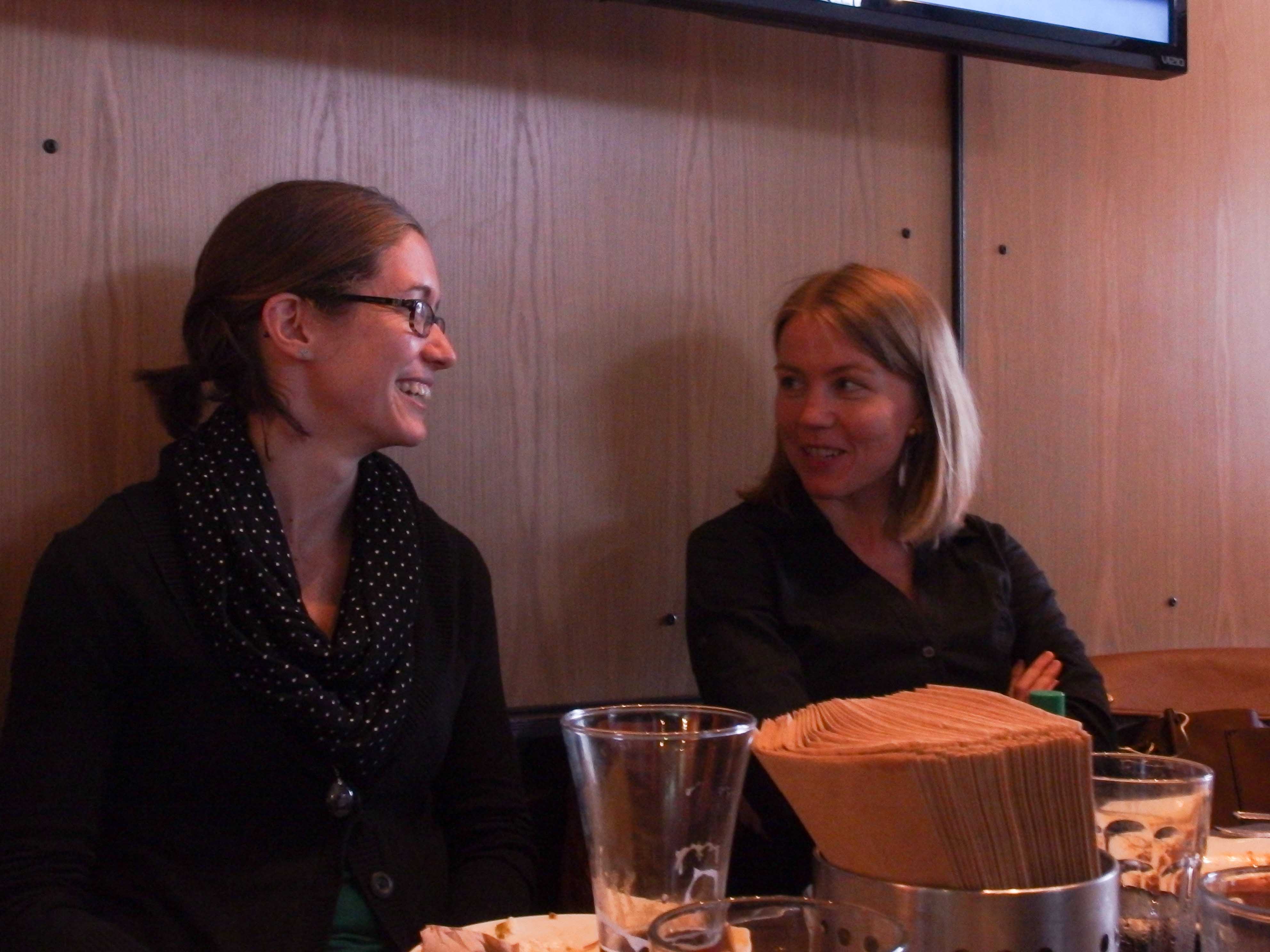
As we announced earlier on CREEC’s website, we finally settled the almost 12-year-old Taco Bell case. Although the settlement requires notice and court approval, we decided to indulge in a bit of BBQ-based celebration on Thursday evening at T-Rex in Berkeley with most but not all of our wonderful team. Unfortunately, my stubborn insistence on never using the pop-up flash on my camera resulted in some pretty blurry and/or grainy photos. Blerg. I’m now looking for an external flash for an Olympus XZ-2 that can tilt but that does not turn the whole thing into a giant, lumbering, unwieldy piece of photographic equipment.
On to our team! Here is the core litigation team — sans Tony Lawson, who was in LA, and Brad Seligman, who is now The Hon. and had pre-existing obligations relating to his talented musical daughters. It also doesn’t include the wonderful Dan Goldstein, who joined the team last fall to assist with settlement and who deserves huge heaping helpings of praise (and, later, scotch) for his successful efforts.
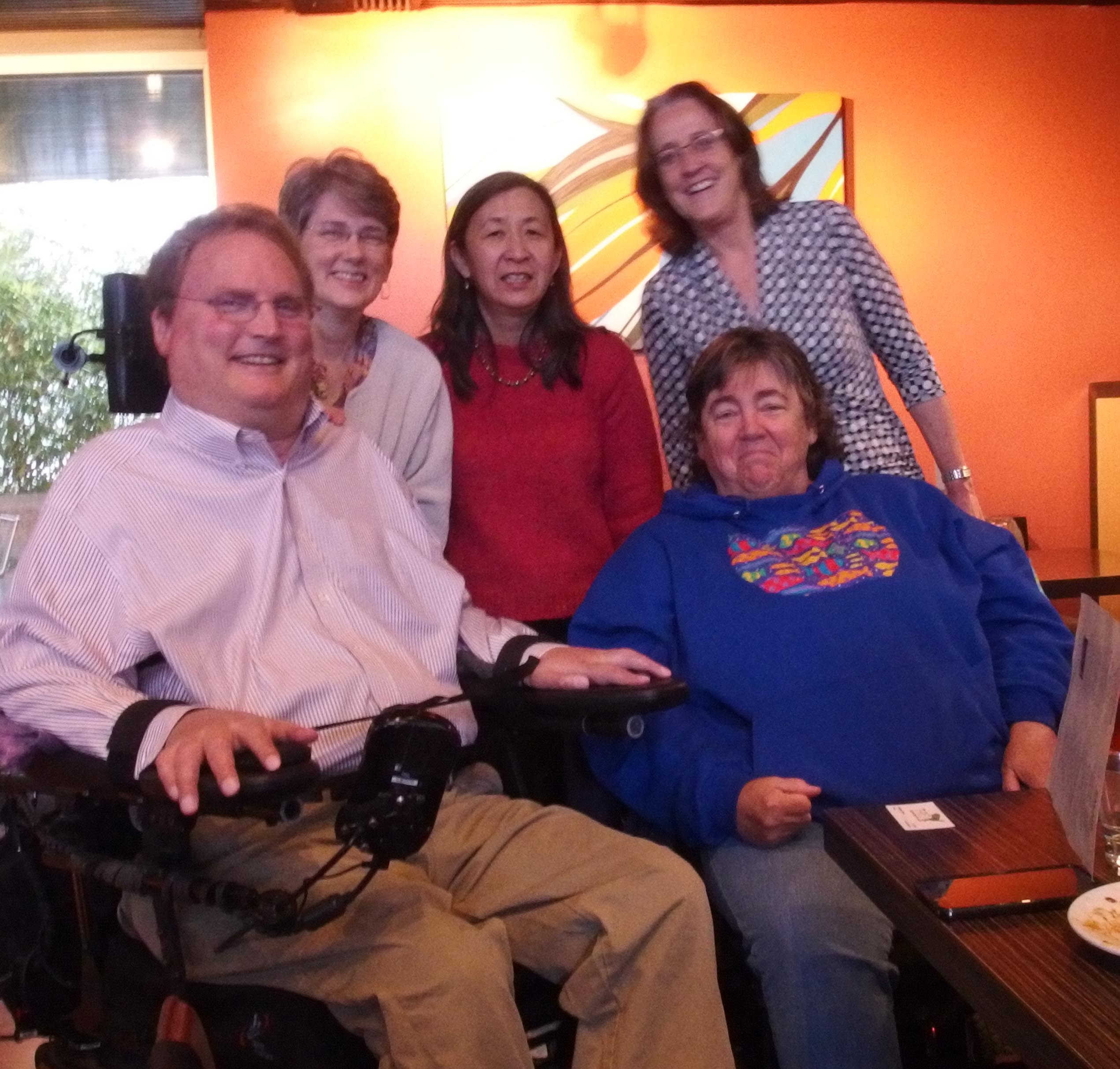
Below: lawyers Tim Fox, me, Mari Mayeda, and Jocelyn Larkin and Named Plaintiff (and disability rights goddess) Corbett.
Bill Lee, who through his own work and that of his firm, was incredibly helpful to and supportive of our case.
Co-counsel Robert Schug and Jocelyn Larkin of the Impact Fund and mentor Lainey Feingold. (I really do need to investigate the flash situation….)
Future civil rights rock stars Sarah Morris (CREEC) and Meredith Johnson* (Impact Fund) plotting world domination.
Tim’s assistant Dustin McNa enjoys some of T-Rex’s famed health food.
And finally, the highlight of the evening: obscure whiskey tasting! The bartender told us this was a bottle from the latch batch ever of this whiskey. “Like drinking a dodo bird,” explained Dustin.
This post doesn’t even begin to recognize all of the people who helped us out over the past 12 years. We’ll have a more complete, better-photographed version after (God willing) final approval.
**********
* It turns out Meredith and Tim both went to St. Olaf College in The Middle of Somewhere Very Cold, Minnesota. We were treated to a brief but inspiring rendition of their college fight song, “Um Yah Yah” (which I think translates as “What Were We Thinking???”). If you think I’m making that up — at least the song title part — check the school’s website!
I got to do one of my favorite things on Friday: talk about the ADA to a bunch of disability rights advocates. Even better: the advocates were with the Southwest Center for Independence, and were in Durango, Colorado. I had the choice of six* hours of driving (each way) through the amazing Colorado countryside, or an hour (each way) bouncing over the mountains in a regional jet. I chose the drive without a second thought.
So Friday morning early, I lit out for Durango and because Holly still isn’t fully house-trained, and thus can’t stay alone with Tim, I brought her along for the ride.
It’s almost as if I bought the CRV with the dogs in mind! Oh, right. Turns out it has an added feature I hadn’t even known about. For those awkward moments when she poops in the middle of a scenic overlook that lacks a trashcan:
Always pack out your trash!
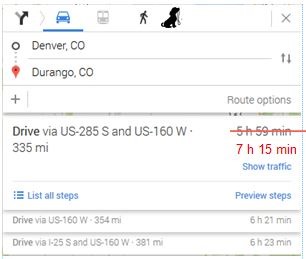
Anyway, I chose the southeastern route in the map above — down I25 and across Route 160 — because I’m not a big fan of pass driving. Google Maps helpfully sets out various routes, and then lets you choose your mode of transportation: car; bus; on foot. To accurately calculate our time, however, they need another option: traveling with puppy.
We stopped every hour and a half to two hours to find Holly a grassy spot. Besides that slight inconvenience, though, she was the perfect traveling companion.
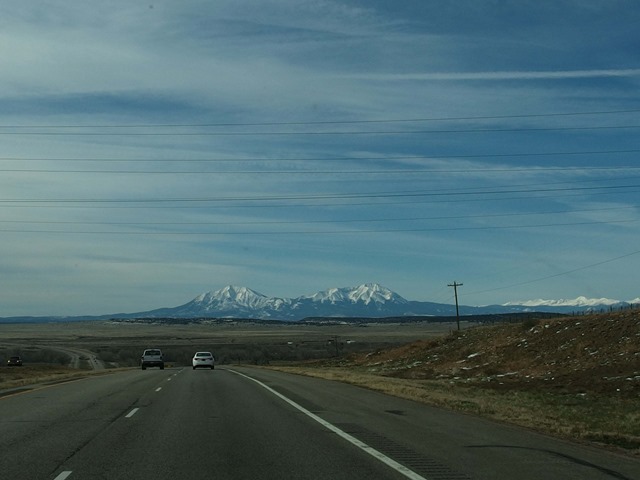
Driving in Colorado: breathtakingly beautiful.
Breathtakingly scary:
Breathtakingly . . . obvious?
Got to Durango without a minute to spare before the talk. That is, though I didn’t have any minutes to spare, I spared a couple, and ended up about 5 minutes late. It was my favorite kind of talk: with interested advocates who had great ideas and great questions.
After the talk, Holly and I set out to explore Durango a bit, and found a path by the river that was perfect for a post-driving-trip stroll.
Obligatory “Holly Posing Because She Knows Just How Cute She Is” photo:
Dinner was yak stew — a first for me! — and lamb dumplings at The Himalayan Kitchen, then back to the hotel, where Holly checked out the accommodations.
For the drive back to Denver, I chose the more direct route — in blue in the map above — that took me on Route 160 as far as Del Norte, and then Route 285 northeast through the mountains. There were a couple more passes, but either they were relatively easy passes or I’m finally getting use to pass driving. Or possibly exchanging the 1988 Accord for a 2013 CRV just makes the whole thing feel safer. But I also took the time to stop for photos. These first four were processed in HDR:
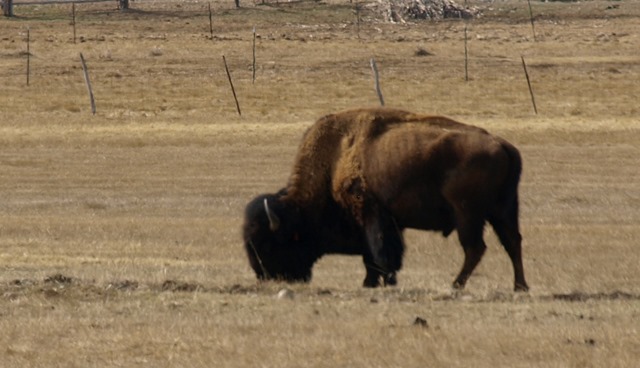
Wildlife!
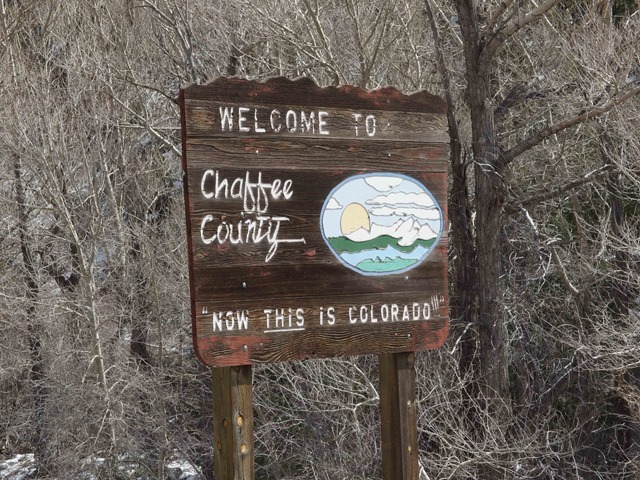
Colorado life!
Uh oh! Better behave myself!***
I arrived home, tired and happy, yesterday afternoon, very grateful to live in a state of overwhelming natural beauty and kick-ass disability advocates.
*********
* Actually, I have to confess, when I first learned I would be going to Durango, I thought, “it’s in the same state; how far can that be?” Having grown up out east**, I assumed that anywhere you had to go within a single state couldn’t be more than a couple of hours’ drive. Soooooo it turns out they make states bigger out here. So the six-hour drive was a bit of a surprise, but ultimately a pleasant one.
** I’ve been overthinking the phrases “back east” and “out west” recently. I use the phrases mostly because they reflect my path. I started life on the east coast, and I’ve migrated out west. But it occurs to me that these common phrases are not only sort of east-coast-centric, but also reflect a European-American-centric path (my peeps mostly entered the U.S. from the east coast and headed west) as opposed to an Asian-American path, as many Asians entered the U.S. from the west coast. So I thought I’d try “out east” for a while and see how it sounded.






![Image: Word comment box that reads "Ha ha! Fuck you [opposing counsel]!"](https://thoughtsnax.com/wp-content/uploads/2014/12/comment-2.jpg)























 Thought Snax