Category Archives: Stupid Lawyer Tricks

Mamas, don’t let your babies grow up to be lawyers.

From a recent deposition.  “OC” is “opposing counsel.”

McSwain subpoena

To experience this enlightening bit of human interaction, I flew to San Francisco, stayed overnight, met with my expert, sat through an hour and a half deposition of which this exchange was actually one of the more productive, and flew home.

It was well worth the trip, though, because I got to hang with Silas and Lorenzo and their awesome parents.   Drawing!  Giggling!  Home-made pizza!  Law gossip!

[Baloney] ADA Defenses

In my non-lawyer life, I’m a bit of a smartass, especially in the presence of what I’ll politely refer to as [baloney]. I’ve been unsuccessful at completely eliminating this tendency from my professional life — I once smirked so aggressively at an opposing counsel’s, um, inaccuracy that the judge asked me whether I was having a facial spasm — but, given its public nature, I’ve tried to limit case-specific smartassery on the blog. I’ve also been working on my in-court poker face.

But it’s hard to completely eliminate blogsnark, chiefly because we run up against so many defenses in our cases that are sheer, unmitigated [baloney]. Here’s one. And what’s special about this one is that events of the defendant’s own creation gave us a rare glimpse of just how full of [baloney] it was.

When we first moved into our current office, we were thrilled to learn that the empty corner space across the street would soon be occupied by what we anticipated would be an excellent Mexican restaurant.  Our office neighborhood is sort of mixed, by which I mean — as we point out on the main website — we are close to excellent restaurants, an independent movie theater, and a bondage and domination shop. And a couple of gay nightclubs, vintage bookstores, and a knitting shop. I really, really love our neighborhood.  A high-quality Mexican joint would be a great addition.

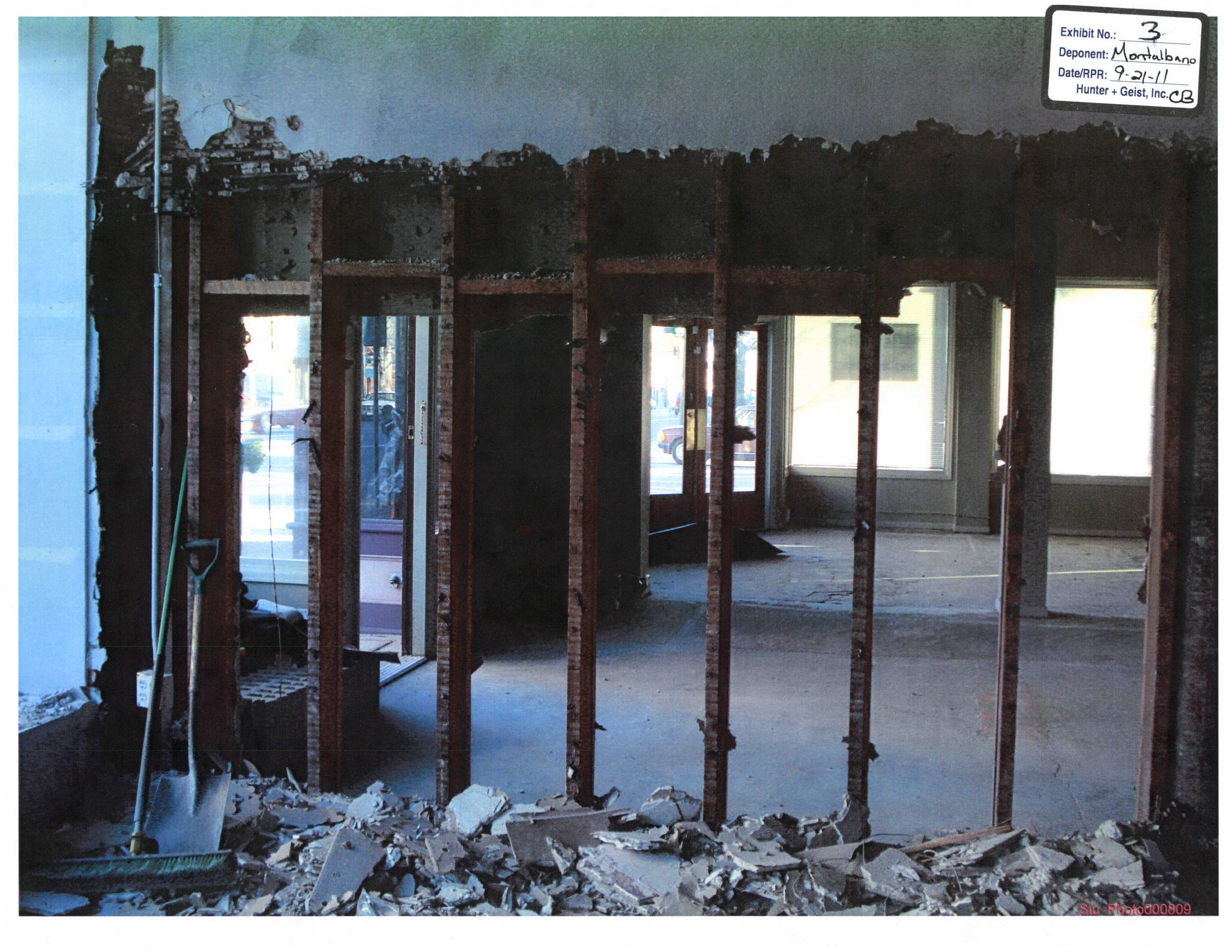
Anyway, the space across the street was completely gutted, but one day as we strolled past — you have to stroll at least once per work day if you have office dogs — we noticed that they were installing raised areas in the space. We chatted with the highest-ranking person we could find on site, and explained that this was not permitted under the ADA. Apparently didn’t matter: the El Diablo restaurant opened with most of its seating on inaccessible raised platforms, and a couple of — also inaccessible — high tables at grade.

003-Montalbano_thumb

Before renovation: flat; accessible.


P000276-long-shot-north-raised_thumb

After renovation: raised; inaccessible.

We called. We wrote. More accurately, Tim did both, trying to explain that we were really psyched about the restaurant, but not the lack of access. To no avail. So Tim did something he doesn’t usually do: became a plaintiff. Represented by our awesome colleagues at the Colorado Cross-Disability Coalition, and joined by several other would-be restaurant patrons who use wheelchairs, Tim filed suit alleging that El Diablo* was in violation of the alterations provisions of the ADA.

Drama ensued.** But through CCDC’s excellent legal work, Judge Matsch granted Plaintiff’s’ motion for summary judgment. Plaintiffs then requested an injunction requiring El Diablo to provide access to the raised areas, which it opposed on the grounds that that would be a hardship, a defense that was not actually legally available, given that the owners had created the problem by installing the raised areas in the first place.

The Court rejected the whining hardship defense and granted the injunction, with some pretty powerful words on discrimination:

The injury to the plaintiffs and those persons represented by the Colorado Cross-Disability Coalition is that when they patronize this restaurant, they must suffer the indignity of discriminatory treatment by their exclusion from 840 square feet of the dining area solely because they use wheelchairs. The elimination of that discriminatory treatment goes to the very purpose of the ADA and it can only be remedied by requiring such modification to those areas as to make them accessible to wheelchairs.

More drama ensued, as it turned out*** that the owners had received funding from the City of Denver, promised to bring the premises into compliance with a variety of applicable codes, and then [apparently] [allegedly] didn’t. So the City shut down El Diablo and Sketch, the bar next door, for code violations. Even more drama ensued, this time between El Diablo and the City, culminating with the owner filing for bankruptcy.

When a company files for bankruptcy, it has to tell the court and the public who its major creditors are. A review of the owner’s public (did I mention public?) bankruptcy filing revealed this, from the folks who complained that it would be a hardship to provide access to the raised areas they created when they renovated the restaurant.

Page-from-2012-12-14-1-Voluntary-Pet

The defendant, while complaining about hardship and refusing to consider installing a ramp — or even spending the money to hire an architect to analyze the feasibility of a ramp — owed the attorneys on that very case $318,455.53. We can probably assume that the defendant had been paying those lawyers for at least part of the case before it stopped paying them, so this over-$300,000 debt is likely only part of the legal fees the owner had decided to spend to fight against what would almost certainly be a far less expensive solution, one that would integrate people who use wheelchairs into the restaurant.

And of course, think how cheap it would have been to comply with the ADA in the first place!

**********

*Yes, we were suing The Devil. Many of you plaintiffs’ lawyers probably often *think* your opponent is The Devil, but ours actually was.

**I’ve previously blogged about one of the dramas: the defendant’s accusation that CCDC was defaming them by posting publicly-available legal pleadings on its website.

*** Please pay attention, journalism students, to the way it should be done. The Westword article at the link contains these gems of impartiality:

Danger. That’s the sign on the door of Sketch, which is supposed to host an opening for a showing of 9News reporter Kirk Montgomery’s photographs tonight.

and this, by the column’s author, a lion in the field of journalism here in Denver:

A few hours ago, I was sitting in [the owner’s] office on the second floor, which didn’t seem to pose any immediate hazard to me … except that [he] was about to blow his top.

Coolest.Brief.Ever.

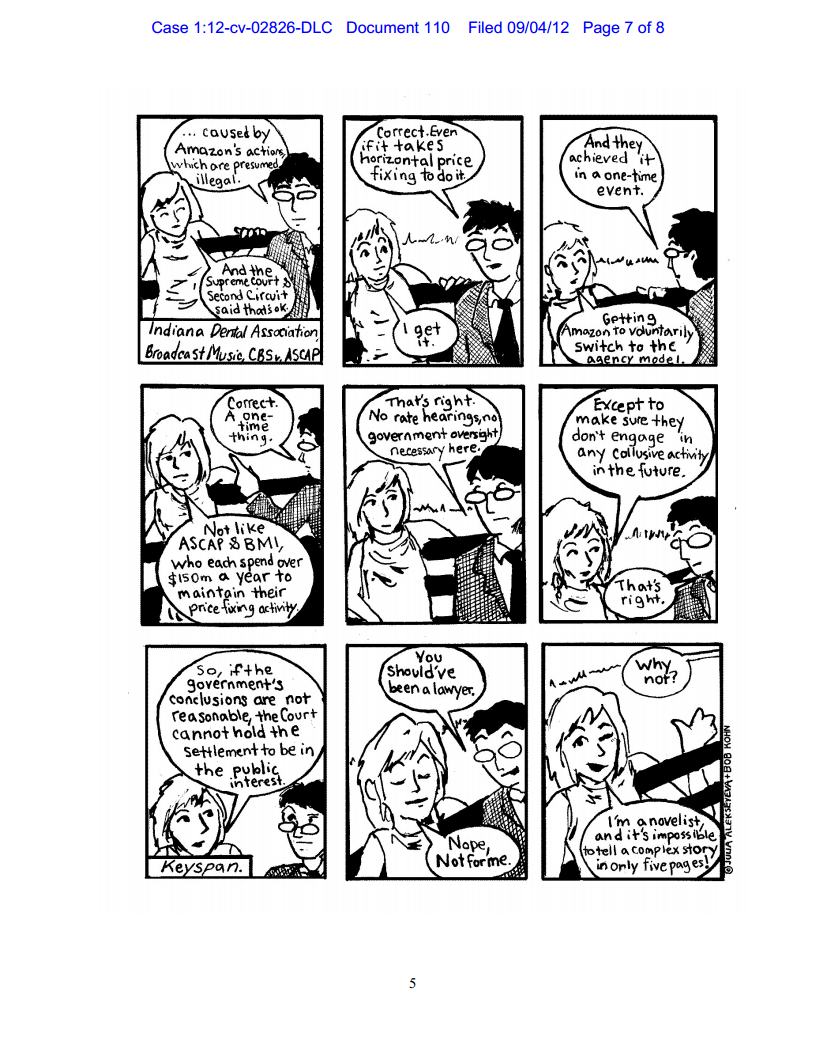
This brief writer was given five pages to express a series of complex antitrust arguments.  Result:  a format I want with all my heart and soul to use in my next brief.   As you can see from the ECF header, this was filed with the court.  I don’t understand the antitrust or economic theory, but check out the last panel for an excellent punchline.


Damn!  I wish I could draw!   Perhaps my next brief could start with the Cute Puppies’ Guide to Title III of the ADA.

Legal Research Graph

The pattern will continue — bouncing between 2 and 10 — up to the moment the brief is filed.  Indeed, I have been known to stop for a game of tennis ball fetch just before typing in the boilerplate “Conclusion” section.

How not to settle a case with me

If you are in settlement negotiations with me, and it is your goal to make sure the case does not settle,* here are several things you can say:**

  1. My client is very emotional about having to comply with the regulations because he supports a disabled baseball team.
  2. My client is very emotional about having to comply with the regulations because he has Parkinson’s.
  3. I know you feel like you want to create a more enjoyable experience for the disabled, but that’s not what the statute requires.
  4. My client refuses to create an annuity for plaintiffs’ lawyers.
  5. With that damages demand, let’s just turn the state of California over to the disabled!

I realize I’m providing advice to my opposing counsel, but sometimes you just gotta reach out.

***************************

*  There are many reasons why this might be a defense counsel’s goal:     (1) Billable hours.  (2) Billable hours.  (3) Billable hours.  … (n) Billable hours.

** All of these are real.  Really.

“Sh*t people say” jumps the shark.

Shit people say to spouses of people who use wheelchairs:

My favorite “I”m so sorry” experience was in my first trial as a young lawyer, when Tim — who was an associate at the same fancy-pants DC law firm that I was — came to watch.  On a break, our loathsome opposing counsel came up to me and said, out of the blue, “I’m so sorry.”  Given the quantity of serious litigation bullshit he had engaged in, I was glad he saw fit to apologize, but thought it was better directed to the senior partner.  I was starting to say something about that when he added, “about your husband…”  Honestly, I still didn’t understand:  Tim wasn’t assigned to the case; what could this dude possibly mean?  He had to stumble on to say something about “injury” and “wheelchair” before it finally dawned on me.  Needless to say, I was speechless.

Years later, I actually wrote and submitted a “Modern Love” column to the New York Times after some lady walked up to us at a baseball game and said something about me being a good caretaker.  How can you explain in a sentence how ordinary life is?  How care is given and taken in equal measure?  Unfortunately, my column couldn’t compete with other important dispatches from the front lines of human relationships, for example, looking for a date on Craigslist or overthinking your boyfriend’s slippers.

That’s the great thing about the blog:  the only thing standing between my thoughts and publication is my own good judgment.  Such as it is.

Lactation: I don’t think that word means what you think it means.

Though what this judge thought it meant is beyond me.  The awesome Barry Roseman posts a quote of the day for a bunch of us civil rights lawyer types.  Here was today’s:

The commission says that the company fired [Donnica Venters] because she wanted to pump breast-milk.  Discrimination because of pregnancy, childbirth, or a related medical discrimination is unlawful.  Related conditions can include cramping, dizziness, and nausea while pregnant.

Even if the company’s claim that she was fired for abandonment is meant to hide the real reason — she was wanted to pump breast-milk — lactation is not pregnancy, childbirth, or a related medical condition.   She gave birth on December 11, 2009.  After that day, she was no longer pregnant and her pregnancy-related conditions ended.

Firing someone because of lactation or breast-pumping is not sex discrimination.*

Hold on.  You may have missed the last line, so I’ll re-WordPress-special-quote-function it:

Firing someone because of lactation or breast-pumping is not sex discrimination.

Makes total sense:  none of the men were permitted to lactate or pump breast milk at work either.  QED!

*****************

* EEOC v. Housing Funding II, Ltd., 11-cv-02442 (S.D. Tex. Feb. 2, 2012), slip op. at 2.

Checklist for being a plaintiffs’ lawyer

The site “Stuff Journalists Like” posted a (so-far) 20-point “Checklist for being a ‘real’ journalist.”  It’s hilarious in and of itself, but some of the items are really part of a longer “checklist for being a word nerd,” for example:

2.  Corrected a loved one’s grammar in a greeting card.

My mother (love ya mom!) really did this once!  My word-nerdiness is clearly genetic and I was doomed from the start, because both of my parents have/had this gene.   Also

8. Can no longer read a newspaper without scanning for typos and errors.

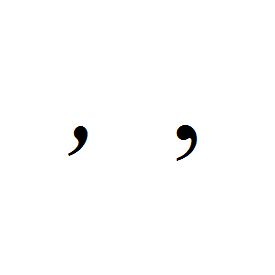
Hell, I can’t read typos and grammatical errors in anything without being deeply disturbed. And I have, within the past week (1) had a serious discussion about whether a comma following a case name was improperly italicized (you know who you are!), (2) pondered the conditions under which the word “id.” at the end of a sentence is preceded by a period and capitalized or preceded by a comma and in lower case; and (3) laughed derisively at the obvious line-spacing errors in my opponent’s brief (before, of course, realizing that the judge would not give a rat’s ass).

Italicized Comma vs. Not Italicized Comma

Here are a couple more that I think apply almost equally to plaintiffs’ lawyers:

3.  Replaced one of the major food groups with coffee.

I never did like fruit, and coffee occupies more of my diet than any food group but pasta and cheese.

5.  Eat in your car more often than you do at a table.

Replace “car” with “desk” and I’ll cop to that.

9.  Learned that being told to “fuck off” and “go to hell” is part of the job.

13.  Found that fine line between harassment and persistence.

Completely applicable to plaintiffs’ lawyers.  Like journalists, we often find ourselves needing to talk to people who don’t really want to talk to us.

10.  Woke in a cold sweat thinking you forgot to change the date on A1.

Just last night I woke up in the middle of the night — Tim can vouch for this — thinking that I never did review the final table of authorities in the brief we submitted on Thursday.  Luckily, our superhuman paralegal was in charge of it, so I slipped right back into a peaceful slumber.

17.  Have conducted a phone interview while completely naked.

Close:  I have often conducted legal research clothed only in a towel.  When you have good ideas in the shower, they really shouldn’t wait until you’re fully dressed to research them.  I have also edited a brief telephonically with co-counsel while walking the dogs and scooping up after them.

I had also previously suggested two “you might be a plaintiffs’ lawyer” conditions:  that your car is older then your paralegal; and when the skirts on the tables supporting the courtroom technology of your opposing counsel are nicer than the skirt you’re wearing.  What else, plaintiffs’ lawyers, should we add to our checklist?

Defame This!

Remember just the other day I was ridiculing some over-caffeinated opposing counsel for accusing CCDC of defamation for posting, on its website, pleadings in case alleging that his client violated the ADA.  Highlight:


My position is that you and your clients have been defaming my clients by raising false allegations of discrimination . . .


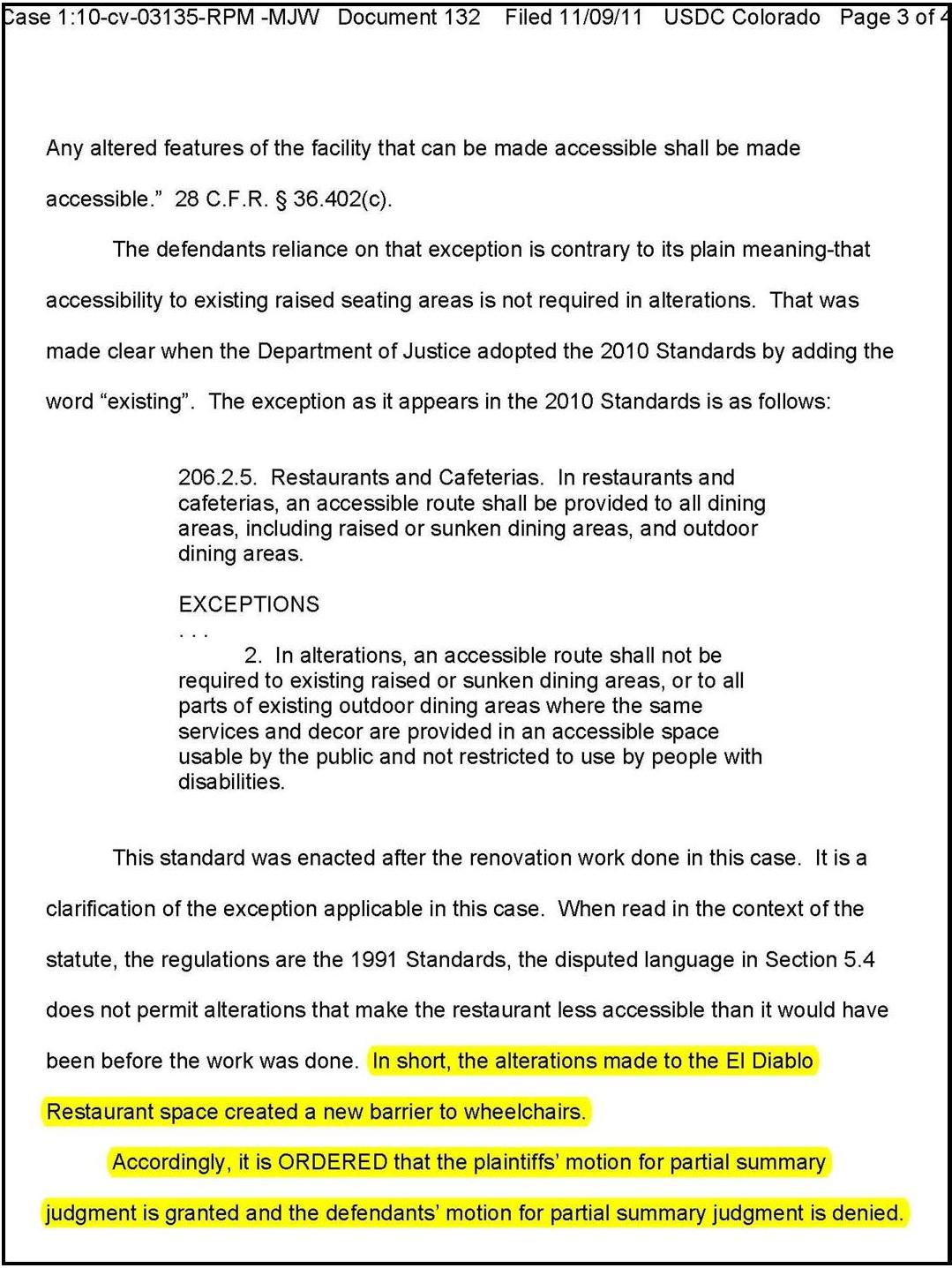
On Wednesday, we got the judge’s decision on our motion for summary judgment.  Here’s page 3 — the key portion: 


That’s right, Ladies and Gentlemen, summary judgment granted to plaintiffs!  Big thanks for the excellent legal work of Team CCDC:  Kevin Williams, Andrew Montoya, and Briana McCarten.


Stupid Lawyer Tricks: alleging defamation as defense to inaccessibility

It should be obvious that whatever the ADA does or does not permit, it would not permit a business owner to DECREASE accessibility.

ADA 101:  You’re supposed to build new facilities to be accessible and make old ones accessible when it’s “readily achievable” — that is, when the cost and your resources make it reasonable.*  When you’re making alterations, you’re supposed to make them accessible “to the maximum extent feasible.”  But fer Pete’s sake — a phrase that really should appear verbatim in the regs — don’t take something that’s accessible and make it inaccessible.

This is what the regs actually say about it:  “No alteration shall be undertaken which decreases or has the effect of decreasing accessibility or usability of a building or facility below the requirements for new construction at the time of alteration.”  ADAAG § 4.1.6(1)(a).

When we moved into our office space in February, 2008, the space across the street was empty and essentially gutted.  Among other things:  flat.  The floor of the space was had no changes in level.  Did I mention it was flat?

Hoping for another good restaurant in our neighborhood, we were psyched to learn that someone was opening a mid-scale Mexican restaurant & bar across the street.  We looked forward to good food and after-work gatherings, especially with our friends & co-counsel at the Colorado Cross Disability Coalition, which is right up the street.

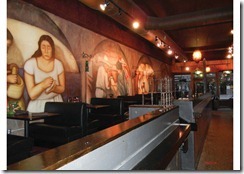
This is what the space looked like before:

Here’s what it looks like now:

We don’t have a panoramic shot of the restaurant, but this is the newly constructed raised area on the north side — the mirror image of the newly constructed raised area on the south side.  No ramps.  Over half of the total floor area is now inaccessible, and most of the rest is occupied by a bar, leaving a couple of tables — often inaccessible high tables — on the ground level.

To summarize:  The owners constructed two inaccessible raised areas in a previously flat, fully-accessible space.  They took a space that could have been completely integrated and created — at best — a wheelchair ghetto.

In brief:

Before: flat.
After:  inaccessible.

We tried hard to talk to them about this, with no success.  So we got together with the Colorado Cross-Disability Coalition and filed suit.

Pause for a brief introduction to CCDC, as if all five of my readers aren’t already intimately familiar with them.  On a shoestring budget, CCDC works with the legislature, conducts training, engages in outreach and advocacy and — when called for — files suit to ensure equality of opportunity for people with disabilities.  During the legislative session, their volunteers are at the capitol every day.  When people are having difficulty securing needed services or benefits, their volunteers are on the phone.  And their advocacy and litigation have increased Denver’s physical accessibility from the Pepsi Center to Red Rocks, and … done a lot of other amazing stuff.  I was going to give some more examples, but just click here and scan the list!

In response to the lawsuit, the restaurant retained Littler Mendelson, a nationwide employment discrimination defense firm.  And by “nationwide” I mean, of course, “expensive.”**  Instead of working with us to make the place more accessible — and saving everyone’s attorneys’ fees — it’s been scorched earth litigation.  But I think what has been most entertaining for us is the Littler lawyer’s decision to accuse CCDC of defamation.  Yup:  the fact that CCDC posts, on its website, the pleadings — public documents — containing the undisputed facts above — took a flat space; made most of it inaccessible — constitutes defamation.  Here is the Littler Mendelson attorney, verbatim, in a deposition of CCDC’s executive director:

5     ……My position is that
6   you and your clients have been defaming my clients by
7   raising false allegations of discrimination, repeatedly
8   accusing my client, both in this case, in judicial
9   filings, but also in Internet filings, which simply
10   reiterate the false allegations put into the court
11   record that my client discriminates against individuals
12   with disabilities.
13                You are trying to present a picture of my
14   client to the Court which is not true, and I’m entitled
15   to present a picture of your client which I believe
16   demonstrates its motives in pursuing this case.  You’re
17   trying to present a picture of your client to the Court
18   of a noble organization just trying to obtain
19   additional access for people with disabilities.
20                I’m allowed to present to the Court a
21   picture of your organization as one which shakes down
22   and scourges local businesses and forces them to incur
23   tens to hundreds of thousands dollars in attorney’s
24   fees and costs in order to promote the organization’s
25   revenue and business, and I think I’m allowed to make
1   the same types of — I’m allowed to rebut the glowing
2   picture of your organization that you’re trying to
3   present to the Court . . .

That’s right:  calling attention to the fact that the defendant took an accessible space and made it inaccessible is defamation.  I suppose we should be glad that being accused of inaccessibility is at least regarded as a bad thing!

Just after we started our firm in 1996, I was talking to my Dad about some of the baloney we were already starting to get from defense counsel.  He told this story. When he was the Executive Director of the Missouri Commission on Human Rights in the early 1960s, he decided to drive around rural Missouri testing the newly-enacted Civil Rights Act which prohibited discrimination on the basis of race in places of public accommodation, for example, restaurants.  On at least one occasion, the restaurant he had just tested called ahead to the next one down the road, and the folks at the second place were waiting at the door with shotguns when he arrived.

I suppose it represents a sort of progress that enforcing the civil rights laws in 2011 requires only a thick skin and a high tolerance for bullshit rather than a up-armored ’64 Dodge Falcon and firearms.

************
* OK, the definition is slightly more complex than that, but I sense your eyes glazing over already.

**  We haven’t seen their legal bills, but I’m fairly certain Littler Mendelson is not working for free.  Our assumptions did lead to this dryly hilarious exchange in the deposition of CCDC’s executive director:

18 Q. All right. Then in the
19 next line, the next paragraph, second sentence, says,
20 “[The restaurant’s] owner is spending money, lots of money, on
21 a 17th Street law firm to fight providing access.” Do
22 you see that?
23 A. Yes.
24 Q. What is the basis of your knowledge
25 concerning the amount of money, if any, that
1 [the restaurant’s] owner is spending on legal fees?
2 A. I — I guess I don’t know exactly. It’s
3 an assumption. Maybe I shouldn’t have made that
4 assumption. Maybe you’re working pro bono and I don’t
5 know that.

If you are not rolling around on the floor laughing so hard you can’t breathe, you probably aren’t a plaintiffs’ lawyer.